
Last updated October 31, 2026
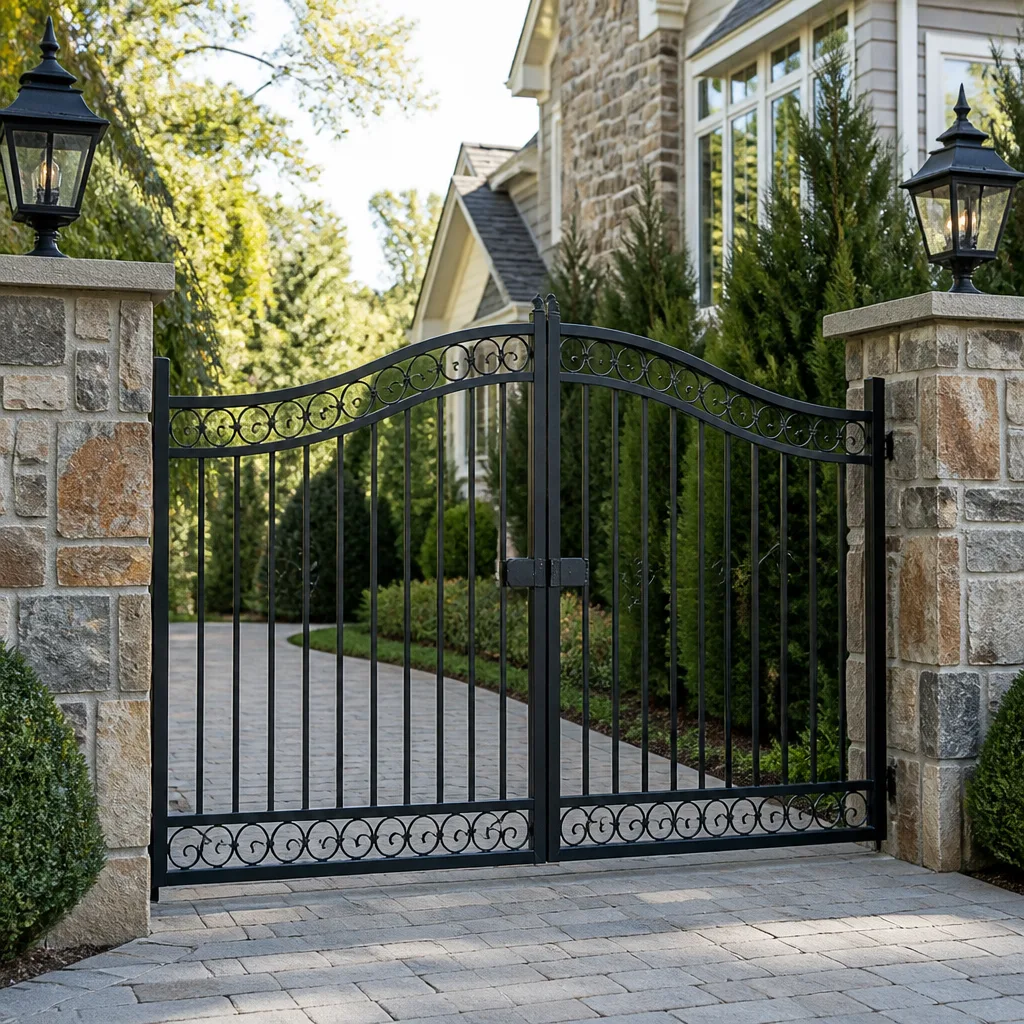 Wrought iron
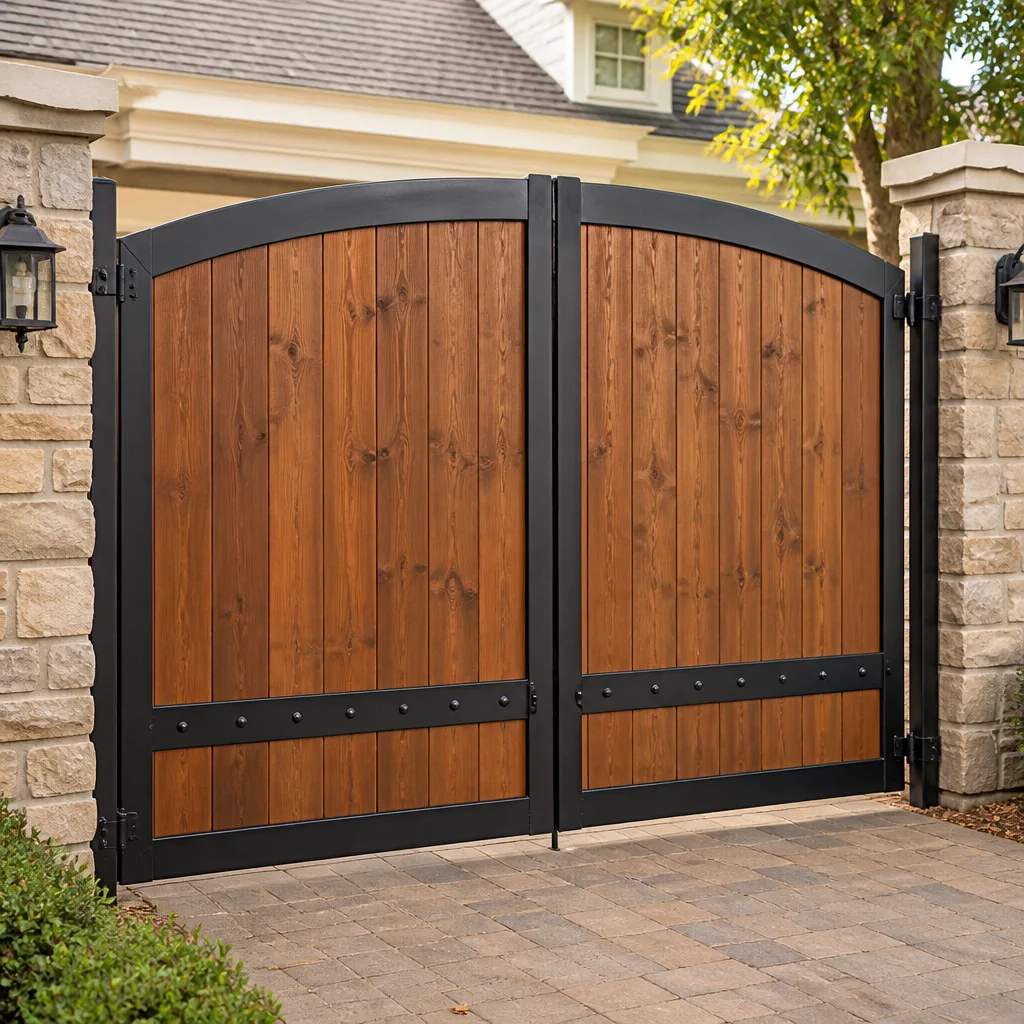 Wood & steel frame
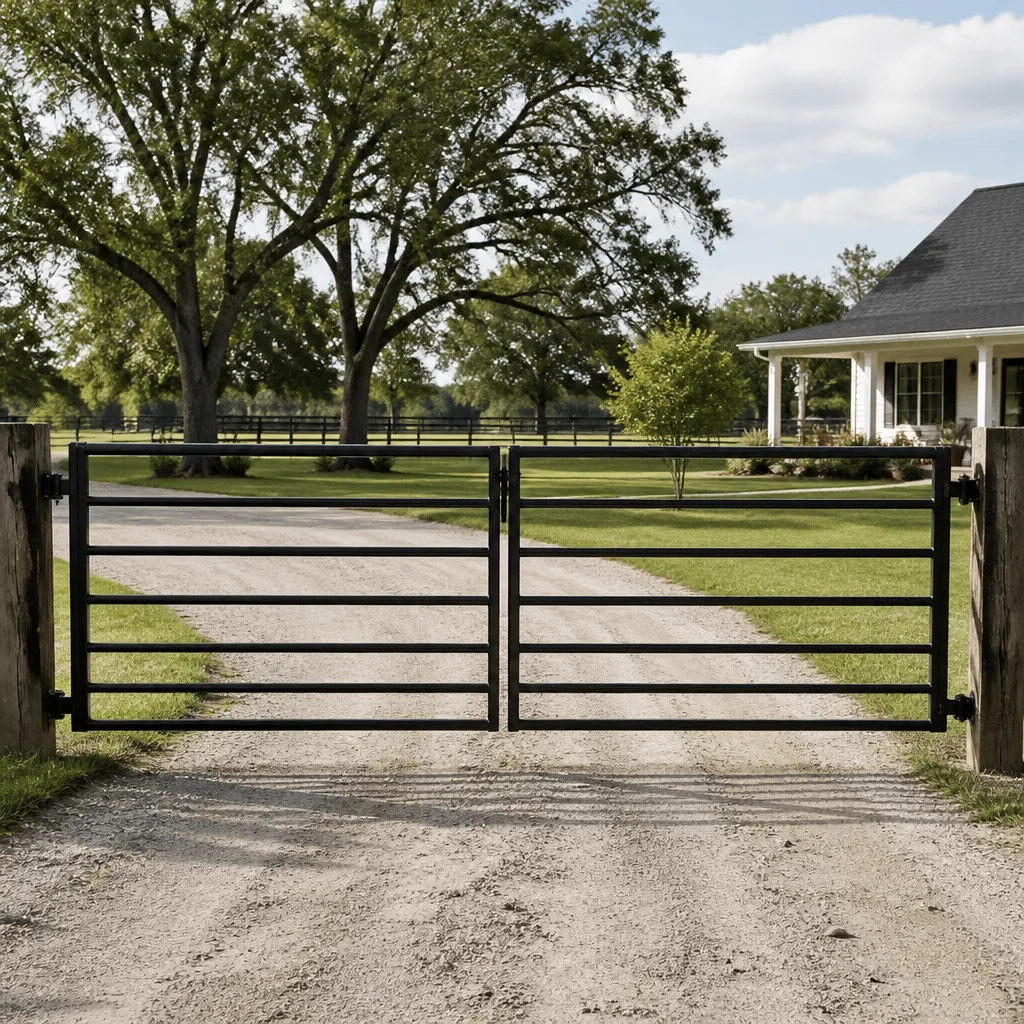 Farm & ranch
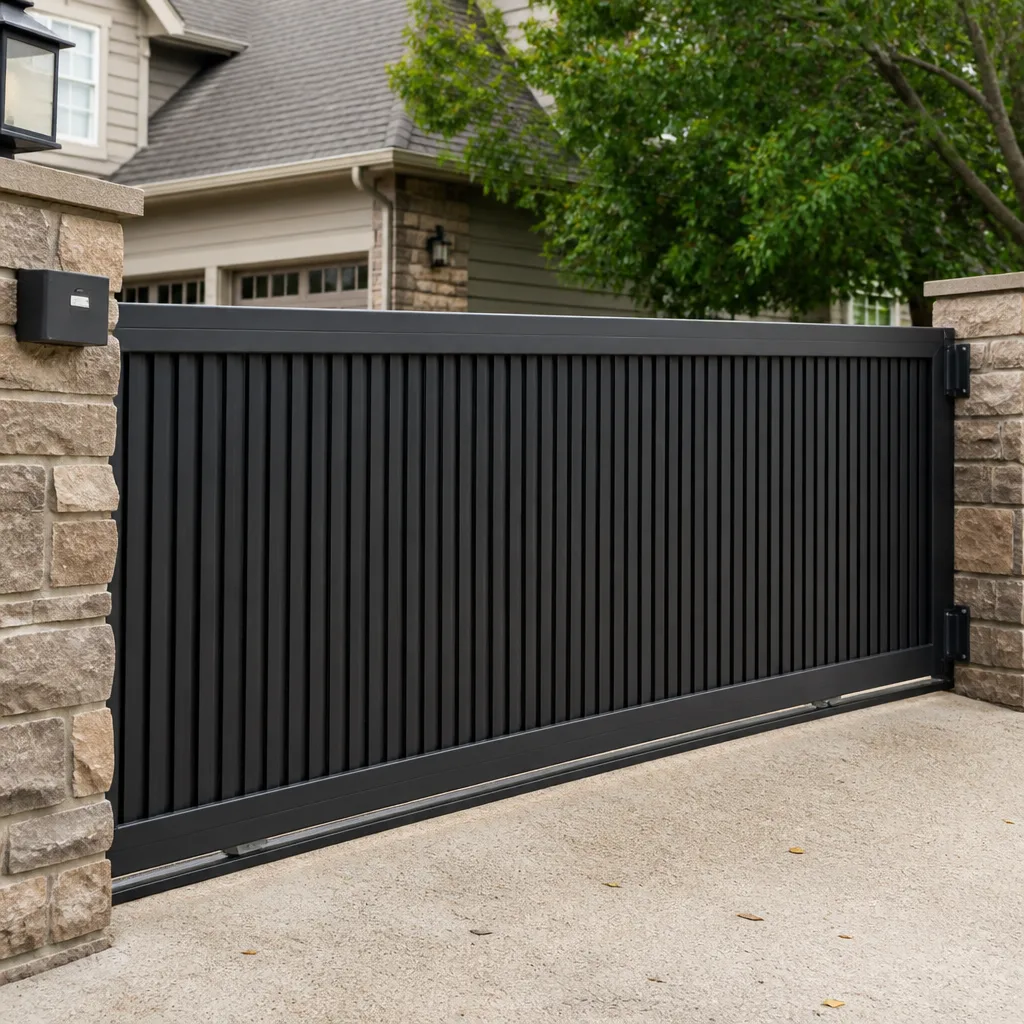 Sliding driveway gates
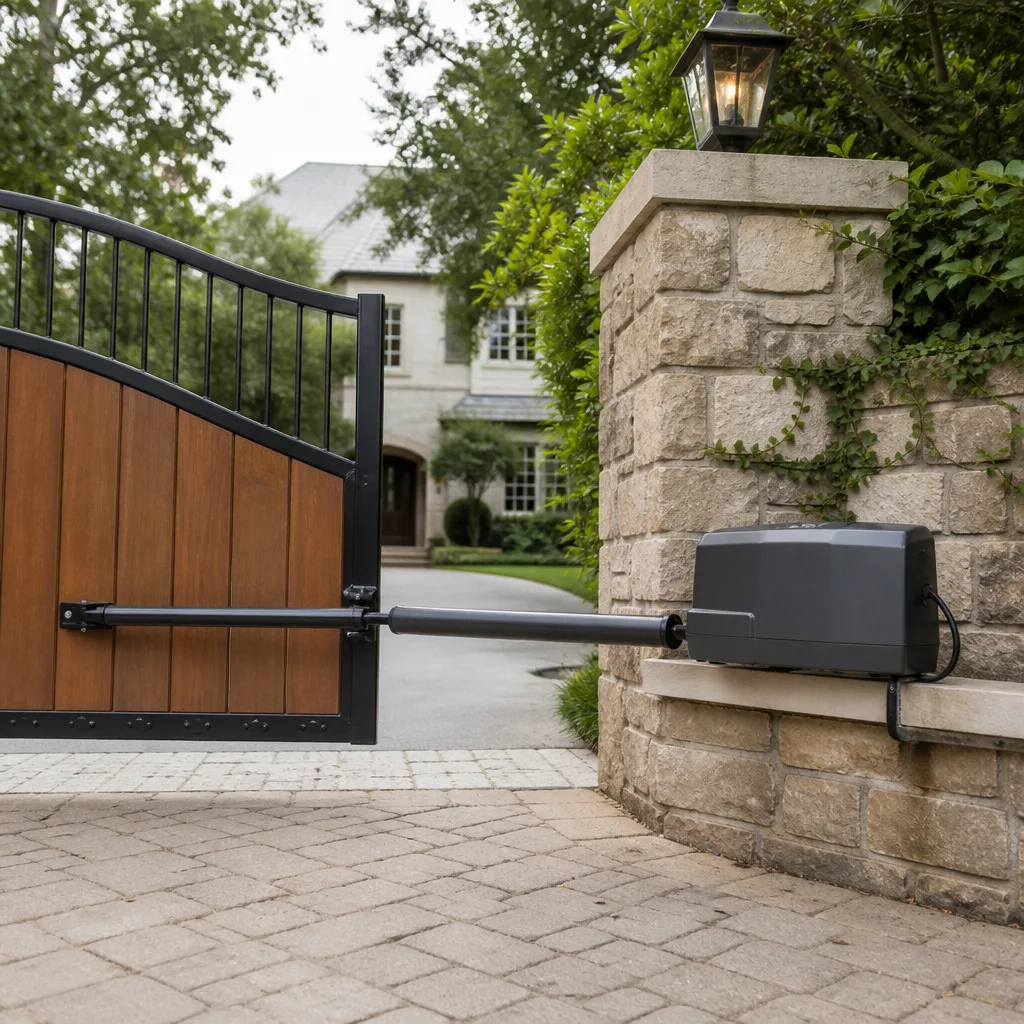 LiftMaster operators
Free on-site gate assessment - hinges, posts, and your LiftMaster or Nice gate operator checked before anything is quoted
The assessment is free and the quote is the invoice.
Get your free estimateThe Complete Guide to Gate Repair in Tampa
A gate that reverses, hesitates, or stops mid-cycle is rarely a “gate problem” – it’s usually a symptom of a separate mechanical or electrical failure that a surface repair will never resolve. In Tampa, where humidity hovers above 70 percent most of the year and salt air drifts inland from the bay, those underlying failures accelerate faster than they would in drier climates. This guide walks through the full diagnostic landscape: what actually breaks, why it breaks in this specific environment, and how to tell the difference between a $200 fix and a $3,500 replacement. For Gate Repair Cost Breakdown: The Tampa Homeowner’s Reference for 2026 details, see our dedicated breakdown. We’ve spent years working on gates in Tampa, and the patterns are consistent enough that we can map them.
Quick Answer
Gate repair in Tampa typically traces back to three root causes: humidity-driven corrosion on hinges and motor housings, operator overload from misaligned hardware, and failing electrical connections at control boards or safety edges. Most repairs cost between $185 and $650 depending on which system failed and whether parts need replacement rather than adjustment. The first step in any Gate Repair services call is identifying which of those three categories you’re dealing with – and skipping that diagnosis is how Tampa homeowners end up paying for the same repair twice.
Styles & brands we work with
Table of Contents
- Why Tampa Gates Fail Differently Than Gates Anywhere Else
- The Three Root Causes Behind Most Tampa Gate Failures
- The Diagnostic Decision Tree: Mechanical, Electrical, or Operator?
- Mechanical Repairs: What Actually Gets Fixed
- Electrical and Automated Gate Repairs
- Access Control Systems: Why the Intercom, Keypad, and Loop Detector All Matter
- Repair vs. Replacement: When Cumulative Damage Changes the Math
- What a Proper Gate Repair Includes (and What It Shouldn’t Cost)
Why Tampa Gates Fail Differently Than Gates Anywhere Else
We’ve repaired gates in Tampa that were installed less than four years ago and already showed corrosion patterns we’d expect to see after a decade in a climate like Phoenix or Denver. The difference isn’t the quality of the gate. It’s the environment. Tampa sits in a subtropical zone where the average relative humidity stays above 70 percent for most of the year, and the city’s coastal geography means salt air travels well inland, particularly during summer storms when wind patterns push moisture across the peninsula. For a gate system, that combination attacks everything from hinge pins to motor housings to the contacts on a control board.
The failure points follow a predictable order. Hinges and pivot points corrode first because they’re exposed metal under constant friction. Motor housings come second, particularly on operators mounted low to the ground where moisture pools. Circuit boards and electrical connections fail third, driven not by visible rust but by creeping corrosion that starts at the edge of a connector and works inward until the connection breaks. In our experience, a Tampa homeowner who calls about a gate that “just stopped working” is usually looking at a failure that started quietly six to eighteen months earlier.
The other Tampa-specific factor is the storm season. High winds push gates against their stops with more force than the system was engineered for during a normal cycle, which bends brackets and throws alignment out of spec. Once alignment is off, the operator has to work harder on every cycle, and the strain compounds. That’s why gates in Tampa seem to fail in clusters after big weather events rather than at random intervals. The storm didn’t break the gate. The storm finished off a gate that was already drifting toward failure.
This matters because it changes what a repair should include. A technician who only replaces the visibly failed component without checking what the humidity and wind have done to the surrounding hardware is handing you a temporary fix. A proper repair in Tampa accounts for the environment, not just the symptom. You can read more about how we approach this on our Gate Repair in Tampa page.
The Three Root Causes Behind Most Tampa Gate Failures
After years of field work in Tampa, the failures we see consolidate into three categories. Almost every gate problem fits one of them, and many gates have two or three happening at once. Knowing which category you’re in determines the repair path, the cost range, and whether the fix will last.
Root Cause #1: Humidity-Driven Corrosion. Tampa’s climate attacks metal in ways that dry-climate technicians never learn to look for. Hinges seize, hinge pins snap, gate wheels develop flat spots from dragging through corroded tracks, and motor enclosures develop pinhole leaks that let moisture inside. On electric gates, the corrosion shows up on wire terminals and board connectors, where a thin layer of green oxidation is enough to break the signal path. The repair here is mechanical or electrical replacement of the corroded components, plus preventive treatment of the surrounding hardware so the pattern doesn’t repeat immediately.
Root Cause #2: Operator Overload from Misaligned Hardware. A gate operator is a motor with a specific duty cycle. It’s designed to move a gate that swings or slides freely. When a hinge sags, a wheel binds, or a track fills with debris, the operator strains against resistance it wasn’t built for. The symptom is a gate that moves slower than it used to, reverses before fully opening or closing, or trips its breaker intermittently. The root cause is almost never the motor itself – it’s the mechanical resistance upstream. Replacing the operator without fixing the alignment is the single most common wasted repair we see in Tampa.
Root Cause #3: Skipped Electrical Connections. On automated systems, the moving parts are only half the system. The other half is electrical: safety loops under the driveway, photo eyes at the gate edges, keypad wiring, intercom lines, and the control board that ties everything together. A gate that opens but won’t close, or closes but won’t respond to the remote, or works fine manually but not automatically, is usually pointing at an electrical connection problem rather than a mechanical failure. These are the repairs that generalists guess at and specialists diagnose in one visit.
The Diagnostic Decision Tree: Mechanical, Electrical, or Operator?
Before you call anyone, you can narrow down the problem category yourself with about ten minutes of observation. This doesn’t replace a professional diagnosis, but it tells you what kind of specialist you need and whether the problem is urgent. For deeper guidance, read our DIY vs Professional Gate Repair: The Tampa Homeowner’s Decision Guide. Here’s the decision tree we walk Tampa homeowners through on the phone:
- Does the gate move at all, even manually? If it’s frozen in place and you can’t push it by hand (after disengaging the operator), you’re looking at a mechanical failure: seized hinges, a broken wheel, or debris wedged in the track. If it moves freely by hand but won’t respond to the operator, the problem is electrical or operator-based.
- Does the gate move partway and then stop or reverse? This is the classic operator-overload pattern. The motor starts the cycle, hits resistance, and trips a safety mechanism that reverses the direction. Check for visible sagging, an obstruction in the track, or a wheel that’s not turning freely. If you find nothing obvious, the resistance may be internal to the operator’s gearing.
- Does the gate work with one input but not another? If the keypad works but the remote doesn’t, or the remote works but the intercom doesn’t release the gate, the problem is in the access-control wiring or the specific input device, not the gate itself. These are the repairs that require a technician who understands the full electrical architecture of the system.
- Does the gate work sporadically? Intermittent failures point to a failing connection: a corroded terminal, a wire that’s lost insulation, or a board component that works until it heats up. These are harder to diagnose because the gate behaves normally during the inspection, which is why you need a technician who knows where to look rather than one who replaces parts on a hunch.
- Does the gate make noise but not move? A motor that hums but doesn’t turn the gate suggests the operator’s capacitor or gearing has failed, or the gate is bound so tightly that the motor can’t overcome the resistance. Either way, continuing to run the operator risks burning out the motor entirely.
Mechanical Repairs: What Actually Gets Fixed
Mechanical gate repair in Tampa covers the physical components that move and wear: hinges, wheels, rollers, tracks, chain drives, cantilever supports, and the gate frame itself. These are the repairs most likely to involve corrosion from Tampa’s humidity, and they’re also the repairs most likely to be done incompletely by a generalist who only addresses the visible damage.
A hinge replacement on a Tampa gate should include inspection of the hinge posts, the frame attachment points, and the gate’s alignment after the new hinge is in place. Swapping a hinge without checking alignment is how a gate gets repaired in March and starts sagging again by August. The same applies to slide gates: replacing a failed wheel without inspecting the track, the other wheels, and the guide rollers means the new wheel inherits the same stress that killed the old one.
Common mechanical repairs we perform in Tampa:
- Hinge and pivot replacement on swing gates (including welding repairs where the post or frame has cracked)
- Wheel, roller, and track replacement on slide and cantilever gates
- Chain and sprocket replacement on chain-drive operators
- Gate frame straightening after storm damage or vehicle impact
- Track cleaning and realignment to reduce operator strain
- Replacement of corroded gate hardware (locks, latches, post caps) before they compromise the gate’s structural connection
The key to mechanical repairs that last in Tampa is addressing corrosion at the source. That means using stainless or galvanized hardware where it’s exposed to weather, treating the surrounding area so the new components don’t inherit the same failure pattern, and checking the operator’s alignment after everything is reassembled. A gate that’s mechanically repaired but out of alignment will simply return the operator to an overload condition, and you’ll be calling someone again within the year.
Electrical and Automated Gate Repairs
Electric gates make up a growing share of what we service in Tampa, and they’re where the gap between a specialist and a generalist shows most clearly. A manual gate has maybe a dozen failure points. An automated gate has the same dozen mechanical points plus a control board, a motor, a capacitor, safety sensors, loop detectors, a receiver for the remote, a keypad, possibly an intercom, and the low-voltage wiring that connects all of them. Diagnosing an electric gate without understanding how those systems interact is guesswork.
The good news is that electric gate problems are usually specific. A control board that won’t respond to any input is a board failure. A gate that opens fine but won’t close automatically is usually a safety loop or photo eye problem. A gate that works with the wall button but not the remote is a receiver issue. A gate that trips a breaker is typically a motor drawing too much current, often because of the mechanical overload we described above. The diagnosis matters because replacing the wrong component doesn’t just waste money – it leaves the actual failure in place to cause the same shutdown again.
We work on LiftMaster, FAAC, BFT, and Linear systems specifically, along with several other major brands. Each has its own board architecture and its own known failure patterns, which is why brand familiarity matters. A technician who’s never opened a FAAC board is going to spend an hour figuring out what someone who services those systems weekly already knows. That time is money, and it’s usually yours. For more detail on the electrical side, see our Electric Gate Repair in Tampa page.
Access Control Systems: Why the Intercom, Keypad, and Loop Detector All Matter
One thing that separates gate repair in Florida from gate repair in most other markets is how many gates are integrated with access control. Tampa gated communities, apartment complexes, and even some residential properties don’t just have a gate – they have an intercom system, a keypad, vehicle detection loops in the pavement, and sometimes a phone-line or cellular connection that ties the whole thing together. When the gate stops working, the problem could be in any of those systems, and they all have to be checked together.
We’ve had Tampa clients call about a “broken gate” when the actual problem was a loop detector that stopped sensing vehicles, so the gate wouldn’t open automatically as cars approached. Another common scenario: the intercom works, the keypad works, but the gate won’t cycle from the phone app because the cellular board lost its signal. These aren’t gate failures in the mechanical sense, but they present as gate failures to the person standing on the driveway.
The diagnostic principle here is simple: every automated gate is a system, not a single machine. The physical gate is just one component. The operator is another. The access control is a third. A repair that only addresses one component when two are compromised leaves the problem half-solved. That’s why a proper diagnostic includes checking the entire chain: input device, wiring, control board, safety loop, operator, and mechanical gate. Anything less is a guess wearing a repair invoice.
Repair vs. Replacement: When Cumulative Damage Changes the Math
Some Tampa gates reach a point where repairing them is technically possible but financially foolish. The decision isn’t about whether the gate can be fixed – it’s about whether the repair cost plus the remaining lifespan of the repaired gate beats the cost of a new installation divided by its lifespan. In plain terms: if a repair buys you eighteen months and costs $900, but a new gate costs $3,200 and lasts twelve years, the replacement is the better financial decision. The math isn’t always obvious on the first repair, but it usually becomes clear on the second or third.
Signs that cumulative damage is pushing toward replacement:
- The gate frame is corroded at multiple points, not just the hinges or wheels
- The operator has been replaced previously and the current one is failing again within a few years
- The track or posts are rusted through in the load-bearing sections
- The control board has failed more than once, suggesting moisture ingress that will keep recurring
- Multiple components – mechanical and electrical – are approaching end-of-life simultaneously
Our approach is repair-first. We don’t sell replacements unless the math genuinely favors the replacement, and we tell you which way the math goes with specific numbers so you can verify it yourself. When replacement is the right call, the same team that diagnosed the failure can handle the Gate Installation in Tampa, which means the new gate gets spec’d to avoid the failure patterns that took out the old one.
What a Proper Gate Repair Includes (and What It Shouldn’t Cost)
A gate repair isn’t just the replacement of a failed part. It’s the repair of the failed part plus the investigation of why that part failed plus the correction of anything that would cause the replacement to fail for the same reason. That’s the difference between a repair that lasts and a repair that buys you sixty days.
Here’s what a thorough repair process looks like from start to finish:
- Diagnosis. The technician identifies the failed component and, just as importantly, the upstream cause. This takes time, and it’s the step that most separates a specialist from a guesser.
- Quote approval. You get a specific price before any work starts. The price is based on the diagnosis, and it’s the price you pay unless additional damage is discovered during the repair – in which case the new work gets quoted and approved separately before proceeding.
- Repair execution. The failed component is replaced or repaired. Where appropriate, the surrounding hardware is treated or adjusted to prevent recurrence.
- Alignment and load testing. The gate is checked through its full cycle, including safety reversal features, and the operator’s load is verified to be within normal range. This step is where a lot of short-lived repairs fall apart – the part is fixed but the underlying stress wasn’t addressed.
- System verification. For automated gates, every input is tested: keypad, remote, intercom, loop detector, and safety edge. The gate isn’t “repaired” until all of them work.
On pricing: repair costs in Tampa vary by the component and the system, but the range for most residential gate repairs runs roughly $185 to $650 where parts are available and no structural work is required. Structural repairs – welding, post replacement, frame straightening – run higher. We provide the exact price before work starts, so there’s no surprise on the invoice. For an accurate number on your specific gate, call us at (866) 976-0095.
Common Mistakes to Avoid
- Replacing the operator when the problem is alignment. A gate that strains against misaligned hardware will burn out a replacement operator the same way it burned out the original one. Fix the resistance first, then assess whether the operator actually needs replacement.
- Ignoring intermittent failures. A gate that works “most of the time” has a problem that’s going to get worse. Intermittent failures are almost always a connection or board issue that will become permanent at the worst possible moment, usually when you’re trying to leave for work.
- Letting corrosion go untreated in Tampa’s humidity. A squeaky hinge or a rust spot near a wheel isn’t a cosmetic issue in this climate. It’s a failure in progress. Addressing it early costs a fraction of the eventual repair.
- Hiring a generalist who only looks at the visible problem. Tampa has plenty of competent general contractors, but gate systems have failure patterns that require specialized familiarity. The technician who correctly identifies the root cause saves you the cost of the second repair.
- Skipping the safety loop check on automated gates. A gate that reverses when it shouldn’t, or won’t close at all, often has a failed or weakened loop detector. If the technician doesn’t test the loop, they haven’t actually diagnosed the system.
- Attempting significant electrical work without gates-specific experience. Gate control boards operate on low voltage, but the incoming power is line voltage, and the safety systems (loop detectors, photo eyes) must be aligned correctly for the gate to function safely. This is work for a trained technician, not a weekend project.
- Delaying a repair because the gate “still works.” A gate that’s slow, noisy, or hesitant is telling you something. The longer it runs in that condition, the more components get dragged into the failure. Early repair is almost always cheaper than late repair.
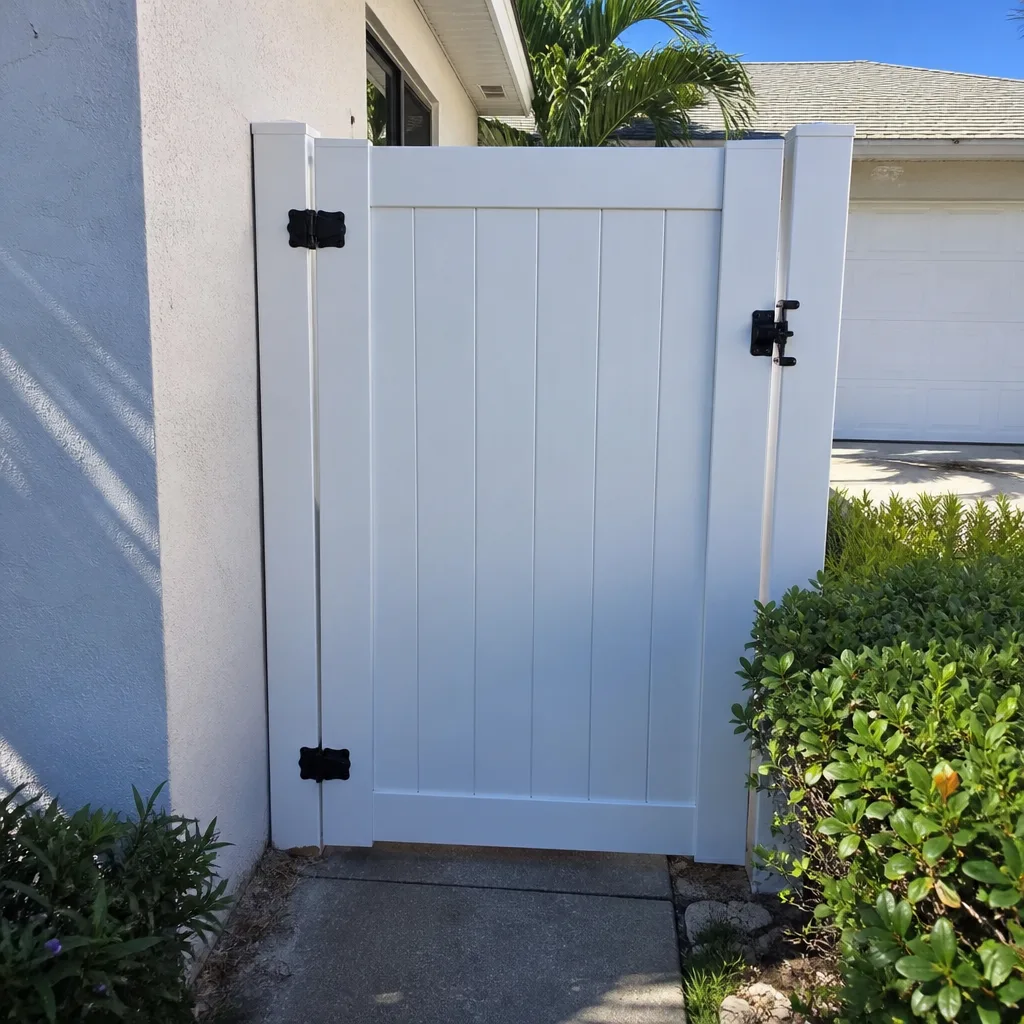
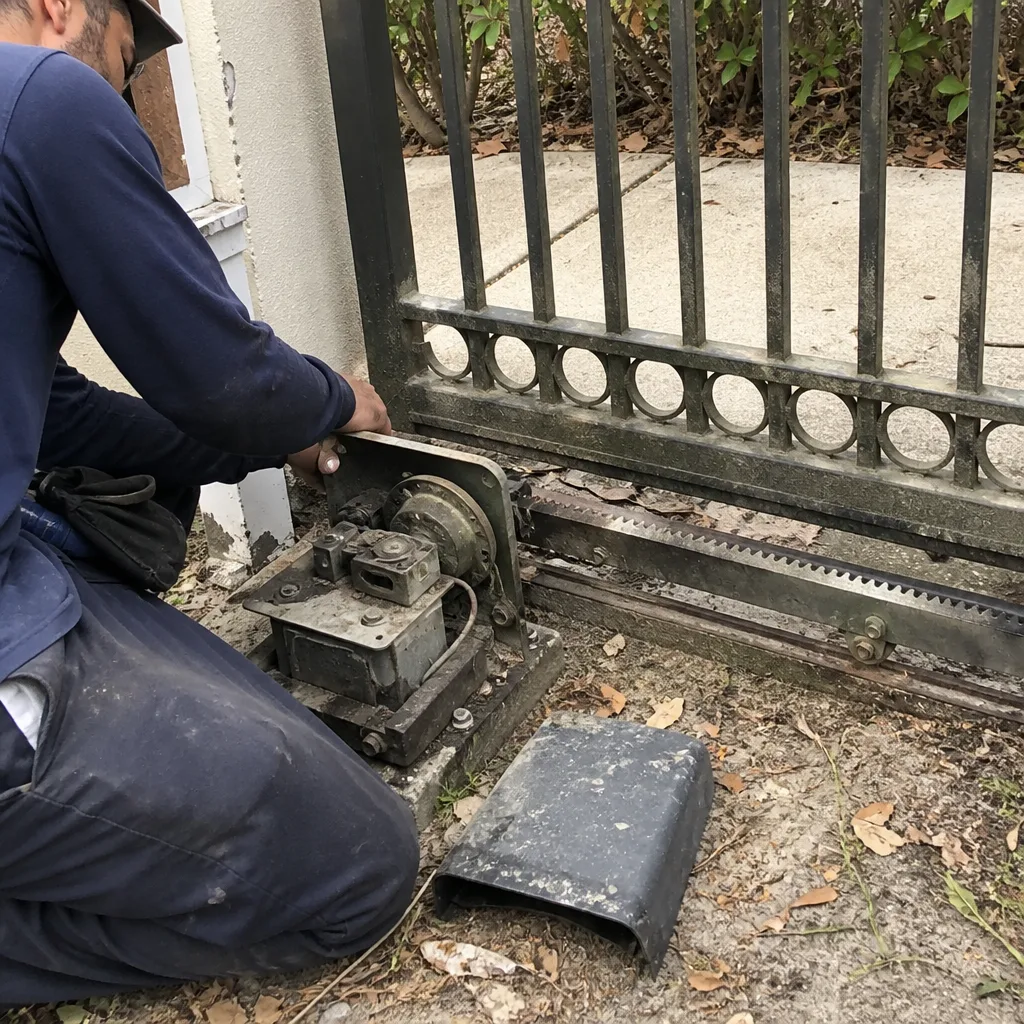
See the difference
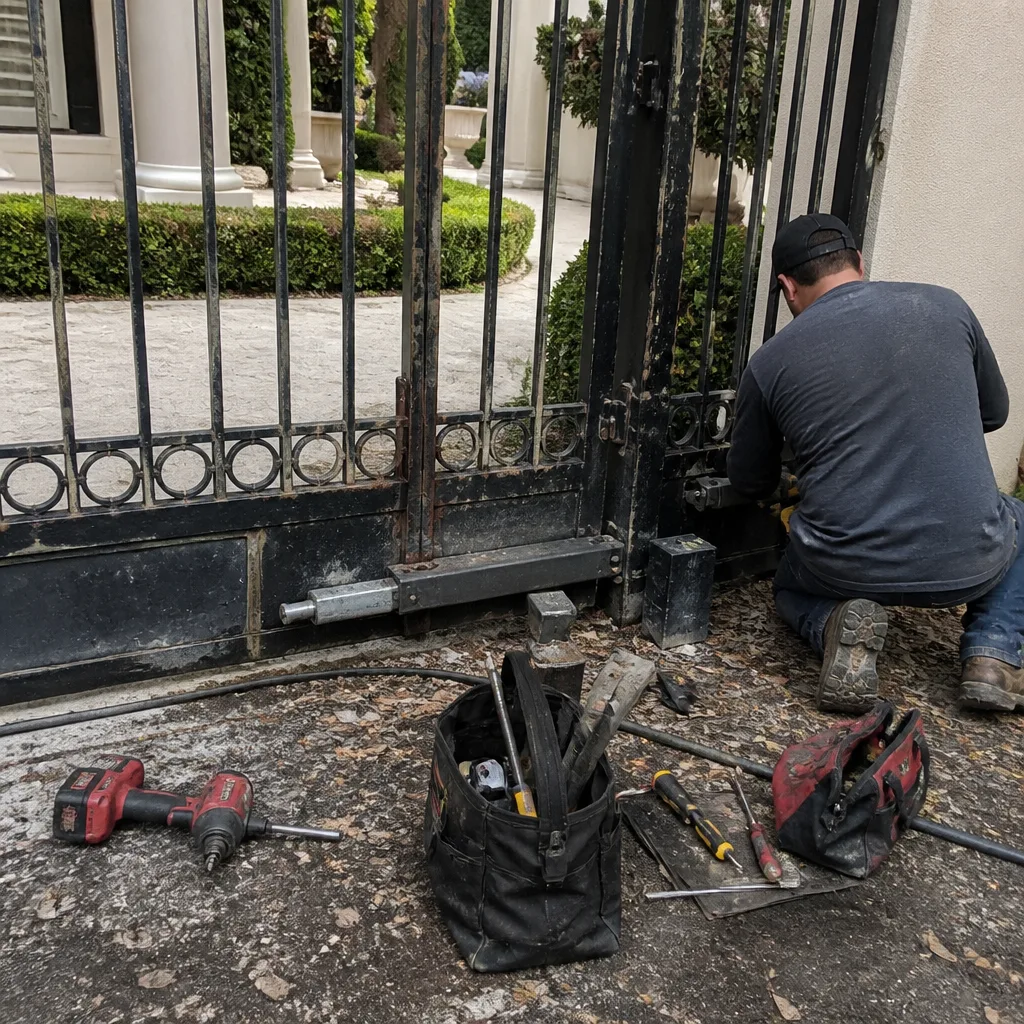 Before
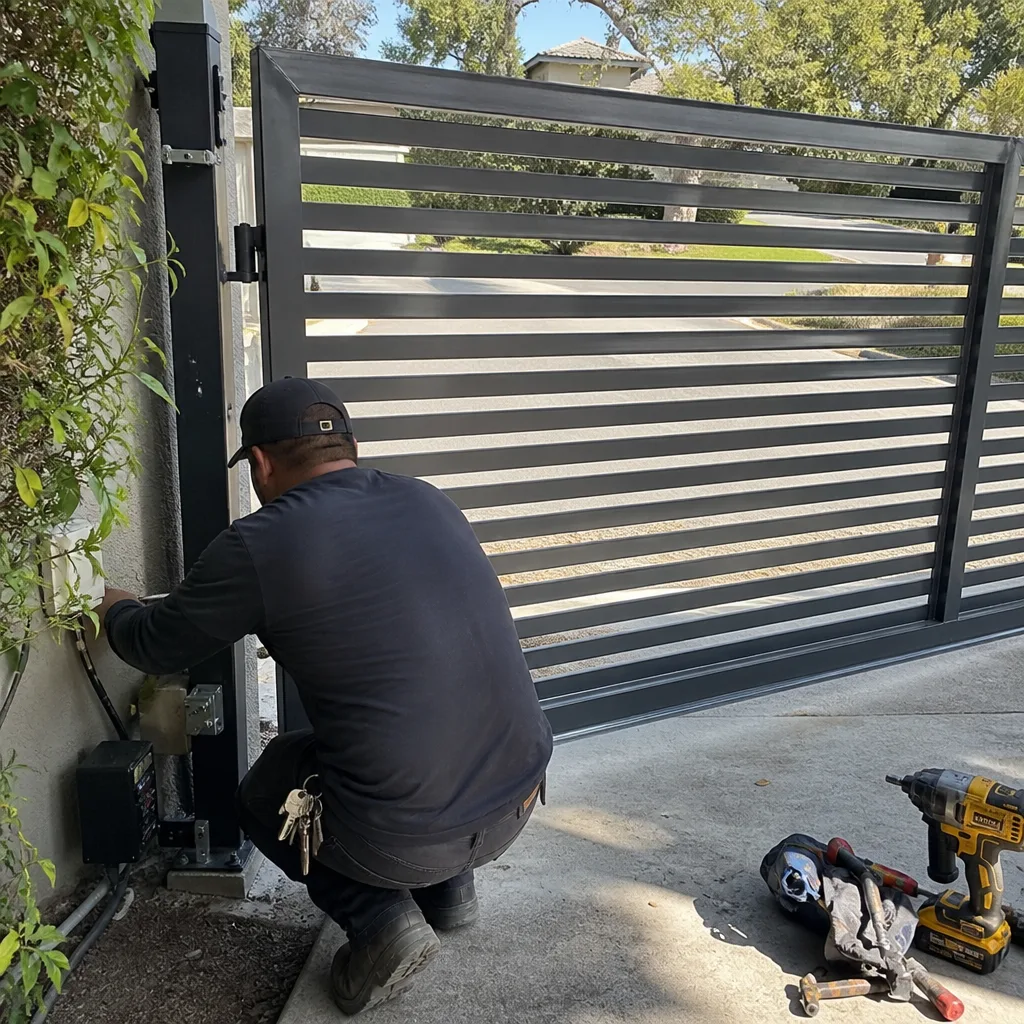 After
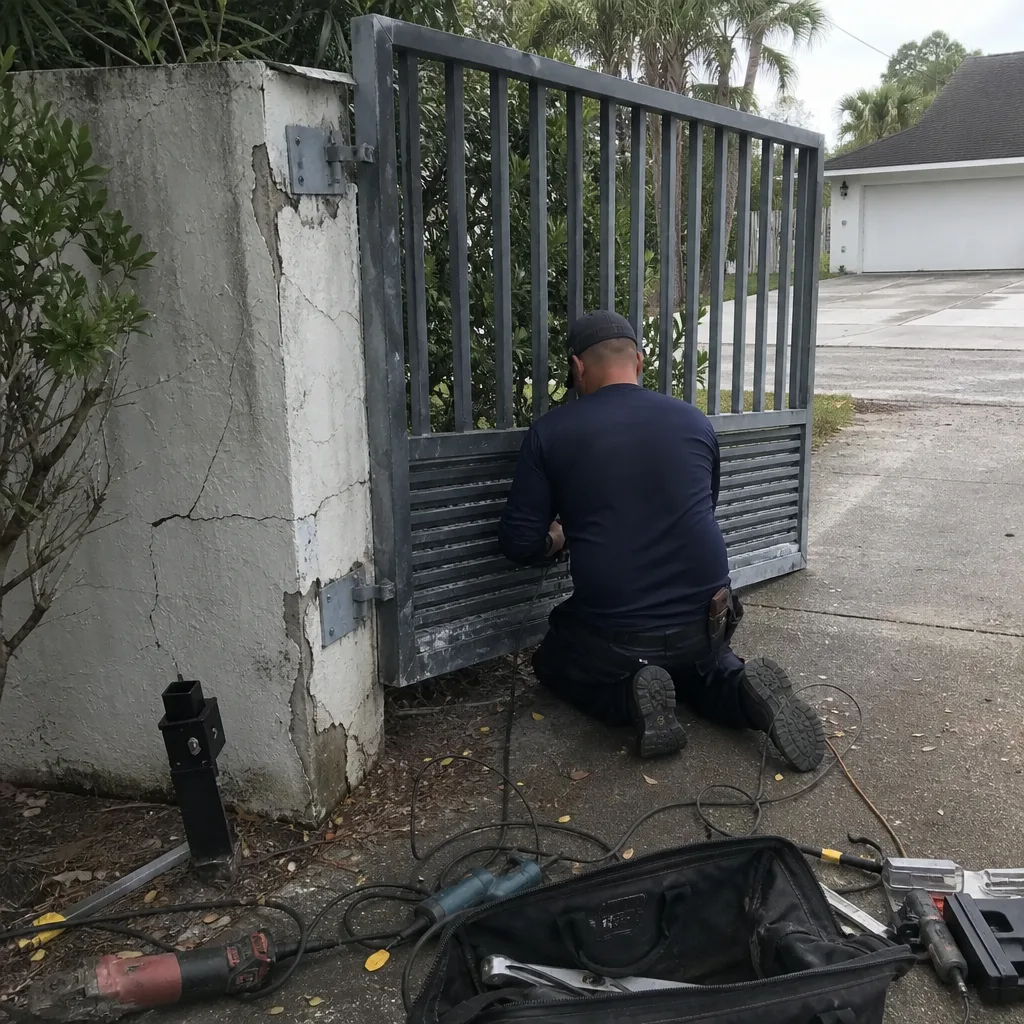 Before
 After
 Before
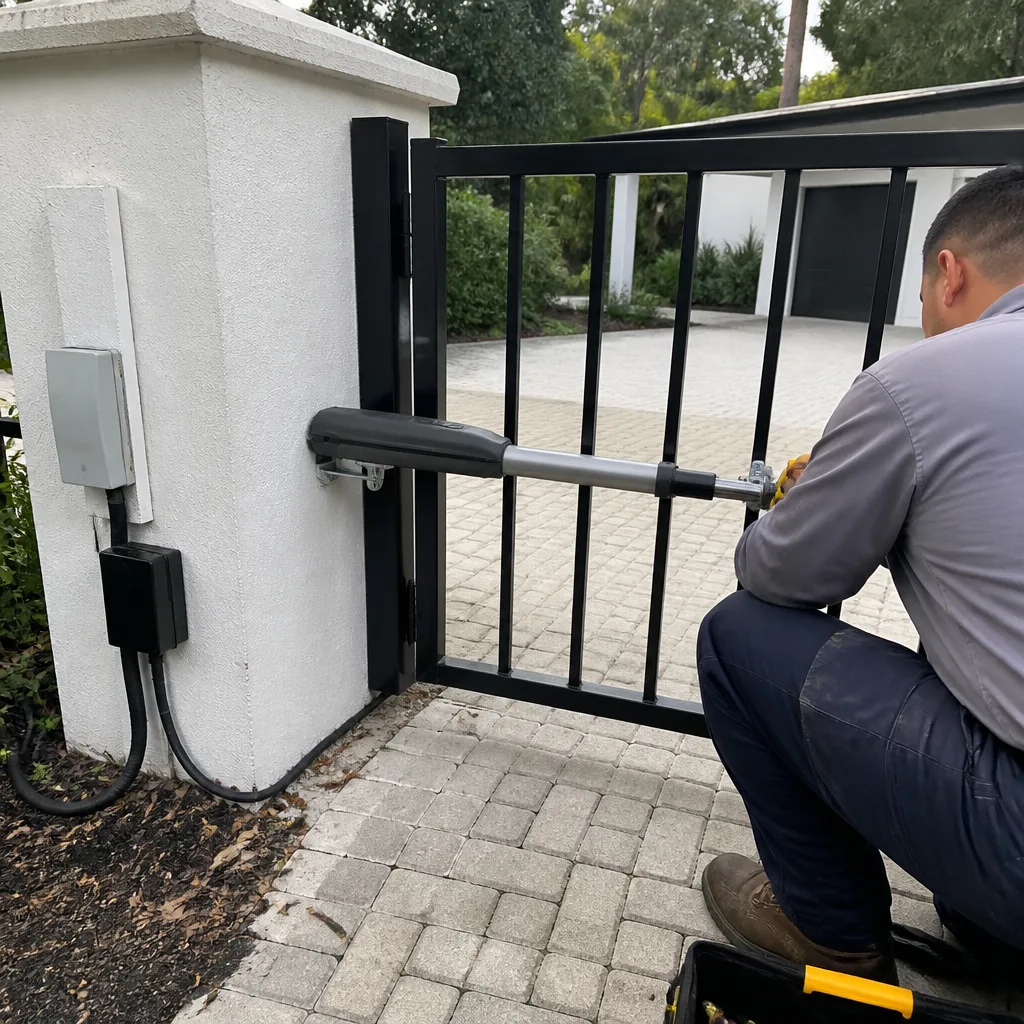 After
When to Call a Professional
You should call a gate specialist when the problem involves anything beyond basic cleaning or lubrication: when the gate is frozen, when it reverses mid-cycle, when the operator hums but doesn’t move, when any input (remote, keypad, intercom) stops working, when the gate trips a breaker, or when you see visible corrosion on load-bearing components. These are the situations where guessing at the cause risks making the problem worse, and where a wrong repair doubles the total cost. Tampa Gate Company offers free estimates in Tampa – call (866) 976-0095 and we’ll tell you what’s actually wrong and what it’ll cost to fix it, before any work begins.
Frequently Asked Questions
Most residential gate repairs in Tampa fall between $185 and $650 for parts and labor on non-structural issues. Structural repairs involving welding, post replacement, or frame straightening run higher. The exact cost depends on which component failed and whether the underlying cause was addressed. Call (866) 976-0095 for a specific quote on your gate – estimates are free.
Intermittent gate failures usually point to a corroded electrical connection, a failing control board component, or a safety sensor that’s drifting out of alignment. Tampa’s humidity accelerates the corrosion process, which is why these failures are more common here than in drier climates. An intermittent failure is a warning sign – it will become permanent, and the fix will be more expensive by then.
We aim to diagnose and repair most gate issues in a single visit, and many Tampa repairs are completed the same day the diagnosis is made. Some situations require ordering a specific part, which extends the timeline. The fastest way to know is to call (866) 976-0095 and describe what the gate is doing.
We service LiftMaster, FAAC, BFT, and Linear systems specifically, along with Viking, Ghost Controls, DoorKing, Elite, and Mighty Mule. Our technicians are familiar with the board architecture and failure patterns of each brand, which means faster diagnosis and fewer wrong-part replacements.
The answer depends on the cost of the repair, the remaining lifespan of the repaired gate, and the cost of a replacement amortized over its expected life. We recommend repair whenever the repair cost is less than about half the replacement cost and the gate is otherwise structurally sound. When the math favors replacement, we tell you that too – with specific numbers so you can see the calculation.
Yes. Our humidity combined with salt air from the bay creates corrosion patterns on hinges, motor housings, and circuit boards that wouldn’t appear for years in a dry climate. A gate that would last fifteen years with basic maintenance in Arizona can need significant work in Tampa within five to seven years if the corrosion isn’t addressed early. That’s why preventive attention – catching rust on hinges and connectors before they fail – matters more here than almost anywhere else.
For more answers to common gate issues in Tampa, visit the Tampa Gate Company home page or call us directly.
The Bottom Line
Gate repair in Tampa succeeds or fails on diagnosis. The humidity and salt air here create failure patterns that don’t match what the average generalist is trained to spot, and the complexity of automated systems means a surface repair often leaves the real problem untouched. If you take one thing from this guide: the symptom isn’t the problem. A gate that reverses, hesitates, or stops is showing you the result of a root cause – corrosion, misalignment, or a failed electrical connection – and fixing the symptom without fixing the cause is how people pay for the same repair twice. Know the cause, fix the cause, and the gate returns to secure, working order. Call (866) 976-0095 for a free estimate, and we’ll diagnose your gate accurately before any work starts.
Written by the team at Tampa Gate Company, serving Tampa since 2013. Explore more guides & resources from our team.