
Last updated October 31, 2026
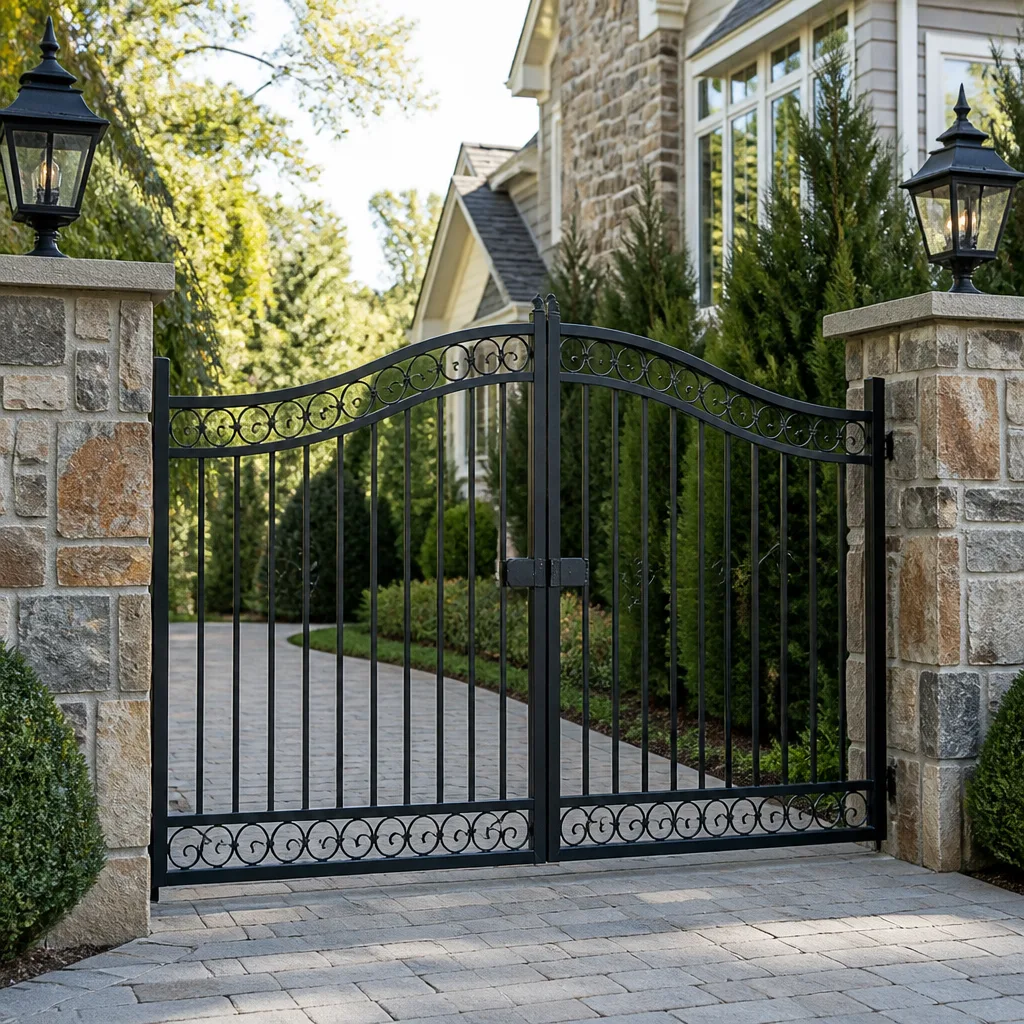 Wrought iron
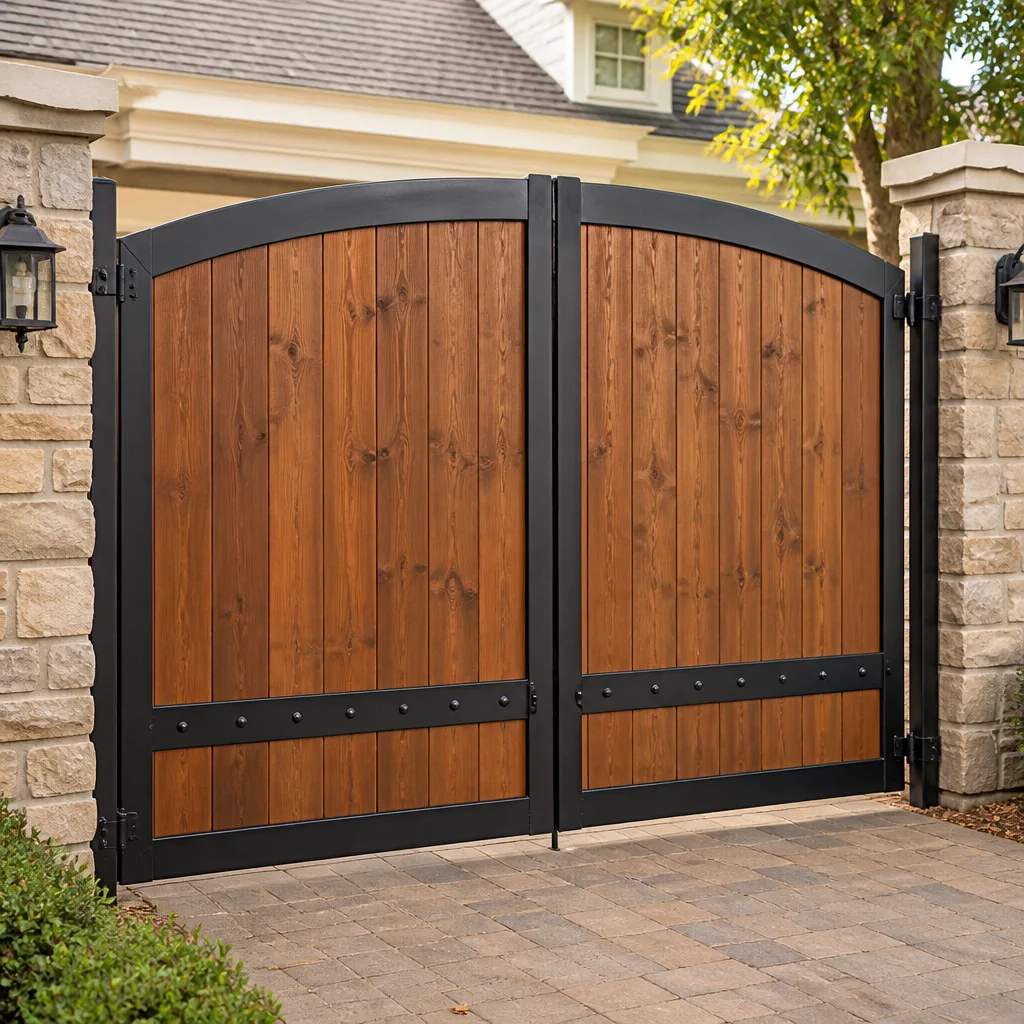 Wood & steel frame
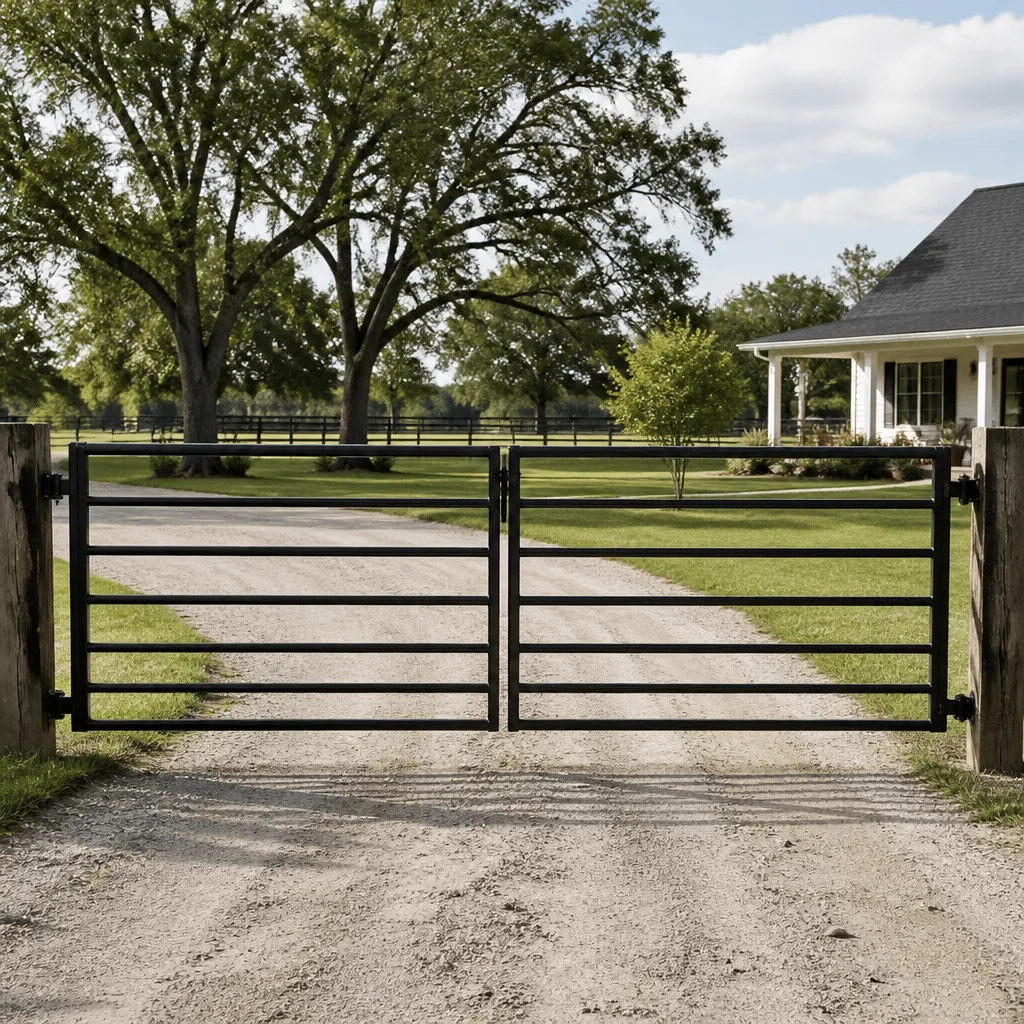 Farm & ranch
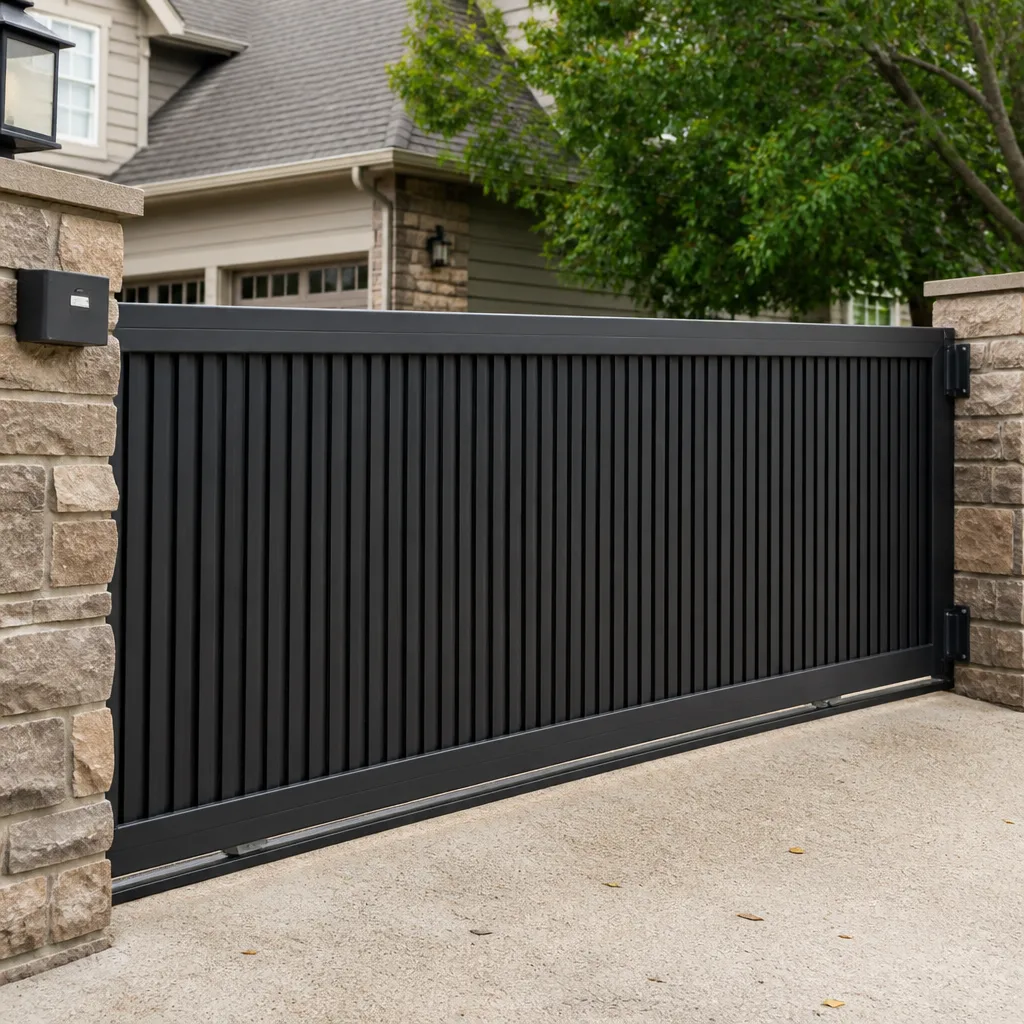 Sliding driveway gates
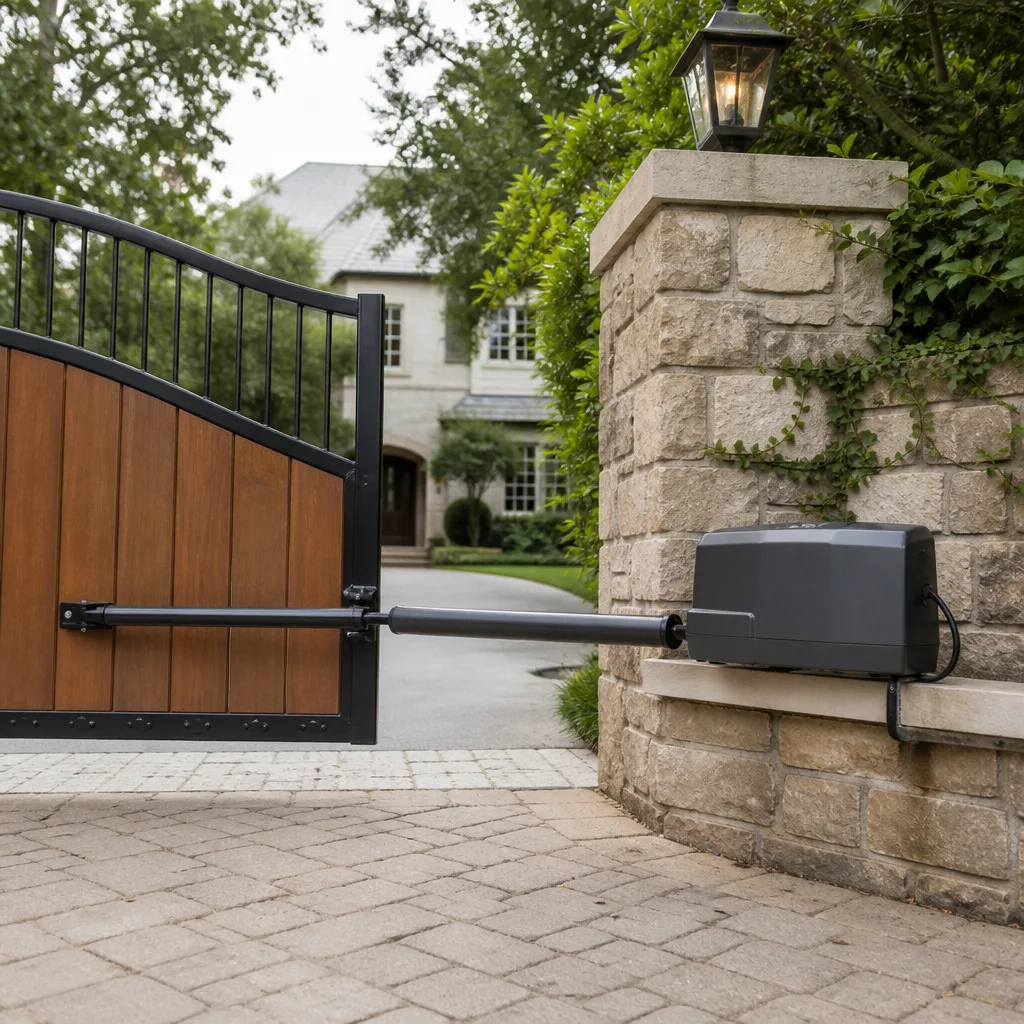 LiftMaster operators
Free on-site gate assessment - hinges, posts, and your LiftMaster or Nice gate operator checked before anything is quoted
The assessment is free and the quote is the invoice.
Get your free estimateThe Complete Gate Repair Guide for Tampa Homeowners
The same gate hardware rated for 10 years in Phoenix can fail in under 3 in Tampa’s coastal humidity, yet most repair guides don’t mention humidity once. This one does. Tampa’s combination of salt air, subtropical moisture, intense UV exposure, and daily afternoon thunderstorms creates a failure environment unlike anywhere else in Florida except maybe Miami, and the difference shows up in hinges, motors, control boards, and safety sensors. What follows is a practical, Tampa-specific guide to diagnosing gate problems, understanding why they happen here more than elsewhere, and knowing when a repair is straightforward versus when you need our Gate Repair services from a specialist who understands the local conditions.
Quick Answer
Gate repair in Tampa typically involves diagnosing whether the failure is mechanical (hinges, wheels, track alignment), electrical (motor, control board, safety sensors), or corrosion-related (salt air and humidity damage to components). Most Tampa gate failures cluster in late summer after months of daily storms and peak humidity have stressed components simultaneously. The fastest path to a working gate is usually a specialist who can identify your system’s brand on sight and diagnose the actual failure point rather than guessing.
Styles & brands we work with
Table of Contents
- Why Tampa’s Climate Destroys Gates Faster Than Other Cities
- The Tampa Gate Failure Calendar: When Things Break and Why
- Gate Materials in Tampa: Aluminum vs. Wrought Iron vs. Vinyl
- The Most Common Gate Problems We See in Tampa
- Post-Storm Inspection: What to Check After a Named Storm
- DIY vs. Professional: What Tampa Homeowners Can Safely Fix Themselves
- What Gate Repair Costs in Tampa
- Common Mistakes to Avoid
- When to Call a Professional
- Frequently Asked Questions
Why Tampa’s Climate Destroys Gates Faster Than Other Cities
Tampa sits in a unique meteorological pocket. We’re far enough south to get intense year-round UV exposure, close enough to the Gulf to get salt-laden air moving inland, and humid enough that metal surfaces stay damp for hours after every rain event. A gate in Carrollwood faces different corrosion pressure than one in Palma Ceia or Beach Park, but the pattern holds citywide: moisture is the enemy, and Tampa has more of it than almost any other major Florida metro.
Salt air is the quiet killer. Homes within roughly three miles of Tampa Bay or the Gulf coastline get airborne salt that settles on gate hinges, motor housings, and control boards. That salt attracts moisture, and the combination accelerates rust on ferrous metals and corrosion on electrical contacts. We’ve opened control boards near Bayshore Boulevard that look like they’ve been sitting in a marina for a decade, when the gate itself is only four years old.
Humidity compounds the problem. When relative humidity stays above 80% for weeks at a time, which is normal in Tampa from June through September, condensation forms inside motor housings and control enclosures even when it hasn’t rained. That condensation shorts out circuit boards, corrodes terminal connections, and causes the kind of intermittent failures that drive homeowners crazy because the gate works fine one day and refuses to open the next.
UV exposure is the third factor. Tampa’s sun index is brutal on plastic components: safety sensor housings become brittle, keypad covers crack, vinyl gate panels fade and warp. Aluminum fares better but its powder coating can chalk and thin after several seasons of direct afternoon sun. If your gate faces west with no shade, expect to address UV-related wear sooner than a neighbor whose gate faces north under an oak canopy.
What this means in practice: a Tampa gate needs more frequent inspection and earlier intervention than the same gate would in drier climates. Waiting until a gate completely fails often turns a $200 hinge replacement into a $900 motor replacement, because rust and corrosion spread while the problem goes unaddressed.
The Tampa Gate Failure Calendar: When Things Break and Why
After years of service calls across Tampa, a clear seasonal pattern has emerged. Gate failures don’t distribute evenly across the year. They cluster, and the clustering follows the weather.
March through May: The Dry Season Wake-Up
As temperatures climb and humidity returns, gates that sat through a mild winter start showing problems. Lubricant has thickened or dried out. Battery backups in electric gate systems have depleted. Small rust spots that formed during winter’s occasional rain have had time to spread. This is when we see a spike in manual gates that suddenly feel heavy or stiff, and electric gates that move slower than they should.
June through September: Peak Failure Season
This is the busiest period for gate repair in Tampa, and it’s not close. Daily afternoon thunderstorms dump rain that gets driven into motor housings and control boxes by wind. Humidity pegs at 85% or higher for weeks. Salt air is most active during these months. The result: a wave of electrical failures, corroded connections, tripped safety sensors, and water-damaged control boards. Late August and early September are typically the worst. By then, components have been stressed for three straight months, and gates that survived June often don’t survive Labor Day.
October through November: Post-Storm Repairs
If a named storm or strong tropical system passes through, the aftermath brings a different kind of damage: misaligned tracks from wind pressure, bent hinges, knocked-out safety loops, and gates that were forced open or closed during power outages. This is also when homeowners notice structural issues that accumulated over the summer but became obvious once the weather cooled.
December through February: The Maintenance Window
Tampa’s mild winters are the ideal time for preventive work. Hinges can be lubricated and adjusted before rust hardens. Electrical connections can be cleaned and sealed. Motor mounts can be checked. A gate serviced in January is far less likely to fail in August. We recommend scheduling an inspection during this window even if nothing seems wrong, because the work done now is what prevents the August breakdown.
Gate Materials in Tampa: Aluminum vs. Wrought Iron vs. Vinyl
Gate material choice affects repair frequency more than most homeowners realize, and Tampa’s climate treats each material differently.
Aluminum Gates
Aluminum is the most common gate material in Tampa and generally the best choice for our climate. It doesn’t rust, it’s lighter than iron (which reduces hinge and motor wear), and it holds up well against salt air. The downsides: aluminum is softer than steel, so it can bend under impact or wind load. Its powder-coated finish will eventually fade and chalk under Tampa’s UV index, especially on west-facing installations. Repairs on aluminum gates typically involve straightening bent sections, replacing worn hinges, and re-coating faded panels. Aluminum gates in coastal neighborhoods like Davis Islands or Westshore still need hinge replacements more often than inland, because the salt works on the steel hinge pins even when the gate itself is immune.
Wrought Iron Gates
Wrought iron is strong and looks substantial, but it’s the highest-maintenance material for Tampa. The humidity and salt air attack bare or scratched steel relentlessly, causing rust that spreads under paint and weakens joints. A wrought iron gate in South Tampa that’s never been properly sealed and painted might need rust treatment within two years of installation. Repairs involve sanding and treating rust, welding cracked joints, and repainting with marine-grade coatings. Iron gates are also heavy, which means opener motors work harder and wear out faster if the gate isn’t perfectly balanced. None of this means you shouldn’t have an iron gate, but it does mean an annual inspection is more important for iron than for aluminum.
Vinyl Gates
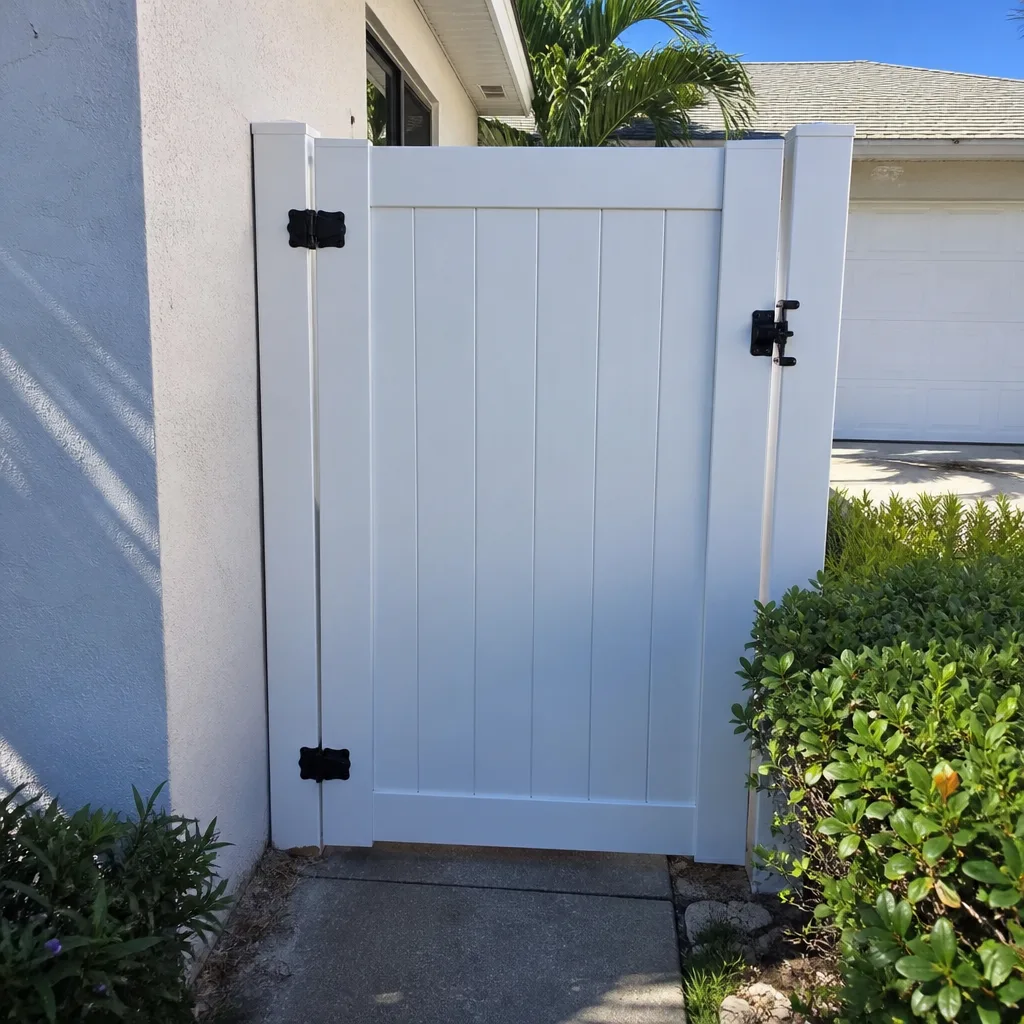
Vinyl gates resist corrosion entirely, which makes them appealing for coastal Tampa properties. But vinyl has its own Tampa problem: UV and heat. Prolonged sun exposure makes vinyl brittle, and brittle vinyl cracks at stress points like hinge attachments and latch mounts. We’ve seen vinyl gates in New Tampa fail at the hinge points after five or six years of direct afternoon sun, while the same gate material in a shaded lot lasts twice as long. Vinyl repairs usually mean replacing cracked panels or reinforcing attachment points with metal backing plates. Vinyl can’t be bent back into shape, so significant damage usually means panel replacement rather than repair.
The Most Common Gate Problems We See in Tampa
When a gate stops working, the problem is usually one of these. Knowing what you’re looking at before you call saves time and helps you describe the issue accurately.
- Corroded or seized hinges. Especially on gates within range of salt air. The gate becomes hard to move, droops at the latch side, or makes a grinding sound when opening. This is the single most common mechanical failure in Tampa.
- Water-damaged control boards. Afternoon thunderstorms drive water into control enclosures that weren’t properly sealed. Symptoms include the gate opening but not closing, erratic behavior, or complete non-response from the keypad or remote.
- Failed safety sensors. Tampa’s humidity and insect activity take a toll on photo eyes and safety loops. The gate starts, then reverses as if something is in the way, or refuses to close at all.
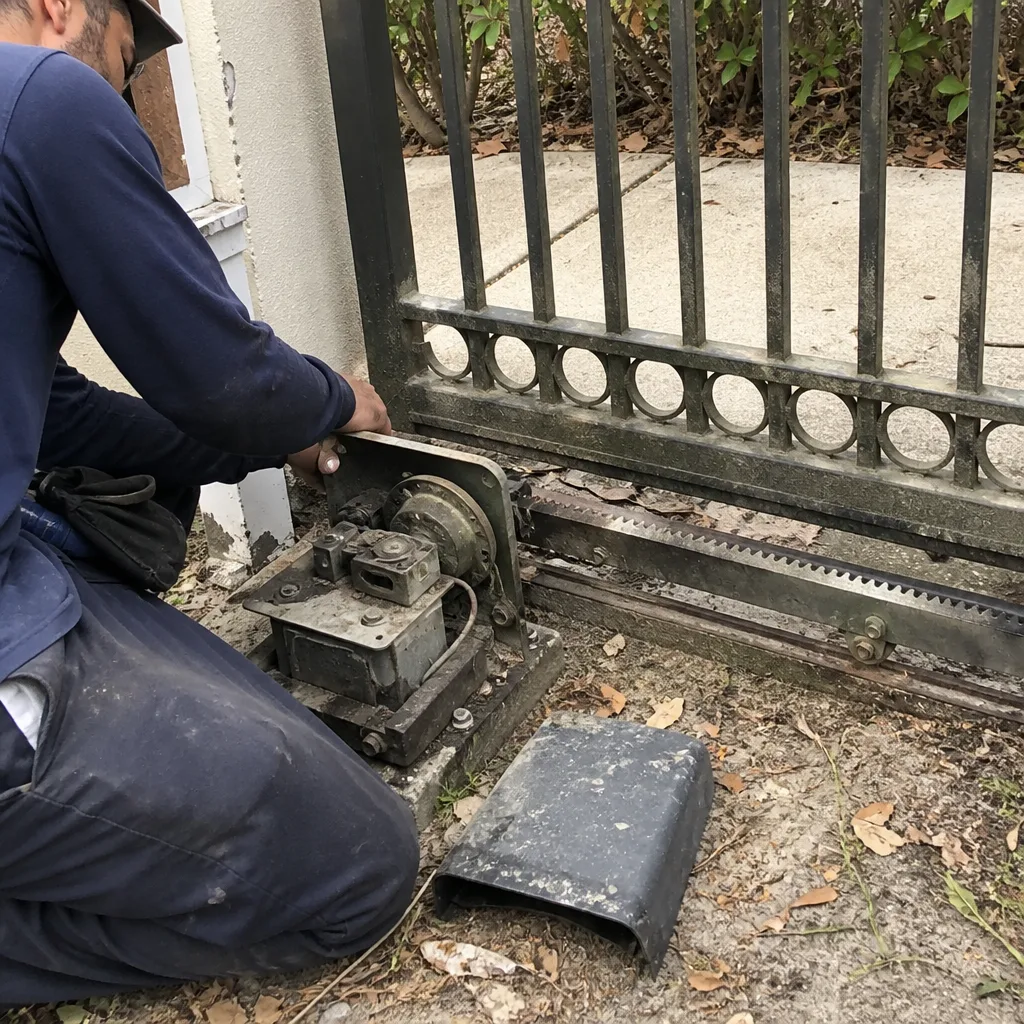
- Worn or misaligned wheels and track. Wind storms and settling soil shift gate tracks. The gate binds, scrapes, or jerks during travel. Left unaddressed, this puts strain on the motor and accelerates wear on every other component.
- Battery backup failure. Electric gates with battery backup systems often sit unused until a power outage, then fail when needed because the battery degraded in Tampa’s heat. A gate that works fine on AC but dies during an outage typically has a dead backup battery.
- Keypad and intercom failures. Sun-baked keypads crack and fail. Intercom systems corrode at the outdoor station connections. These are access-control problems rather than gate-movement problems, but they’re just as disruptive.
The repair approach matters. A generalist might replace a motor when the real problem is a corroded ground wire. A gate specialist starts by confirming the actual failure point. We work on LiftMaster, DoorKing, and Elite systems specifically, among others, which means the common failure modes for each brand are familiar to us before we even arrive.
Post-Storm Inspection: What to Check After a Named Storm
After a heavy wind event or named storm passes through Tampa, most homeowners check their roof and windows. The gate usually gets skipped, but it shouldn’t be. Wind-driven rain and debris cause specific damage that’s easy to spot if you know what to look for. Run through this checklist before calling anyone.
- Open and close the gate manually. Put the opener in bypass mode if it has one. Does the gate move smoothly or does it bind? Any new stiffness, scraping, or resistance indicates bent hardware or track misalignment.
- Look at the hinges and mounting posts. Wind pressure can shift gate posts or loosen hinge bolts. Look for fresh gaps between the gate and post, rust streaks that weren’t there before, or visible cracking around post footings.
- Check the track and wheels. Debris from the storm often gets lodged in track channels. Leaves, palm fronds, and small branches are the usual suspects. Clear anything obvious, then check that wheels sit squarely in the track.
- Inspect the control box for water. Open the control enclosure (power off first if you’re comfortable doing so) and look for standing water, condensation, or mineral staining from dried water. If the board shows corrosion or burned spots, don’t power the gate back up until a professional has looked at it.
- Test the safety sensors. With the gate clear of obstructions, try closing it. If it reverses immediately or refuses to move, storm moisture has likely gotten into a sensor or the safety loop has been damaged.
- Check the battery backup. If your system has one, test it by cutting power to the opener and attempting to open the gate. A battery that fails to hold the gate through a full open-and-close cycle needs replacement.
If anything on this list looks wrong, photos help. Take clear pictures of the damage before you call a repair service. It speeds up diagnosis and gives you a reference if the problem worsens between the call and the visit.
DIY vs. Professional: What Tampa Homeowners Can Safely Fix Themselves
Some gate maintenance is genuinely doable by a homeowner. Some is not. The line between the two matters for both safety and cost, because a DIY attempt gone wrong often turns a cheap fix into an expensive repair. For help deciding, see DIY vs Professional Gate Repair: The Tampa Homeowner’s Decision Guide.
What You Can Reasonably Do Yourself
- Lubricating hinges and wheels. Use a silicone-based or lithium grease spray. Do this twice a year, ideally in January and again in June before peak humidity. Wipe away excess to avoid attracting grit.
- Clearing track debris. After storms, remove leaves, twigs, and accumulated dirt from the gate track. A stiff brush and a leaf blower handle most of it.
- Tightening visible bolts and screws. Over time, gate hardware loosens. A socket set and some blue thread-locker on frequently loosening bolts can prevent bigger problems. If a bolt is rusted or stripped, don’t force it.
- Checking the photo eye alignment. Many sensor issues are simple misalignment. Ensure both sensors face each other directly and that nothing blocks the beam path. Clean the lenses with a soft cloth.
- Replacing remote batteries. If the gate responds to the keypad but not the remote, try fresh batteries before anything else.
What You Should Not Attempt
- Any work on the motor, control board, or internal wiring. Electric gate systems carry significant voltage, and capacitor discharge can injure even when power is off. A gate motor’s moving parts also present serious pinch and crush hazards during testing. This work belongs to someone who does it every day.
- Replacing or tensioning heavy gate hardware. Gates are heavier than they look, and a gate that falls during a hinge replacement can cause serious injury. If the gate weighs more than you can comfortably lift with one hand, don’t work on its support hardware.
- Adjusting safety loops or photo eyes connected to the control system. Incorrect adjustments can disable safety features without you realizing it, creating a hazard for kids, pets, and delivery drivers.
- Welding or structural repairs. Cracked welds on a wrought iron gate need proper equipment and technique. A bad weld fails again, usually at the worst possible moment.
There’s also the question of code and HOA rules. Many Tampa neighborhoods with gated entrances or newer subdivisions have specific requirements about who can work on gate systems, especially where access control and fire department override switches are involved. If your HOA or community association says repairs must be done by a licensed or approved contractor, that’s not negotiable. The same applies to commercial and multi-family gate systems in Tampa, where fire code compliance and liability concerns make professional service the only realistic option.
What Gate Repair Costs in Tampa
Gate repair pricing varies by the nature of the failure, but understanding the general ranges helps you evaluate quotes. These are Tampa market ranges based on typical residential work. Prices are always quoted and agreed before any work starts.
- Hinge replacement (single gate): $150 to $400, depending on hinge type and gate weight.
- Track realignment or repair: $175 to $500, depending on track length and damage extent.
- Safety sensor replacement: $120 to $300 per sensor, including alignment and testing.
- Control board replacement: $250 to $700, varying by brand and board complexity.
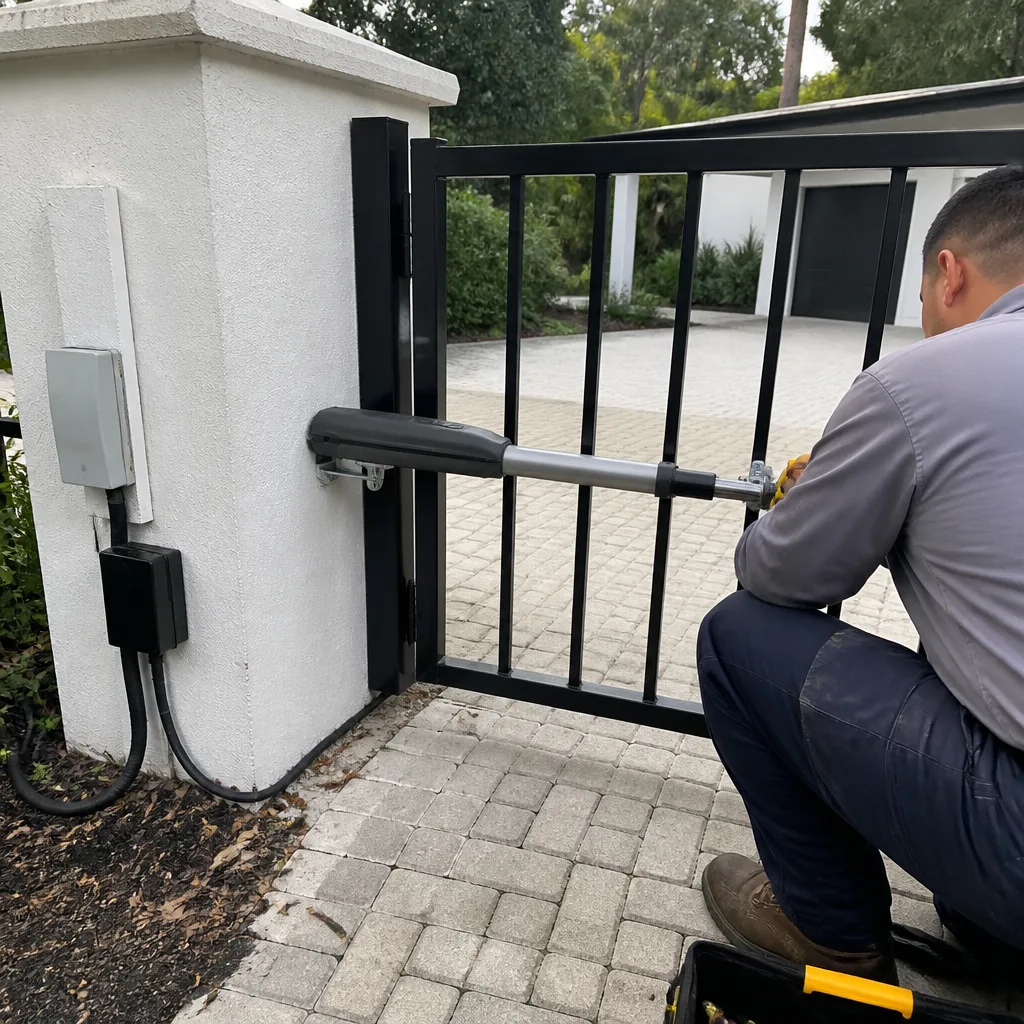
- Motor or opener replacement: $500 to $1,400, depending on brand, gate weight, and whether new safety equipment is required.
- Battery backup replacement: $100 to $300, depending on system type.
- Full diagnosis and service call: Many companies, including Tampa Gate Company home, offer free estimates on repair work, so you get a real number before committing.
Coastal Tampa locations sometimes see higher repair frequency but not dramatically different pricing. The bigger cost variable is how long a problem has been left to worsen. A sticky hinge caught early is a $200 fix. That same hinge ignored for a year can pull the gate out of alignment, burn out a motor, and turn into a $1,200+ repair.
Common Mistakes to Avoid
- Ignoring a gate that’s getting harder to move. Stiffness is always a symptom of something. The longer it’s ignored, the more components get damaged by the added strain.
- Using WD-40 on gate hinges. WD-40 is a water displacer, not a long-term lubricant. It washes out and leaves metal unprotected against Tampa’s humidity. Use silicone or lithium grease instead.
- Powering through a gate that reverses unexpectedly. That reversal is a safety feature responding to a sensor or obstruction. Forcing the gate to close by holding the button overrides the safety system and can damage the motor.
- Painting over rust on a wrought iron gate. Paint seals rust in, not out. The rust continues spreading underneath, and the problem gets worse while looking better. Rust needs to be removed or treated first.
- Replacing one part on an old system without checking the rest. A new motor on a gate with worn hinges and misaligned track just moves the failure point. The old problems stress the new component and shorten its life.
- Waiting until after the summer to address a known issue. That June problem becomes an August emergency. If you notice slow operation, odd noises, or intermittent behavior in spring, address it before peak humidity and storm season hit.
- Calling a generalist who doesn’t know your gate’s brand. Gate systems are not interchangeable. Brand-specific knowledge matters for diagnosis speed and correct parts selection. A technician who works on LiftMaster and DoorKing systems daily diagnoses faster than one seeing your gate for the first time.
When to Call a Professional
Call a gate specialist when the problem involves electrical components, motorized hardware, structural damage, or safety systems. If the gate won’t move at all, moves erratically, makes grinding or squealing sounds, or the safety sensors aren’t functioning, you’re past DIY territory. The same applies if your gate was damaged in a storm and you can see misalignment, bent metal, or water inside the control box. A gate that fails to close properly is also a security problem, not just an inconvenience, and leaving a property unsecured in Tampa overnight is a risk most homeowners don’t want to take. Gate Repair in Tampa is available from Tampa Gate Company, which offers free estimates in Tampa. Call (866) 976-0095 and describe what you’re seeing. A specialist who knows the brand of your system can usually narrow the problem down before arriving.
Frequently Asked Questions
Typical Tampa gate repairs range from $150 for a simple hinge replacement to $1,400 for a full motor replacement, with most common repairs falling between $200 and $600. The price depends on the component, the gate’s size and weight, and how long the problem has been left to worsen. Estimates are free, and the price is always quoted and agreed before any work starts. Call (866) 976-0095 for an exact quote on your specific gate.
Same-day availability depends on the nature of the problem and the current schedule. Emergency repairs for security-critical failures are prioritized when possible. The fastest way to find out is to call (866) 976-0095 and describe what’s happening with your gate.
Yes. Tampa Gate Company services LiftMaster, DoorKing, Elite, and Mighty Mule systems, along with several other major brands. Brand familiarity means faster diagnosis and correct parts selection, which matters for getting your gate back to secure, working order quickly.
In most cases, repair is the right call. Gates and openers have replaceable components, and a targeted repair costs far less than full replacement. Replacement is only the recommendation when the structural integrity of the gate itself is compromised, the repair cost approaches 60% or more of replacement cost, or the existing system is obsolete and parts are no longer available. We repair first, and we don’t push Gate Installation in Tampa unless repair genuinely isn’t the right answer.
Tampa’s summer combines daily thunderstorms, 80%+ humidity, and intense heat, all of which stress electrical components. Water intrusion into control enclosures, condensation on circuit boards, corroded connections, and heat-degraded batteries all peak during June through September. This is the most common time for Electric Gate Repair in Tampa service calls. Preventive maintenance in winter or spring significantly reduces summer failures.
Simple component repairs typically don’t require a permit in Tampa. However, new gate installations, significant structural work, and any modification involving access-control systems in gated communities or commercial properties may require permits and must meet fire code requirements. If you’re unsure, a gate specialist can tell you what applies to your specific situation. When in doubt, consult the city or county permitting office before starting any structural work.
The Bottom Line
Tampa gates fail differently than gates anywhere else. Salt air corrodes, humidity shorts out, UV bakes, and summer storms stress everything at once. The gate hardware that works fine in Phoenix gets punished here, and the homeowners who avoid the worst of it are the ones who inspect early, maintain during the winter window, and call a specialist at the first sign of trouble rather than waiting for a full failure. Whether you’re dealing with a corroded hinge on a Beach Park driveway gate, a water-damaged control board in Carrollwood, or a storm-damaged track in New Tampa, The Complete Guide to Gate Repair in Tampa can help you understand what you’re facing, and the right move is a repair service that understands both gate systems and the specific environmental pressures Tampa puts on them. If your gate is acting up, call (866) 976-0095 for a free estimate. We’ll diagnose the actual problem and give you an honest recommendation, whether that’s a repair or, in the rare cases where it makes sense, a replacement.
Written by the team at Tampa Gate Company, serving Tampa since 2013.
See the difference
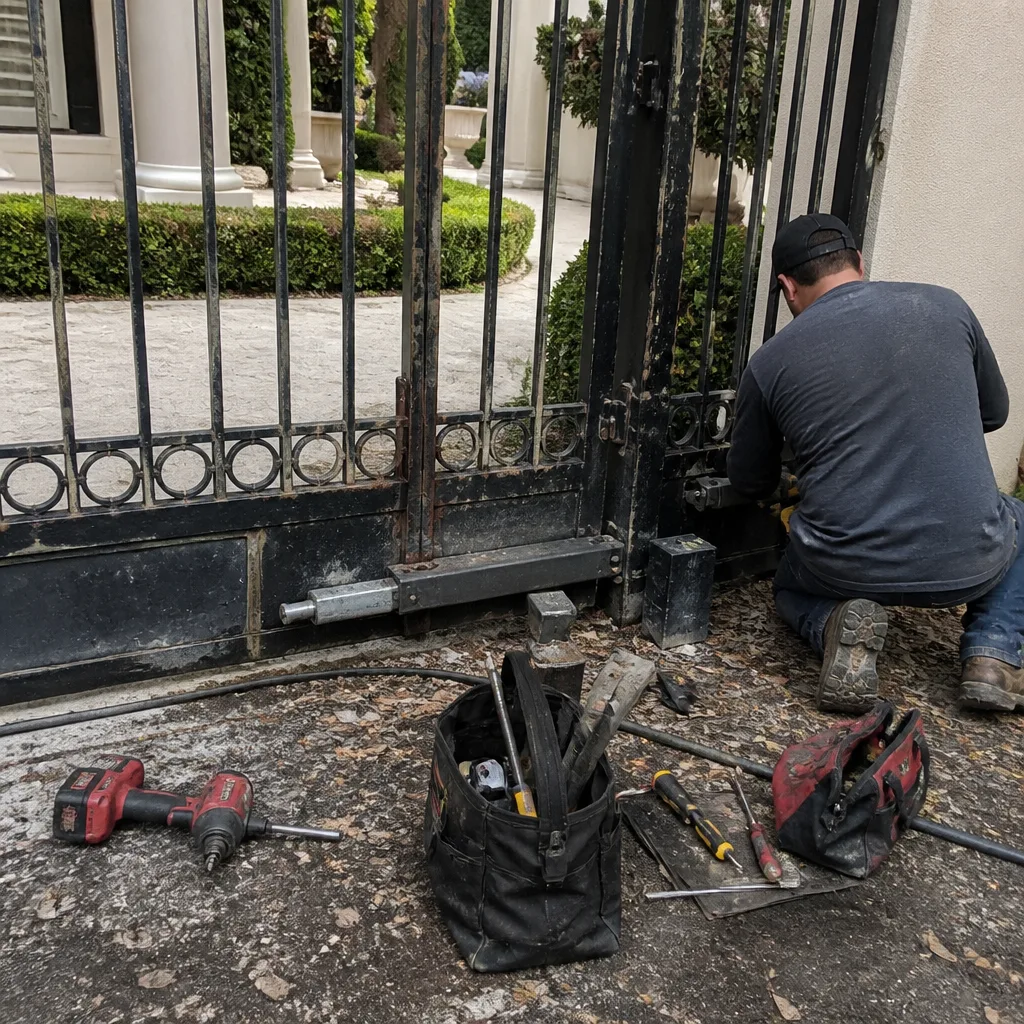 Before
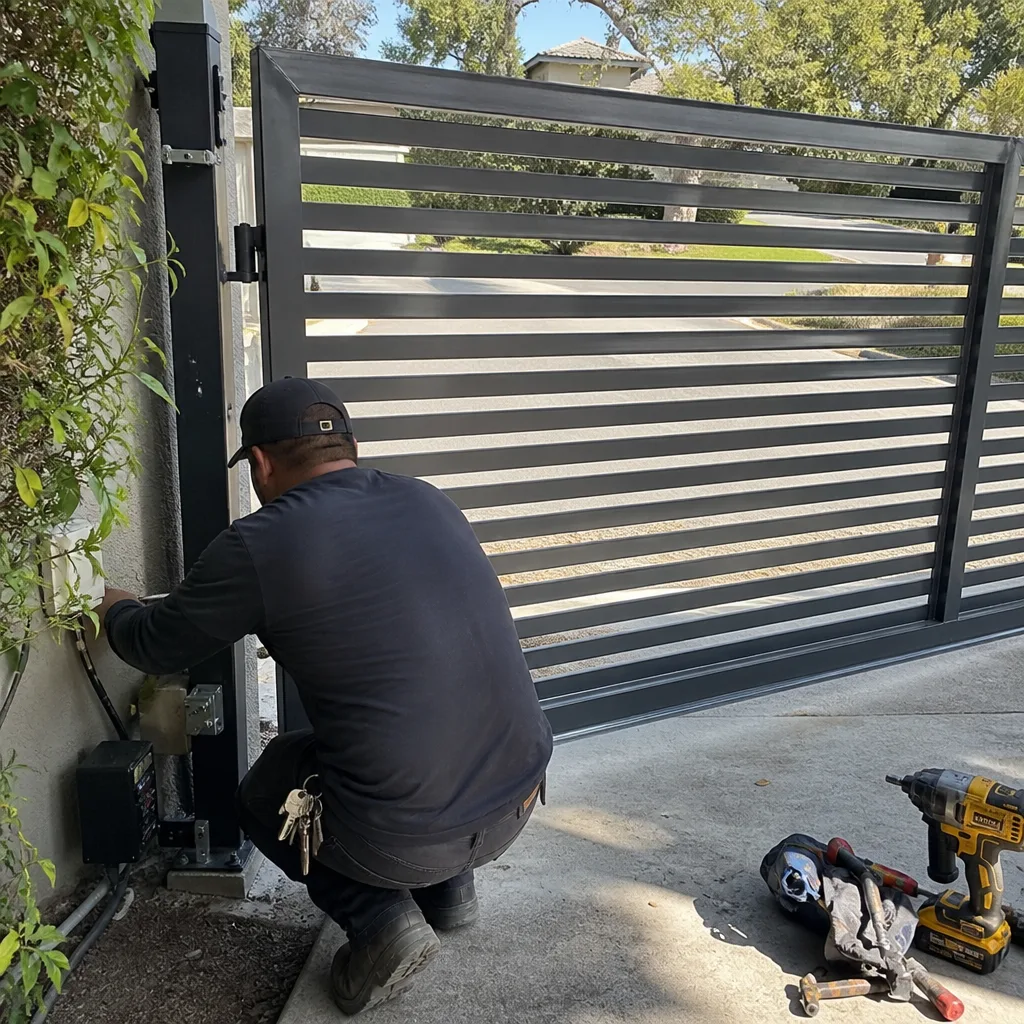 After
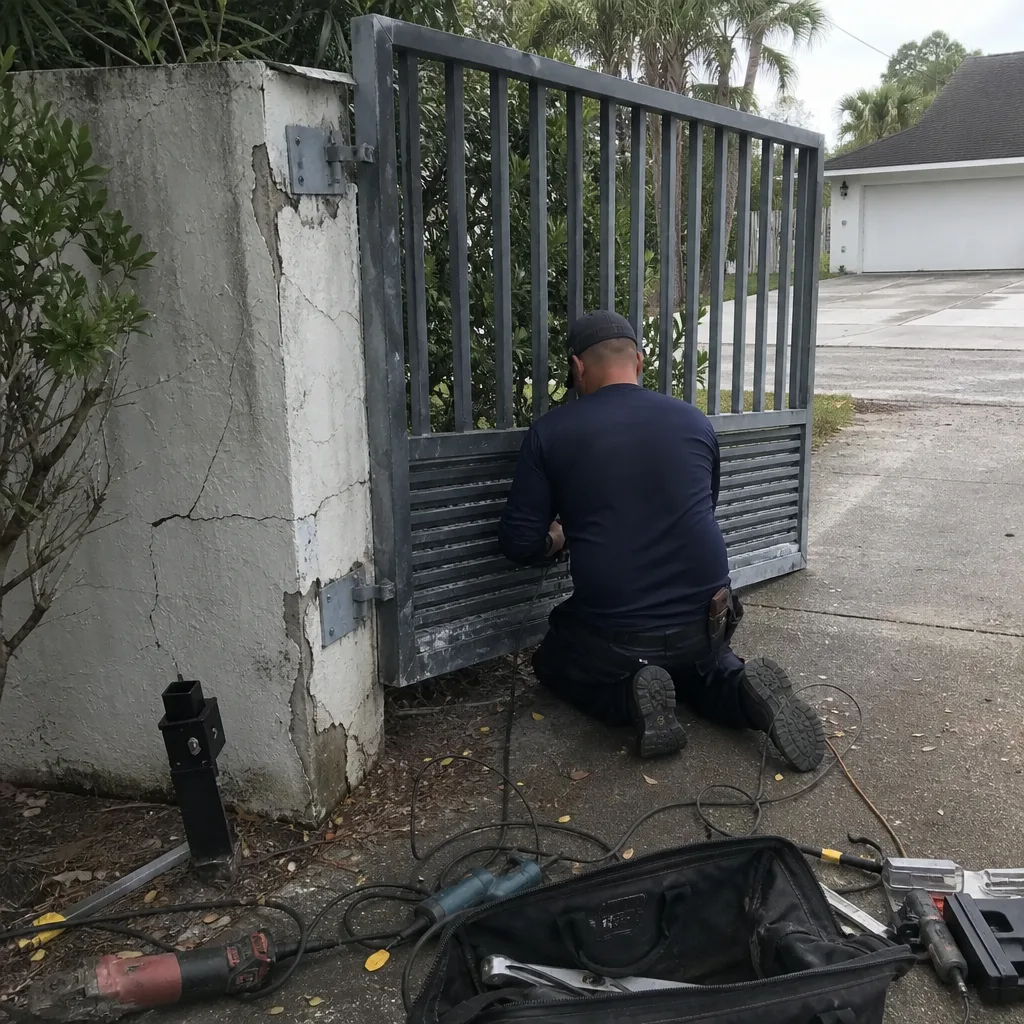 Before
 After
 Before
 After