
Last updated October 31, 2026
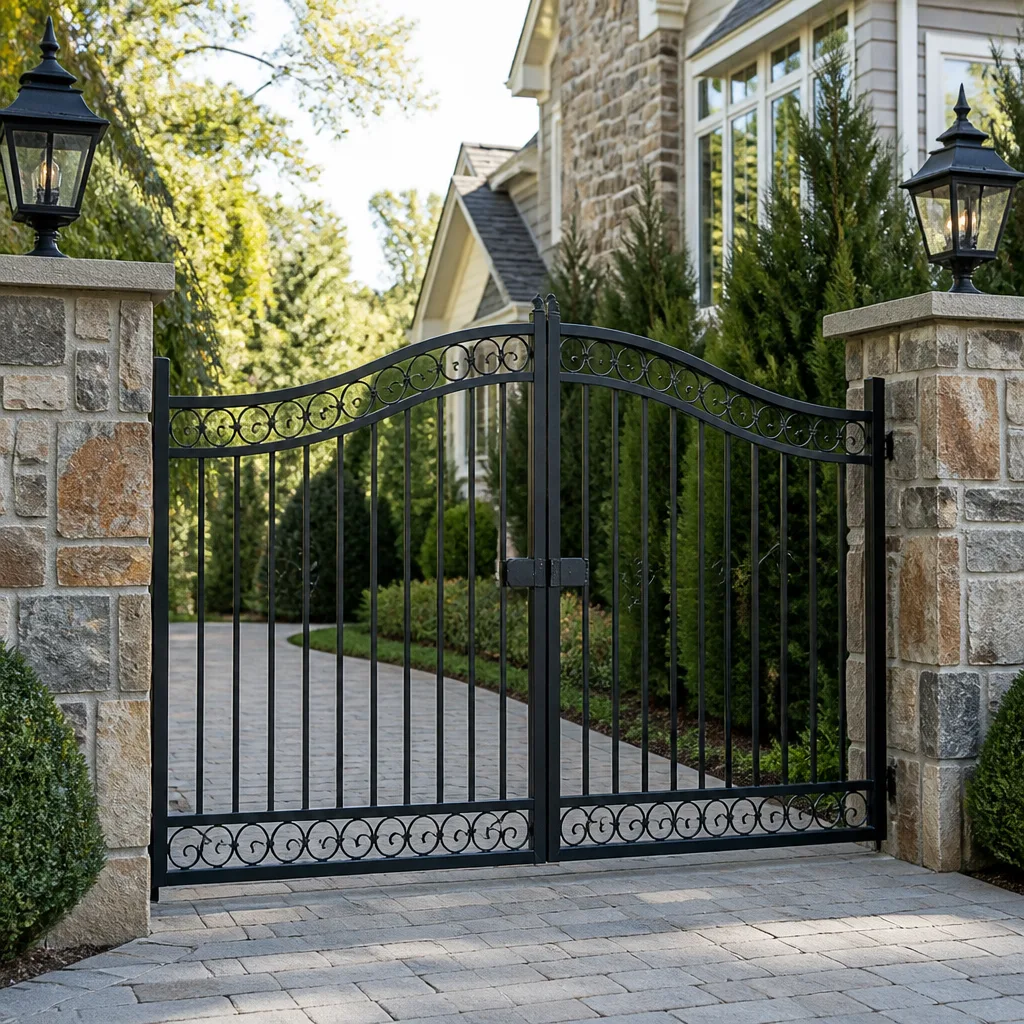 Wrought iron
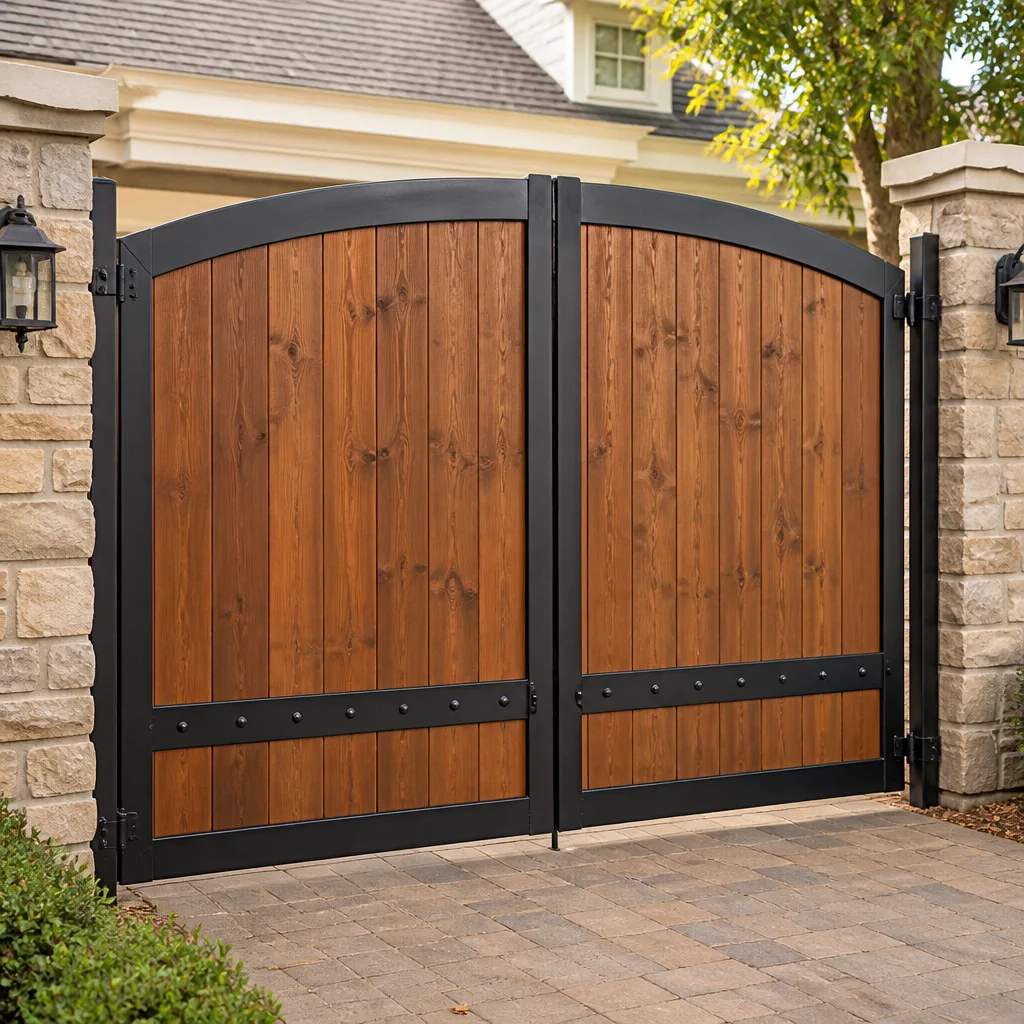 Wood & steel frame
 Farm & ranch
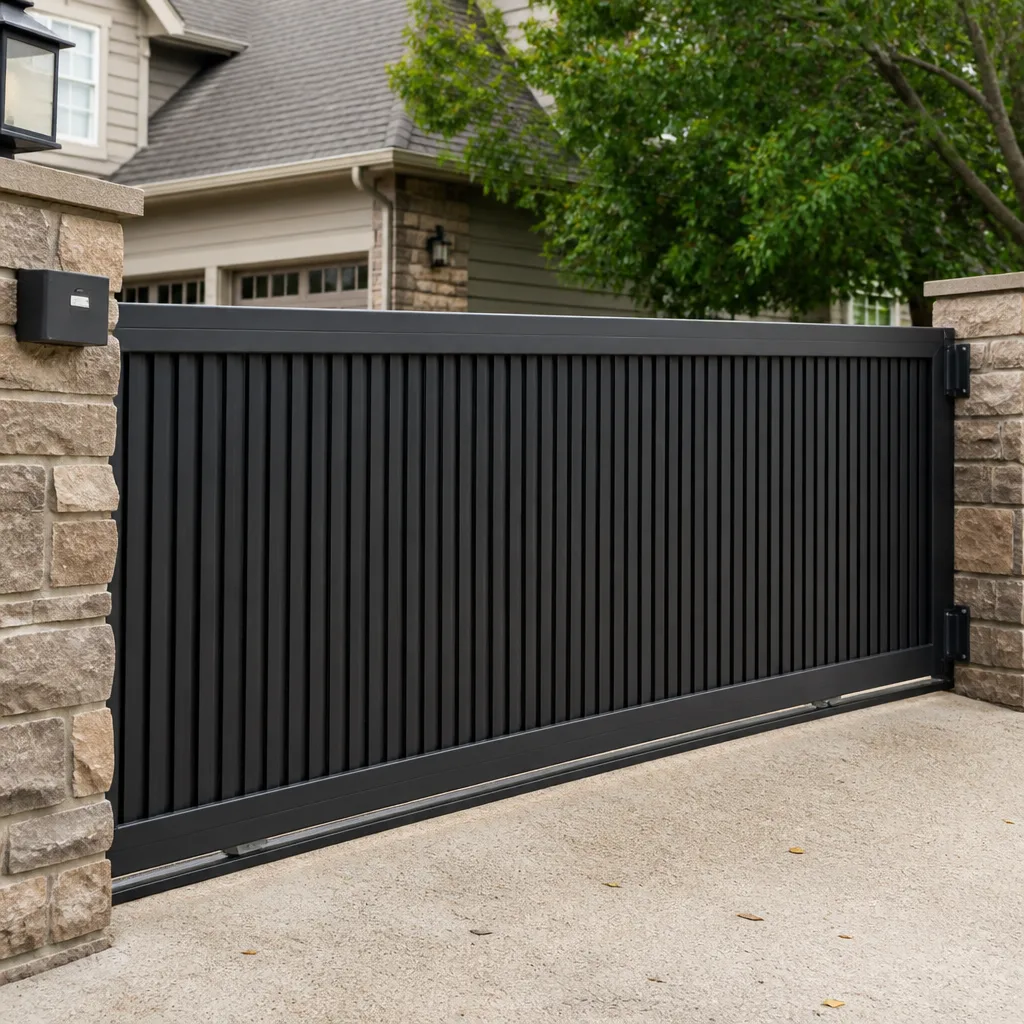 Sliding driveway gates
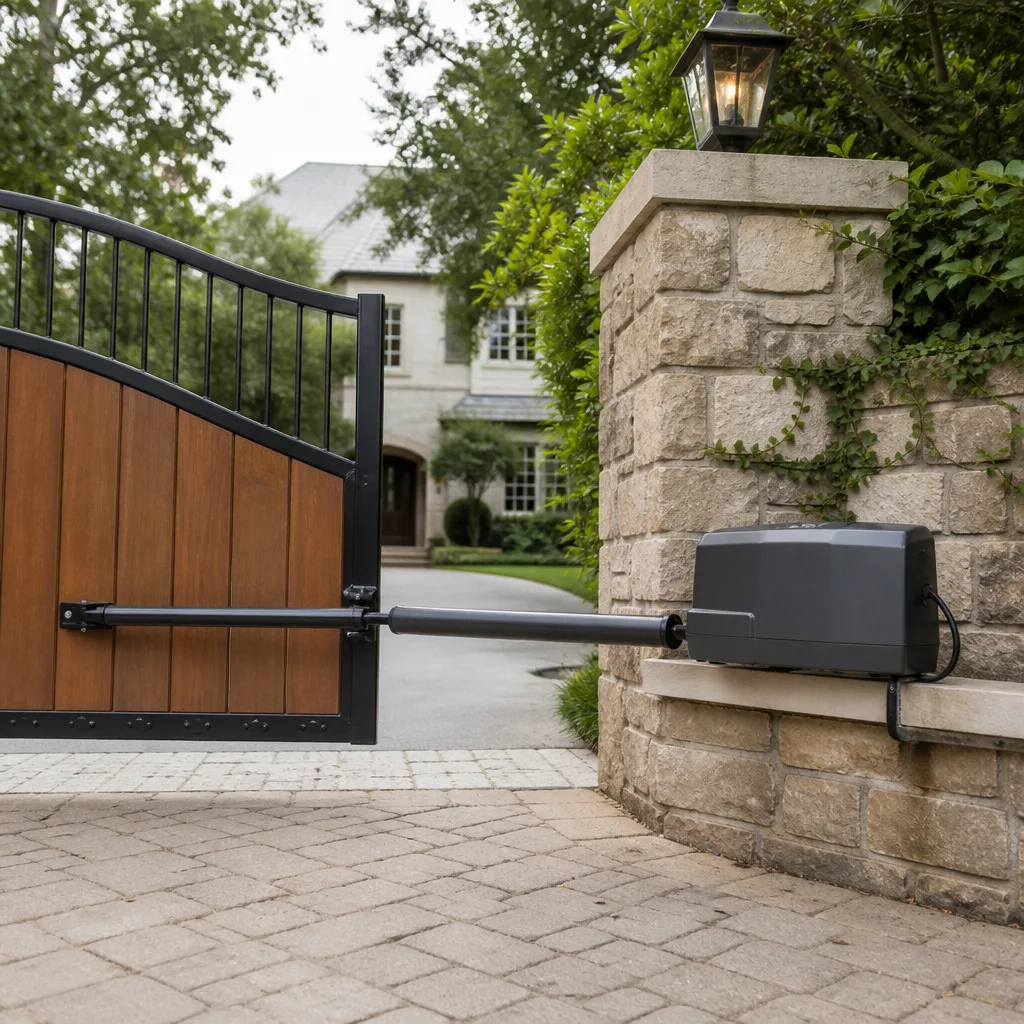 LiftMaster operators
Free on-site gate assessment - hinges, posts, and your LiftMaster or Nice gate operator checked before anything is quoted
The assessment is free and the quote is the invoice.
Get your free estimateSeasonal Gate Repair Care for Tampa: Year-Round Homeowner’s Guide
The first thing to know about gate maintenance in Tampa is that the four-season calendar most homeowners grew up with doesn’t apply here. We don’t get freezing winters that snap welds or autumns that bury tracks in leaves. What we get is a brutal six-month wet season that pushes salt air into every electrical connection and a dry season that bakes rubber seals brittle and seizes metal hinges. If you’re following a spring-summer-fall-winter checklist, you’re maintaining for a climate you don’t live in and missing the actual stress points that cause most Tampa gate failures. This guide breaks down the real seasonal threats to your gate, when they hit, and what to do about them before a small problem becomes a gate that won’t open when you’re already late. For a deeper dive, see our Complete Gate Repair Guide for Tampa Homeowners.
Quick Answer
Seasonal gate care in Tampa comes down to two cycles: wet-season preparation from May through June focused on sealing electrical components and clearing drainage, and dry-season maintenance from October through November focused on lubrication, hinge adjustment, and rubber component replacement. Most gate failures in Tampa happen when homeowners skip the pre-wet-season inspection and discover corroded connections or blocked drainage during the first heavy storm.
Styles & brands we work with
Table of Contents
- The Wet Season Protocol: June Through September
- Post-Storm Recovery: What to Check After Heavy Rain
- Dry Season Tasks: October Through May
- Adjusting Gate Operator Sensitivity for Tampa Heat
- Lightning and Electrical Care in Florida’s Strike Zone
- Brand-Specific Seasonal Care Notes for Tampa Systems
- Common Mistakes to Avoid
- When to Call a Professional
- Frequently Asked Questions
The Wet Season Protocol: June Through September
Tampa’s wet season isn’t just rainy. It’s a daily cycle of afternoon thunderstorms, 90-degree heat, and humidity that rarely drops below 70 percent even at night. For a gate, that environment is an endurance test. Moisture creeps into control boxes, condenses on circuit boards, and accelerates rust on any exposed steel. Add the salt air from Tampa Bay and you have a corrosion environment closer to a coastal marina than a typical Florida backyard.
The wet season protocol is about getting ahead of that moisture. Here’s the sequence we recommend in Gate Repair in Tampa work:
- Inspect and reseal the control box. Open the operator housing and look for any signs of past water intrusion: rust staining, white mineral deposits, or condensation marks on the circuit board. If the gasket is flattened or cracked, replace it before the first tropical storm. A tube of marine-grade silicone sealant is a cheap insurance policy against a $400 board replacement.
- Check drainage around the gate posts and track. Shifted soil from spring rains can create low spots where water pools against the gate’s foundation. Standing water wicks up into the post and rusts the base from the inside. Grade the soil away from the posts or add a French drain if you’re seeing pooling after a normal afternoon storm.
- Test the safety sensors and loop detectors. Moisture in underground loop wiring is one of the most common wet-season failures in Tampa. Run the gate through a full open-close cycle and watch for hesitation, reversal, or failure to respond. If the gate acts up only after rain, the loop wiring is suspect.
- Lubricate with a wet-rated product. Standard lithium grease washes out in Tampa’s downpours. Use a marine-grade or waterproof lubricant on hinges, rollers, and the chain or belt drive. Reapply monthly during peak wet season.
- Trim vegetation around the gate and photo eyes. Wet season is growing season. Branches that clear the gate in May will be dragging across sensors by July. Keep a 12-inch clear zone around the entire gate path.
In our experience, the homeowners who do this protocol in late May are the ones who still have a working gate in August. The ones who wait until the first storm are usually calling us with a dead operator and a gate stuck half open.
Post-Storm Recovery: What to Check After Heavy Rain
Any storm that brings sustained winds over 40 mph or more than three inches of rain in a few hours deserves a post-storm gate inspection. Tampa gets several of these every year, and the damage pattern is almost always the same. Wind stresses the gate’s attachment points and forces debris into the track. Rain finds every gap in the electrical enclosure.
For automated gates, run this checklist within 24 hours after the storm passes:
- Visually inspect the gate in the closed position. Look for sagging at the free end, fresh rust streaks, or bent track sections. A gate that was perfectly level before the storm and droops two inches after means the post shifted or a hinge pin bent.
- Open the operator housing and check for water. Even a well-sealed box can let moisture in when driven rain hits the seams at 50 mph. If you find condensation, leave the cover open on a dry day and let everything air out before running the motor. A wet board that gets powered up can short instantly.
- Clear debris from the track, rollers, and chain path. Palm fronds, roof shingles, and random landscaping debris end up in gate tracks after every significant storm. Remove it before cycling the gate. A single stick jammed in the track can strip the gear or overload the motor.
- Test the gate manually first. Disengage the operator and push the gate by hand through a full cycle. If it binds or resists, there’s physical damage that will burn out the motor if you force it. Never power up an operator on a gate that won’t move freely by hand.
- Cycle the gate on automatic and listen. Grinding means debris in the gearbox or a misaligned chain. A hesitation near the close position usually points to a damaged safety edge or photo eye. Address these issues before they become full failures.
For manual gates, the post-storm check is simpler but just as important. Walk the gate through its full arc and watch the hinges. Any that are rocking in their mounts or showing fresh rust at the welds need attention before the next wind event. A loose hinge on a heavy gate concentrates stress on the remaining attachment points, and the next storm can tear it loose entirely.
If any part of this checklist turns up damage you’re not equipped to fix, that’s the time to call our Gate Repair services team. We’d rather diagnose a bent track than replace a stripped operator, and the repair is always cheaper when you catch it early.
Dry Season Tasks: October Through May
Tampa’s dry season is the six or seven months when the daily thunderstorms stop and the air finally drops below swamp conditions. It’s pleasant for people and rough on gates in a completely different way than the wet season. The failure modes shift from water intrusion to thermal stress, dried-out rubber, and seized metal-on-metal joints.
The dry season starts with the first significant cool front, usually in October, and runs until the afternoon storms return in late May or early June. Here’s what needs attention during those months:
- Re-lubricate everything that went through the wet season. The waterproof lubricant you applied in May is long gone by October. Hinges, rollers, and bearing points need fresh lubricant before the dry air sets in. Dry hinges wear exponentially faster than lubricated ones, and the play they develop gets magnified every time the gate cycles.
- Inspect rubber components for cracking. The safety edge, photo eye covers, and any weatherstripping or gaskets take a beating from the wet-season UV and the dry-season desiccation. Tampa’s sun is relentless even in winter, and rubber that spent June through September wet and hot dries out and cracks by January. Replace brittle safety edges before they stop detecting obstructions.
- Check the gate’s alignment and adjust hinges. The wet-dry cycle causes soil around the posts to expand and contract. A gate that was perfectly plumb in September can be noticeably off-level by February. Tighten hinge bolts, check that the gap between the gate and the post is consistent top to bottom, and adjust the latch if it’s not engaging cleanly.
- Inspect the chain or belt tension. Temperature swings change metal dimensions. A chain that was snug at 85 degrees will be slacker at 50 degrees, and a slack chain jumps teeth on the sprocket. Check the tension and adjust per the manufacturer’s spec for your system.
- Test the manual release mechanism. Dry season is the best time to verify that your gate’s manual release actually works. If the power goes out during a summer storm and the release is seized from six months of disuse, you’re stuck with a gate that won’t open by hand. Lubricate the release mechanism and run it through a full disengage-reengage cycle.
One more thing that’s specific to Tampa’s dry season: grass fires and controlled burns. Smoke and ash don’t affect gates mechanically, but if you live in a neighborhood with a lot of open acreage nearby, dry-season winds can coat sensors with fine ash that degrades their performance. A quick wipe of the photo eyes and safety edges every month costs thirty seconds and prevents most phantom reversal complaints.
Adjusting Gate Operator Sensitivity for Tampa Heat
Gate operators have sensitivity settings that control how much resistance the motor tolerates before it reverses direction. These settings are set at the factory for average conditions, but Tampa doesn’t do average. A gate that’s smooth and free-moving at 70 degrees on a January morning can bind noticeably at 95 degrees on a July afternoon because the metal has expanded and the joints have less clearance.
Most operators from brands like LiftMaster, FAAC, and BFT have adjustable obstruction sensitivity, either through a physical dial on the control board or through a menu on a digital interface. The goal is to set it high enough that the gate doesn’t false-trigger reversal from normal seasonal expansion, but low enough that it still stops if a child or pet gets in the path. That’s a narrow window and it moves with the thermometer.
Here’s how we approach it on most systems:
- Establish a baseline. On a moderate day, ideally between 70 and 80 degrees, run the gate through several cycles and adjust the sensitivity until it operates smoothly with no reversals when empty and stops reliably when an obstruction is placed in the path.
- Retest during a heat spike. When Tampa sits in the 90s for a solid week, run the gate again. If it’s reversing for no reason, the thermal expansion is tripping the sensor. Increase the obstruction threshold slightly and retest with an actual obstruction to make sure it still catches a real blockage.
- Retest during a cold snap. Tampa occasionally drops into the 40s, and a gate that’s dialed for summer heat will run a little looser in the cold. That’s usually fine, but verify the gate still stops on obstruction. A gate that’s too loose in cold weather is a safety hazard.
- Document the settings. On systems with a digital interface, note the setting values in the manual or on a label inside the control box. Seasonal adjustments are much easier the second year when you know what worked the first year.
If you have a Mighty Mule or Ghost Controls system, the sensitivity adjustment is typically on the board itself, and the owner’s manual covers the exact procedure. If you’re not comfortable opening the control box, we handle this as a routine seasonal service call. It takes about twenty minutes and extends the life of the operator significantly.
Lightning and Electrical Care in Florida’s Strike Zone
Florida leads the continental United States in lightning strikes per square mile, and the Tampa Bay area sits in the middle of the action. The corridor between Tampa and Orlando is nicknamed “Lightning Alley” for good reason. For an automated gate, that’s not an abstract statistic. It’s the reason control boards fail even when the physical gate is undamaged.
A lightning strike doesn’t have to hit your gate directly. A strike a quarter mile away can induce a voltage spike in your gate’s wiring that fries the control board, the safety sensors, or the transformer. Most gate boards fail from induced surges, not direct hits. The wiring that runs from the house to the operator acts like an antenna, picking up the electromagnetic pulse of a nearby strike and sending it into components that are designed for twelve or twenty-four volts, not several thousand.
Year-round electrical maintenance in Tampa should include these steps:
- Install a surge protector on the gate’s power supply. A basic whole-gate surge suppressor is inexpensive and takes fifteen minutes to wire in. Match the suppressor to your operator’s voltage and amperage. This is the single highest-return investment you can make in gate electrical longevity in this region.
- Verify the grounding connection. The operator’s ground wire should connect to a proper grounding rod, not just a conduit or a water pipe. Corrosion can eat through ground connections over time, and a bad ground means the surge has nowhere to go except through your board. Check the ground connection at least once a year, and clean any corrosion from the lug.
- Inspect low-voltage wiring for insulation cracks. The wiring for keypads, safety sensors, and loop detectors is exposed to heat, humidity, and UV. Cracked insulation allows moisture in and creates a path for stray current. Replace any wiring that shows brittleness or cracked insulation, especially in the area where it exits the ground or passes through the gate frame.
- Consider a battery backup. In Tampa, the power goes out for many reasons: storms, grid failures, accidents. A gate with battery backup continues to operate through outages that would otherwise leave your property inaccessible. Newer operators from BFT and LiftMaster support integrated battery modules.
The lightning risk is one area where we consistently see homeowners skipping maintenance until they’ve already lost a board. A surge protector and a good ground connection cost a fraction of a replacement control board, and in this part of Florida, the odds are not in your favor if you leave the system exposed.
Brand-Specific Seasonal Care Notes for Tampa Systems
Not all gate operators respond to Tampa’s climate the same way. We work on systems from all major brands, and over the years we’ve learned which ones need extra attention in specific seasons. Here are the patterns we see with a few of the most common systems in the Tampa market.
LiftMaster residential swing and slide operators are workhorses but their plastic enclosures can warp slightly in direct Florida sun. We recommend checking the cover seals on LiftMaster units twice during the wet season and keeping the unit shaded if possible. The battery backup units also drain faster in high heat, so test the battery more frequently between April and October.
FAAC hydraulic systems are popular for heavier commercial gates and hold up well to Tampa’s heat, but the hydraulic fluid thickens in the occasional cold snap, which changes the gate’s speed and can trip the close limit. If you have a FAAC 400 or similar hydraulic system, run a full cycle test in December or January and listen for sluggish movement. The fluid should be changed every two to three years regardless of season, and more often if the system runs multiple cycles per day.
Mighty Mule systems are the most common DIY-installed gates in Tampa, and they see a lot of wet-season failures because they’re often mounted with minimal weather protection. The Mighty Mule control board is well-sealed but the wiring connections at the terminal block corrode quickly in humidity. A yearly inspection of those connections, with a dab of dielectric grease on each terminal, prevents most failures. We recommend this for every Mighty Mule owner in the area, especially those near the bay.
BFT operators are common on newer Tampa installations and handle the wet season well, but their photo eyes are sensitive to the dry-season dust and the algae growth that happens on the eye covers in humid weather. Clean the photo eye lenses monthly during the wet season and watch for reduced sensitivity during dry, dusty periods, especially on properties near unpaved roads or construction areas. If you have one of these systems and need Electric Gate Repair in Tampa, we can diagnose board, motor, and sensor issues on the first visit.
For any of these brands, the same pattern applies: regular attention beats reactive repair. Knowing what your specific system is prone to in this climate is half the battle.
Common Mistakes to Avoid
- Using automotive lubricant on gate parts. Automotive greases are designed for sealed environments and wash out quickly in Tampa rain. Use a marine-grade or waterproof product rated for exposed outdoor use, or you’ll be re-lubricating every two weeks.
- Testing the gate only after it fails. The most expensive gate repairs in Tampa are the ones that start as five-minute fixes. A loose hinge bolt, a corroded terminal, a low battery. Set a calendar reminder for May and October and inspect before the season turns, not after the gate stops responding.
- Ignoring the safety edge after a storm. The rubber safety edge on the gate’s leading edge gets battered by wind, stored water, and debris. A cracked edge that no longer detects an obstruction turns a safety feature into a liability. Inspect it after every significant storm and replace it at the first sign of cracking.
- Painting over rust without addressing the cause. Rust on a Tampa gate is usually the result of standing water against the metal, not simple oxidation from air exposure. Grinding and painting over the rust without fixing the drainage issue means the rust comes back within a season, and this time it’s deeper in the metal.
- Skipping the manual release test. Homeowners discover their manual release doesn’t work exactly when they need it most: during a power outage in a storm. Test the release mechanism every time you do seasonal maintenance, and lubricate the mechanism with a penetrating lubricant rather than grease, which hardens in the dry season.
- Setting the operator sensitivity once and forgetting it. Tampa’s temperature range is enough to change how your gate moves through its arc. A setting that worked in March may cause false reversals in August. Recheck sensitivity every season change and adjust before the operator burns out from repeated reversal cycles.
- Letting vegetation grow into the gate path. In Tampa’s wet season, a small vine grows into a gate-obstructing vine in a matter of weeks. Vegetation interfering with the photo eyes creates phantom reversals, damages the safety edge, and leaves scratches on the gate surface. Keep a clear zone around the entire gate arc.
When to Call a Professional
Most of the maintenance in this guide is doable for a homeowner who’s comfortable with basic tools and has access to the owner’s manual. But there are situations where you’re better off calling a specialist. If you open the control box and see burned components, corrosion on the board, or water inside the housing, don’t power it back up. That’s a diagnosis and replacement job, and a Tampa Gate Company home service call gets it sorted without the guesswork. If the gate has shifted on its posts and you can see movement in the hinges or the post itself, that’s structural, not a maintenance item. If you’re facing anything involving the main spring or torsion assembly, stop and call us. Those are under enormous tension and the failure mode is dangerous. Tampa Gate Company offers free estimates in Tampa, and we’d rather look at a problem than have a homeowner risk an injury or make the damage worse. Call (866) 976-0095 if you’re unsure.
Frequently Asked Questions
Twice a year is the minimum for Tampa’s climate: once in May before the wet season begins, and once in October before the dry season sets in. If your gate is coastal or near Tampa Bay with direct salt air exposure, add a mid-wet-season inspection in August. Gates that run more than ten cycles per day, like those on multi-unit properties, may need quarterly attention. Our team at Gate Installation in Tampa recommends setting calendar reminders for early May and early October so the maintenance happens before the season, not during it.
Seasonal maintenance visits in Tampa typically range from $100 to $250 depending on the system type, the number of gates, and whether parts like seals or safety edges need replacement. Most homeowners spend less than $400 per year on preventive maintenance, which is a fraction of the $600 to $1,200 cost of replacing a control board or operator that failed from neglect. Call (866) 976-0095 for an exact quote; estimates are free.
Yes. Storm damage to gates is a priority service category, and we schedule assessments as quickly as possible after major weather events. A gate stuck open after a storm is a security problem, and a gate stuck closed is an access problem. Call (866) 976-0095 and we’ll get you on the schedule fast.
Electric gates need everything a manual gate needs plus electrical care: control board inspection, sensor testing, surge protection verification, and seasonal sensitivity adjustment. A manual gate only needs the mechanical items like lubrication, hinge inspection, and rust treatment. Most Tampa homes with gates have electric systems, and those are the ones that fail most often without preventive maintenance.
The most common seasonal failure is water intrusion into the control box during the wet season, followed by corroded terminal connections from months of high humidity. Both are preventable with a proper gasket seal, sealed wiring connections, and a surge protector. We see this pattern across all brands we service, including Mighty Mule, LiftMaster, and FAAC systems.
The right answer depends on the gate’s age, the cost of the current repair, and the condition of the structural components. As a repair-first company, we recommend replacement only when the gate’s frame or posts are structurally compromised, or when the accumulated repair costs over the next two years would approach the cost of a new system. We’ll give you an honest assessment and a written price for either path. Call (866) 976-0095 for a free evaluation.
The Bottom Line
Gate care in Tampa isn’t about following a generic seasonal checklist. It’s about understanding the two patterns that actually govern how gates fail here: wet-season moisture attacking electrical systems and corrosion, and dry-season heat and desiccation attacking mechanical joints and rubber components. If you inspect and seal before the wet season, inspect and lubricate before the dry season, and keep your surge protection and grounding current, you’ll avoid most of the failures we see. The rest comes down to catching small problems before they compound. Twice a year is enough. Stick to the calendar, and your gate will outlast most of its neighbors. For more guides & resources, visit our blog.
Written by the team at Tampa Gate Company, serving Tampa since 2013.
See the difference
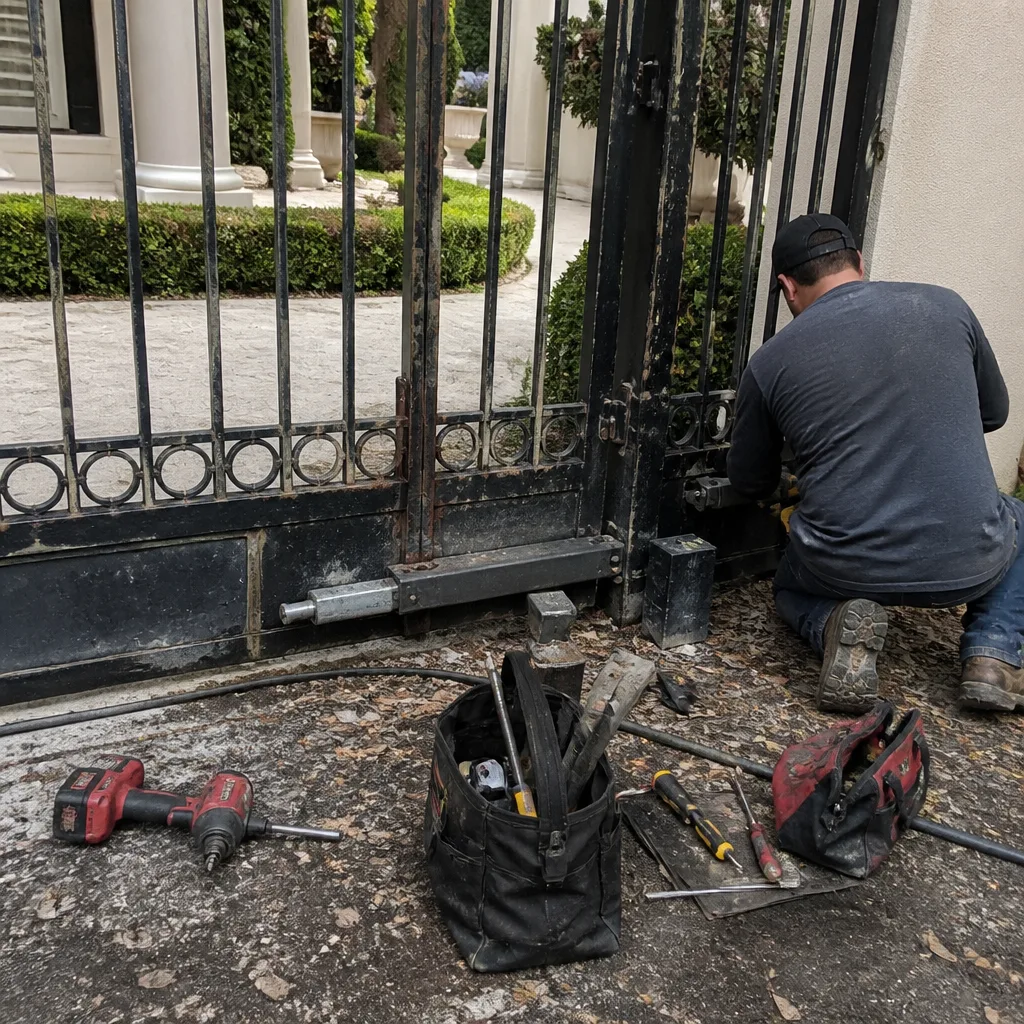 Before
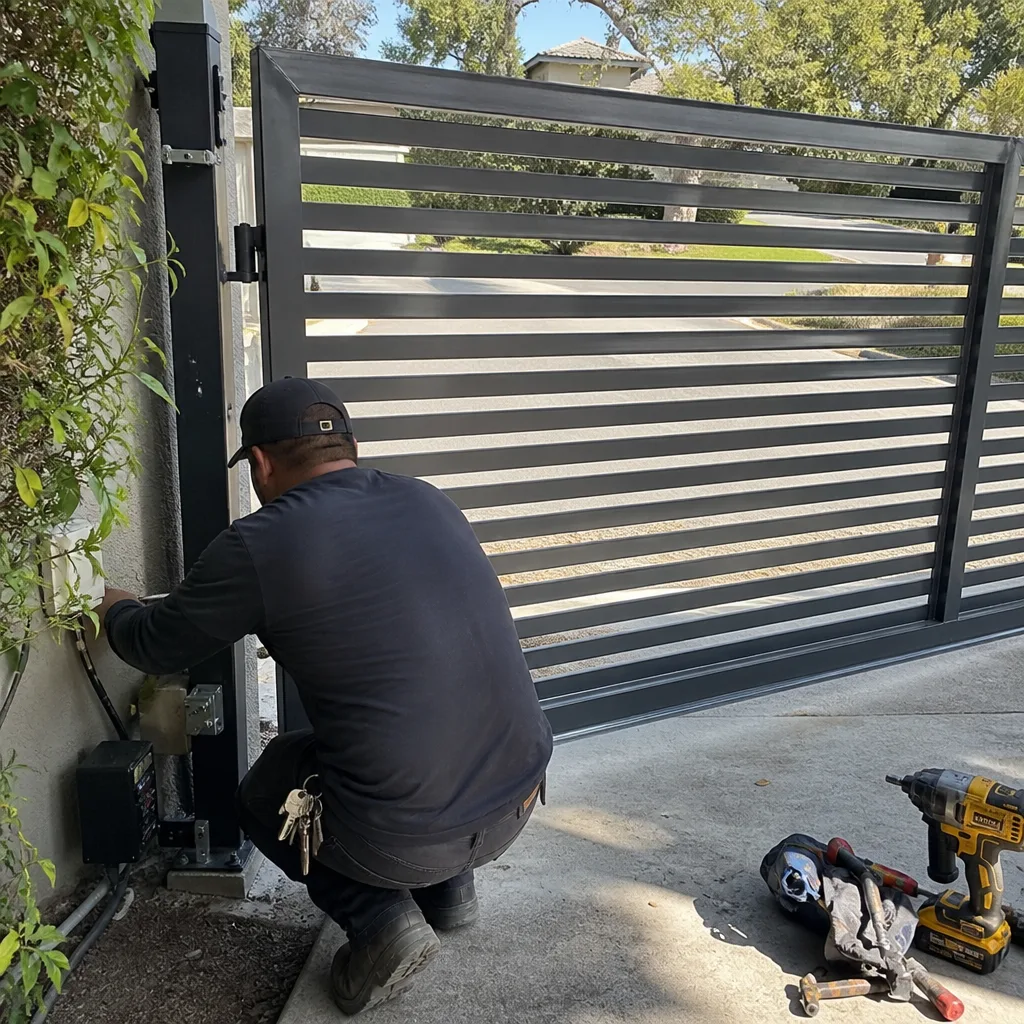 After
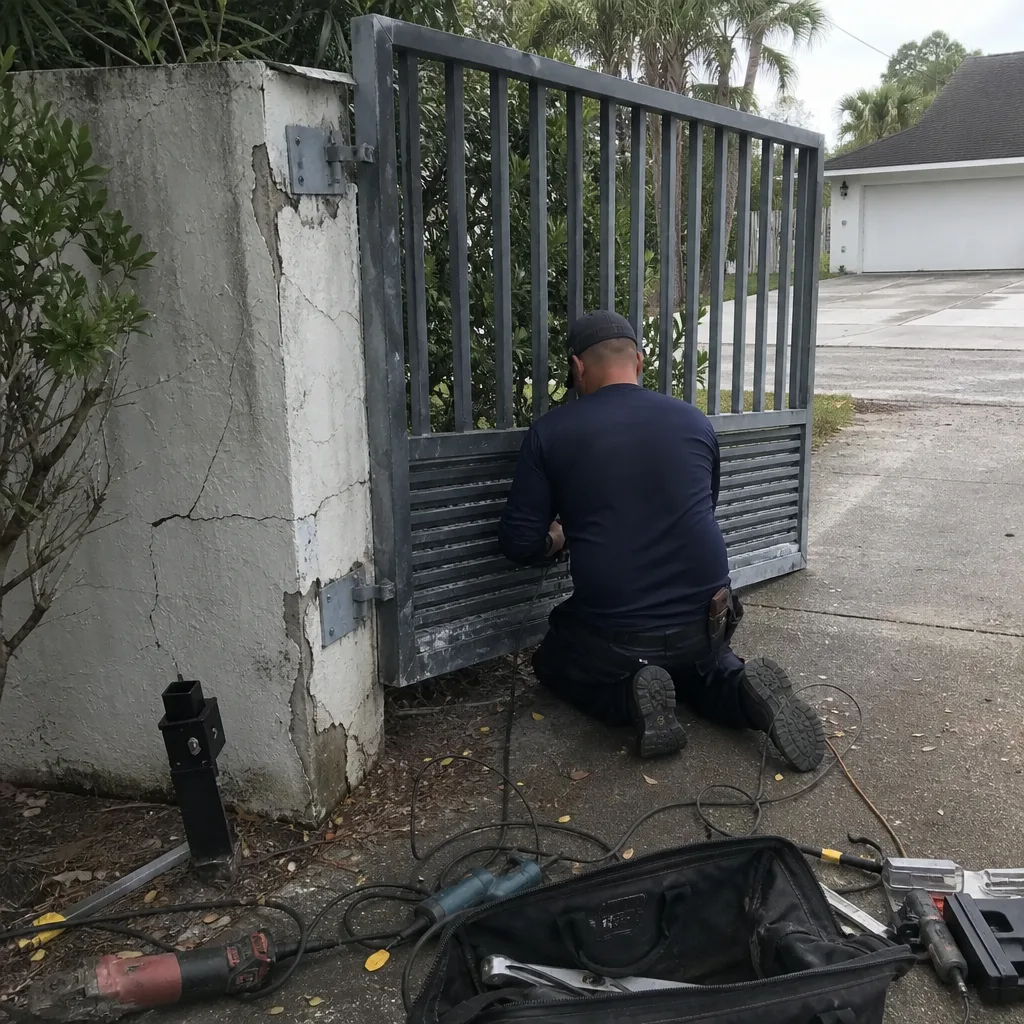 Before
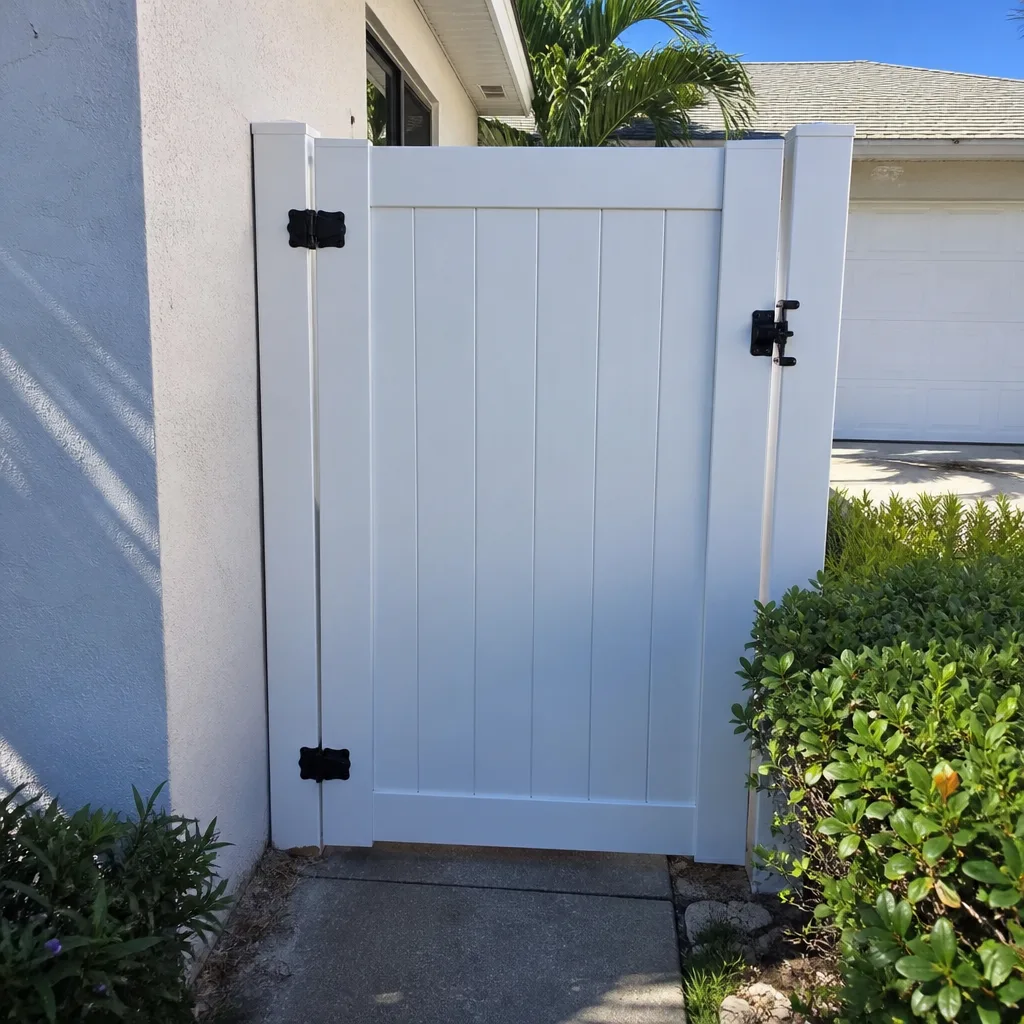 After
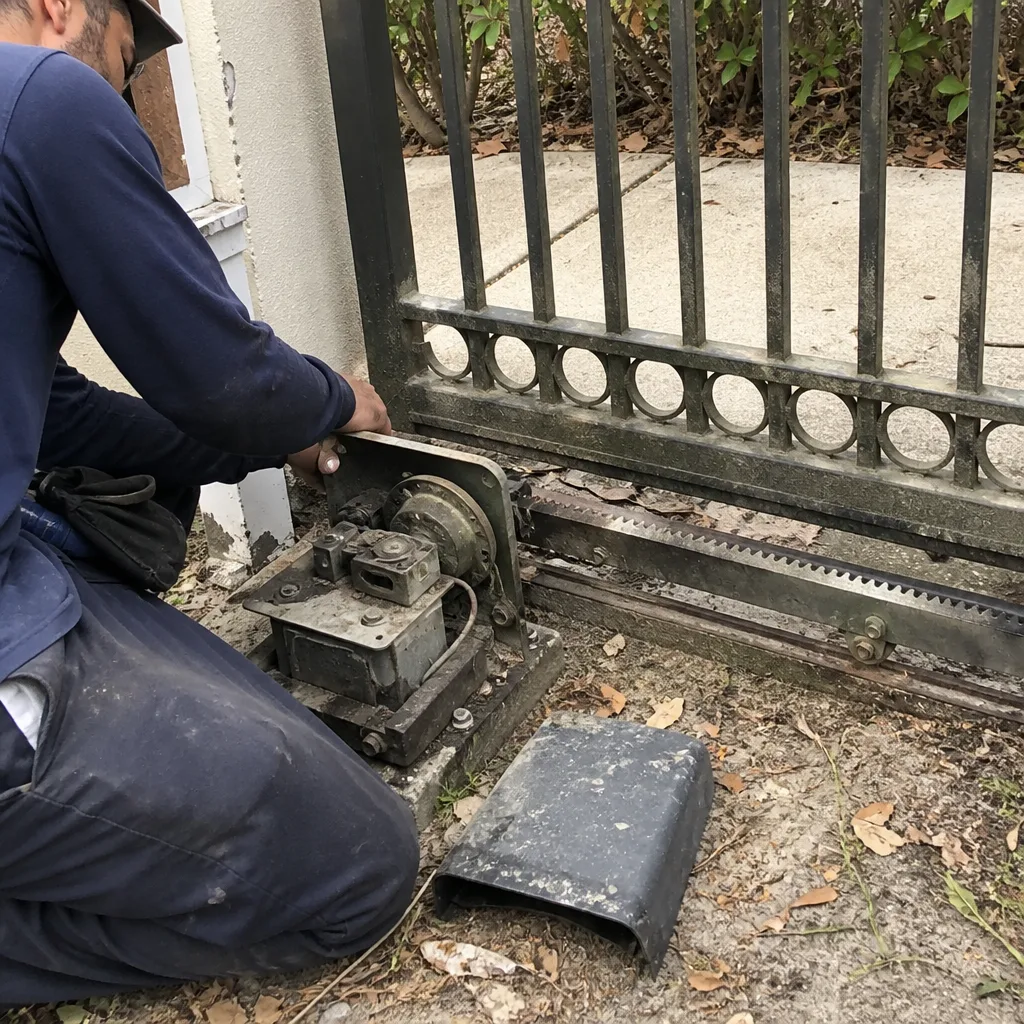 Before
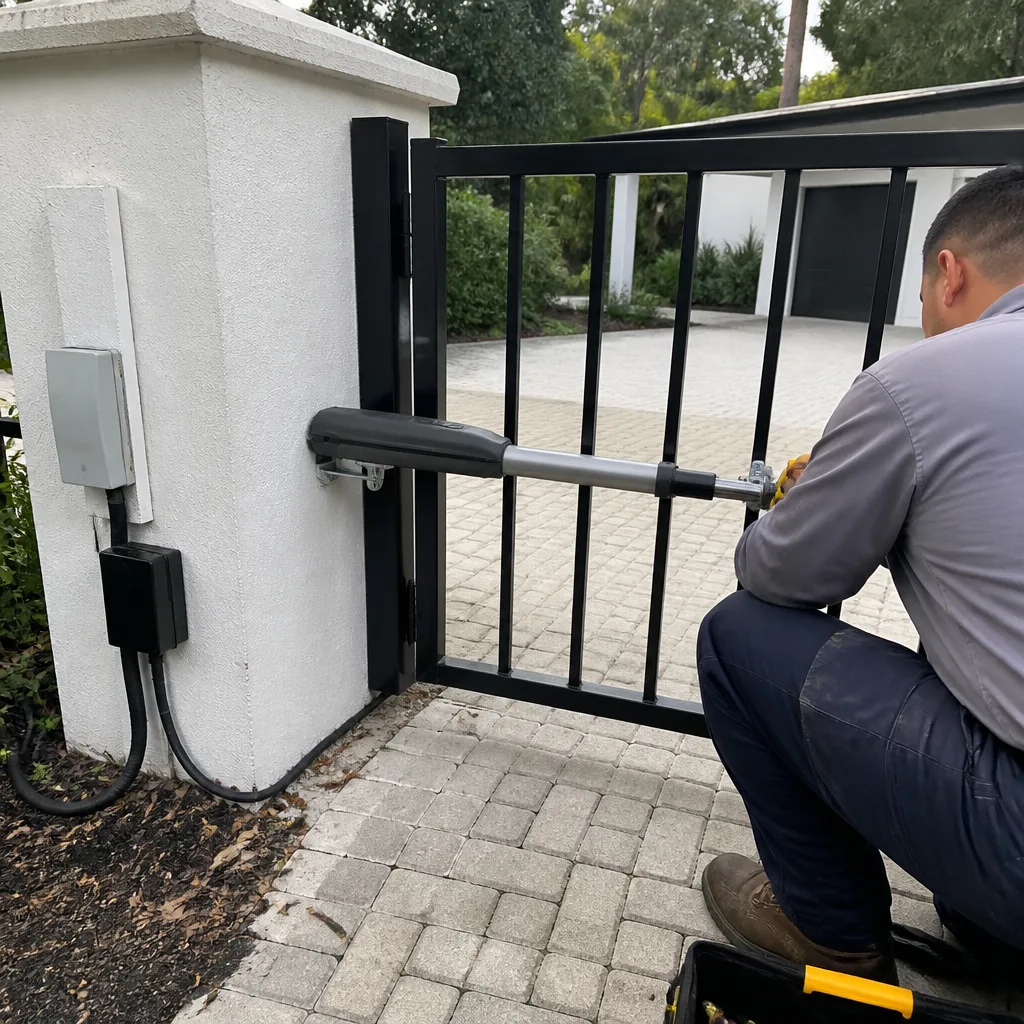 After