
Last updated October 31, 2026
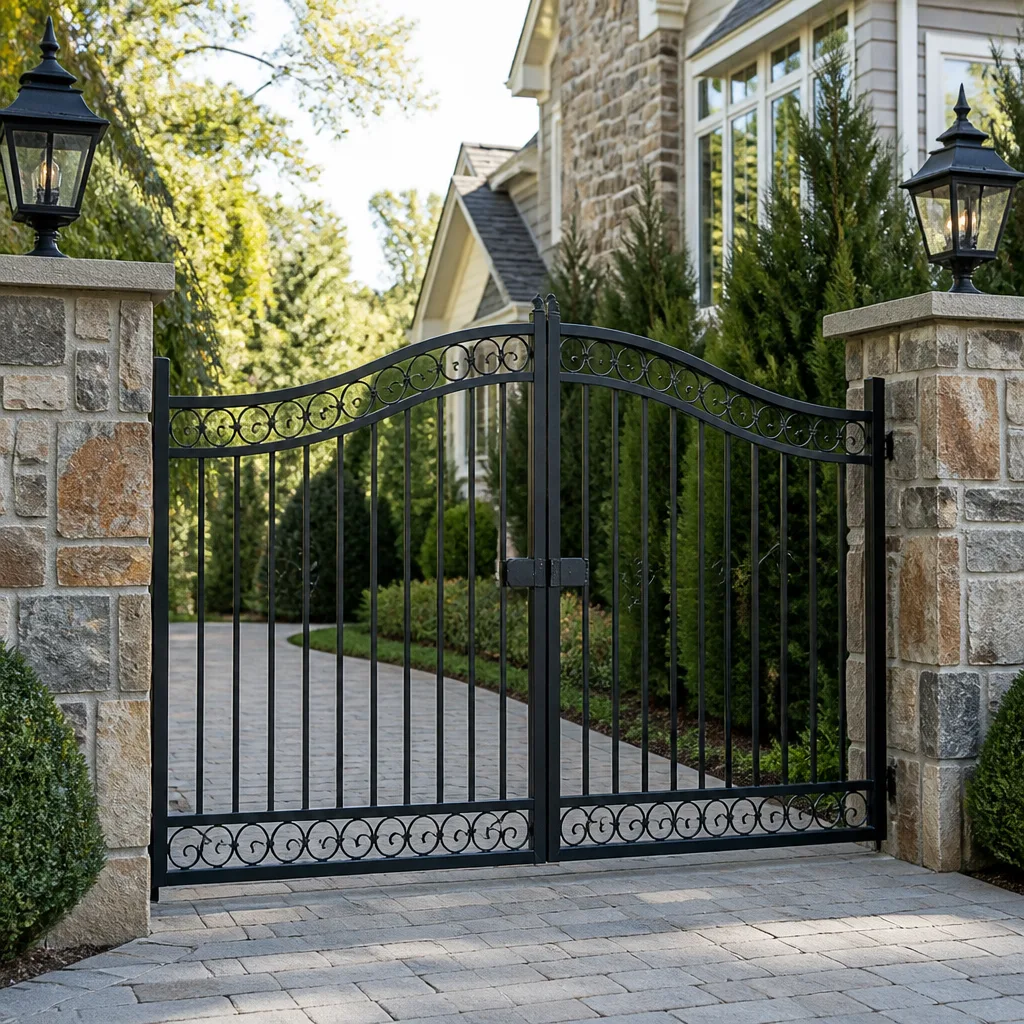 Wrought iron
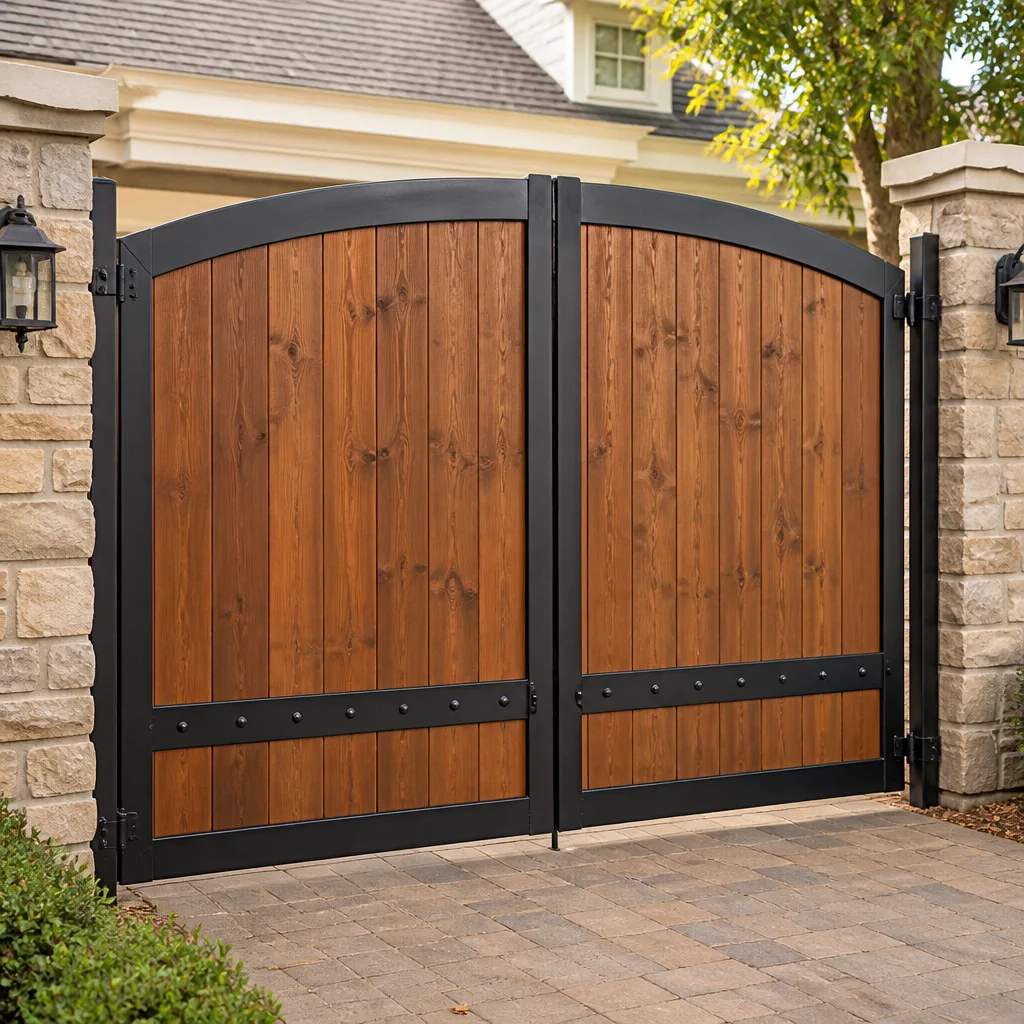 Wood & steel frame
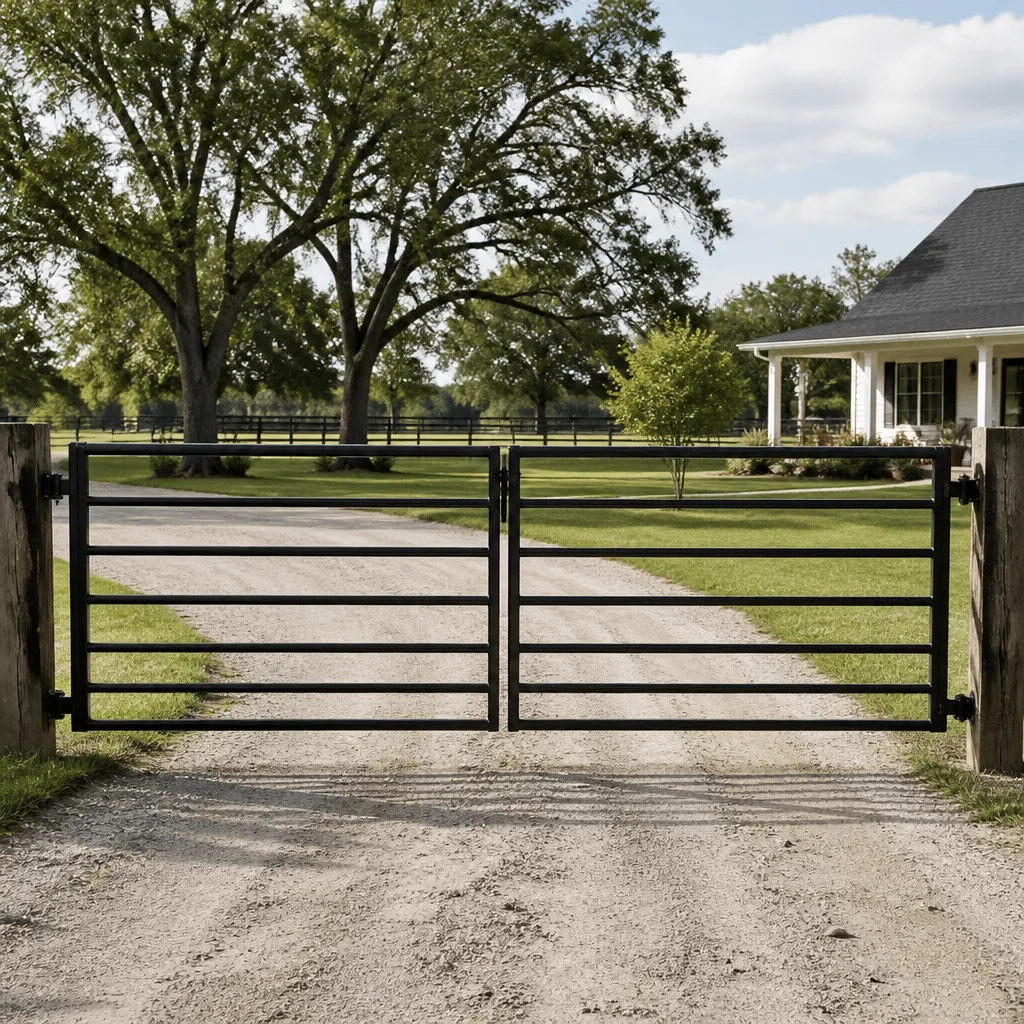 Farm & ranch
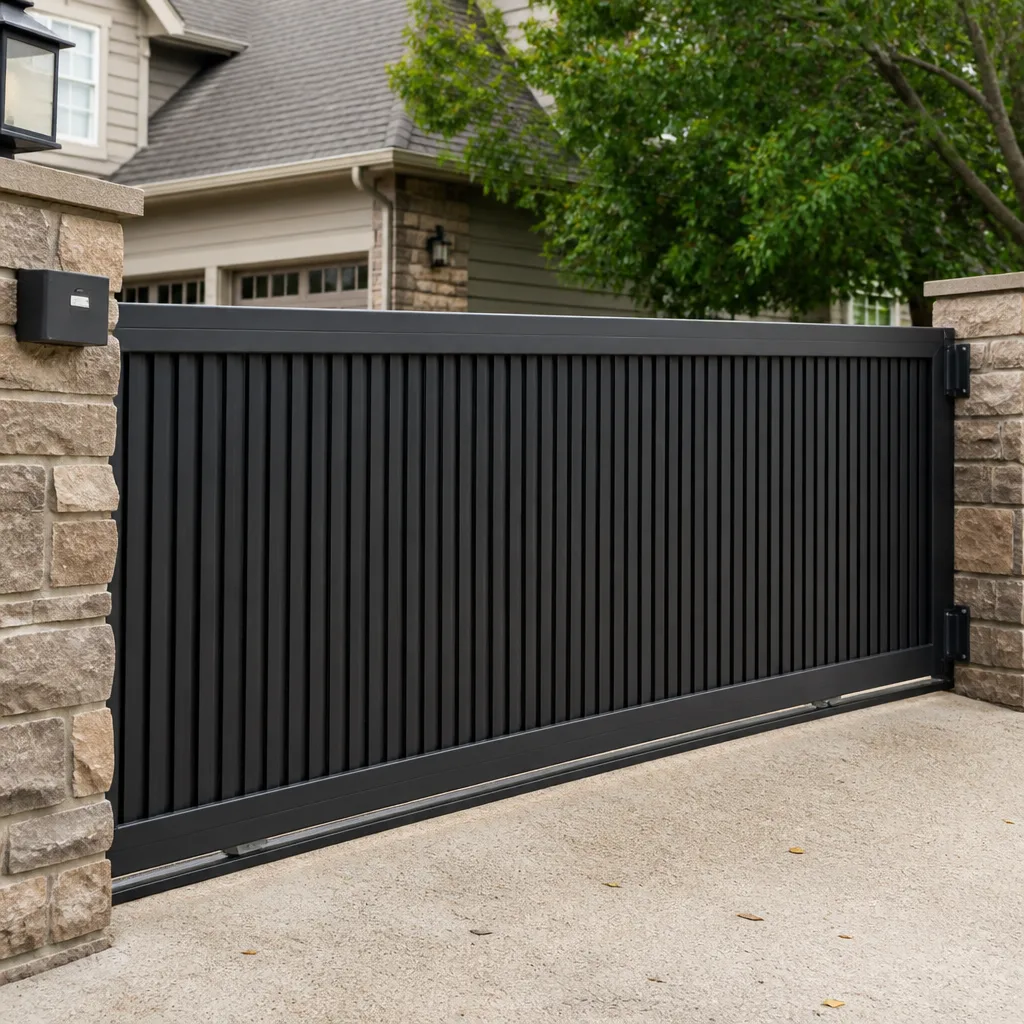 Sliding driveway gates
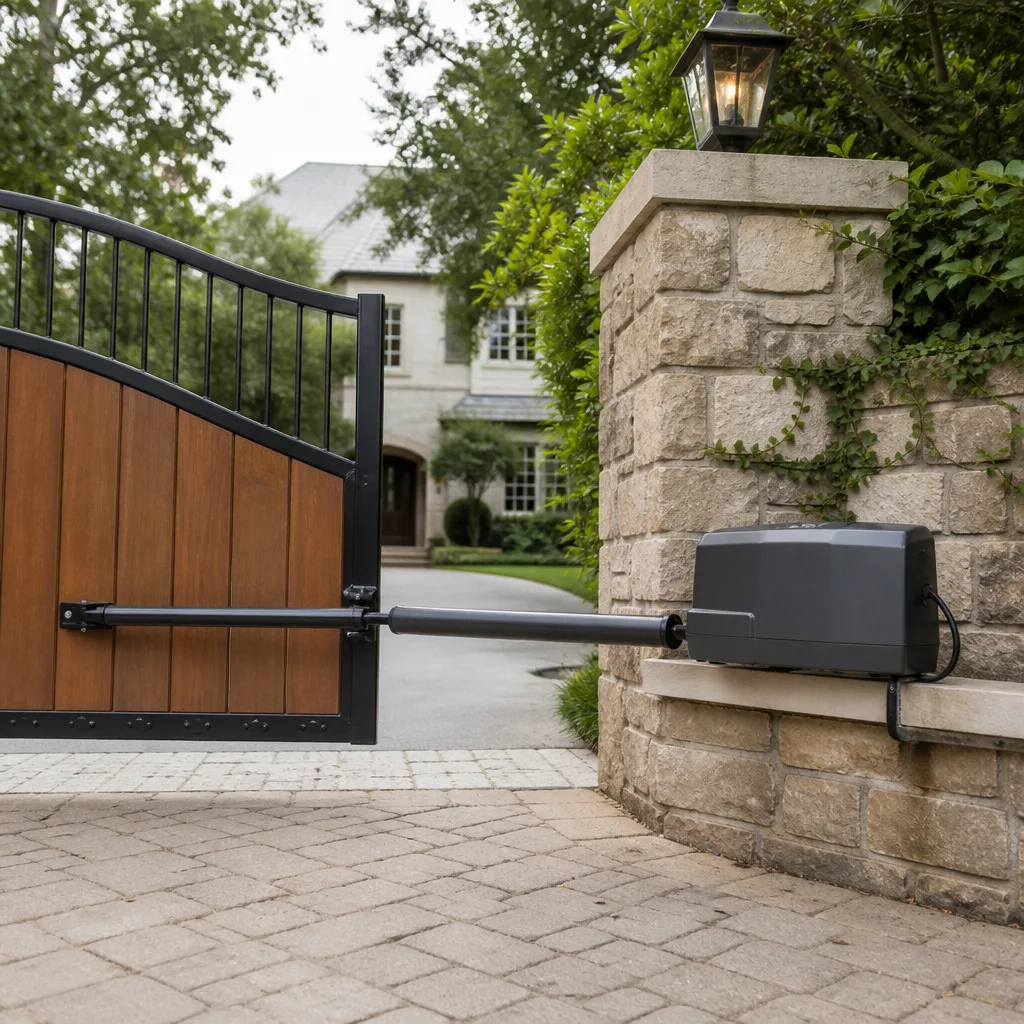 LiftMaster operators
Free on-site gate assessment - hinges, posts, and your LiftMaster or Nice gate operator checked before anything is quoted
The assessment is free and the quote is the invoice.
Get your free estimateDIY vs Professional Gate Repair: The Tampa Homeowner’s Decision Guide
A gate is the only piece of home infrastructure that both secures your property and moves under power every single day, which means when it fails, you’ve got two problems at once. In Tampa, where a gate might cycle twenty times a day between family cars, delivery trucks, and the occasional AirBnB guest, the failure rate is higher than in places where gates sit idle. This guide draws the line between what a homeowner can safely fix and what requires a specialist offering Gate Repair services, because getting that line wrong in one direction costs you money, and getting it wrong in the other direction can put a 300-pound gate through your car door. Here’s how to make the call.
Quick Answer
DIY gate repair is appropriate for mechanical wear items: wheels, hinges, lubrication, and visible hardware adjustments. Professional repair is required for anything involving motor disassembly, control board diagnosis, limit switch adjustment, or wiring, because those systems are governed by Florida electrical code, manufacturer warranty terms, and safety-critical failure modes that a general handyman or a YouTube video cannot prepare you for. If the gate is electric and the problem is not visible on the surface, call a specialist.
Styles & brands we work with
Table of Contents
- The Category System: Three Kinds of Gate Repairs
- What’s Genuinely DIY (And What Tools You Actually Need)
- What You Should Never Touch Without a Specialist
- The Hidden Cost of DIY Electrical Gate Work
- Tampa-Specific Risks: Why Humidity Changes the Math
- The Break-Even Math: When DIY Costs More Than a Service Call
- Brand Considerations: Ghost Controls, DoorKing, Elite, and Mighty Mule
- Common Mistakes to Avoid
The Category System: Three Kinds of Gate Repairs
The first decision every Tampa homeowner should make when a gate stops working is not “can I fix this?” but “what category is this repair in?” In our experience working on gates across the Tampa area, virtually every failure falls into one of three buckets: mechanical wear, electrical malfunction, and structural damage. The category determines everything else because it determines whether you’re holding a wrench or holding a liability.
Mechanical wear is the category most people imagine when they think about DIY gate repair. A hinge that’s sagging, a wheel that’s worn flat, a latch that doesn’t catch because the post shifted slightly. These are visible problems with visible solutions. You can see the worn wheel. You can hear the hinge squealing. You can feel the latch not engaging. Mechanical wear is almost always DIY-appropriate, provided you have the right tools and the physical strength to manage the gate’s weight.
Electrical malfunction is the category that gets homeowners into trouble. The gate won’t open, or it opens halfway and stops, or the keypad doesn’t respond, or the safety sensor keeps triggering for no reason. These failures live inside the operator housing, the control board, the wiring paths, or the safety loops buried under the driveway. Nothing about them is visible from the outside, and nothing about them can be diagnosed by looking at the symptom alone. A gate that opens halfway and stops could be a limit switch, a control board, a motor capacitor, or a dozen other things. Guessing at electrical problems is not a repair strategy; it’s a parts-ordering hobby.
Structural damage is the rarest category: a vehicle strike, a storm event, a post that’s rusted through at the base. These failures are usually dramatic and obvious. They’re also outside the scope of what a homeowner should handle, not because the homeowner lacks skill, but because a gate that’s compromised structurally can fail catastrophically under its own weight. A 400-pound gate hung from a failing post is a stored-energy problem waiting to release.
What’s Genuinely DIY (And What Tools You Actually Need)
The DIY-appropriate repairs in Tampa are the ones where you can see the entire problem with your eyes. We’ll be specific here, because “basic handyman skills” is a phrase that has launched a thousand bad decisions. Here’s what a homeowner with a socket set, a level, and patience can actually handle:
- Replacing gate wheels. Sliding gates run on wheels that wear down over time, especially on concrete driveways with a rough finish. If your gate drags, shudders, or makes a grinding sound, check the wheels. Replacement wheels are widely available, and the job is a matter of unbolting the old wheel and bolting on the new one. You need a socket set, a floor jack or block to take the gate’s weight, and penetrating oil for bolts that haven’t moved in years.
- Lubricating hinges and pivot points. A squealing gate is telling you something: metal is rubbing on metal. In Tampa’s climate, lubricant breaks down faster than in drier regions, which means you’ll do this more often than the average homeowner. Use a lithium-based grease or silicone spray on hinge pins, wheel bearings, and latch mechanisms. Do not use WD-40; it’s a solvent, not a long-term lubricant.
- Tightening and adjusting visible hardware. Gate sag is often just loose hinge bolts. Before you assume a structural problem, check every bolt and nut you can see. Use a level to check the gate’s position relative to the post. If the gate is out of level by more than a quarter inch at the latch end, you may need professional adjustment, but first make sure the bolts are actually tight.
- Cleaning and realigning the photo-eye sensors. On electric gates, the safety sensors look like small boxes mounted near the ground on either side of the gate opening. If they’re dirty, blocked, or knocked out of alignment, the gate will refuse to close or will reverse as soon as it starts closing. Cleaning them with a dry cloth and checking that they point directly at each other is a perfectly safe DIY task.
These four repairs cover maybe half of all mechanical gate issues in Tampa. They require no specialized knowledge, no code compliance, and no risk to your safety beyond the normal hazards of working around heavy objects. If your gate’s problem is on this list and you can see it, you can fix it.
What You Should Never Touch Without a Specialist
Now the other side of the line, and this is where we’ll be blunt because the consequences are not subtle. Electric gate systems are not consumer electronics. They are high-torque motorized systems governed by Florida electrical code, manufacturer specifications, and in many Tampa neighborhoods, HOA design and safety requirements. When you open the operator housing and start disconnecting wires without understanding the system, you are not doing repair. You are doing risk.
Here’s what requires a professional. Period.
- Control board diagnosis or replacement. The control board is the brain of the gate system. It coordinates the motor, the safety loops, the keypad, the intercom, and sometimes a vehicle detector. Control boards fail in ways that look identical to motor failures, switch failures, and sensor failures. Diagnosing which component is actually bad requires a multimeter, a wiring diagram, and enough experience with that specific brand to know which failures are common. Guessing wrong means you buy a $300 board when the problem was a $30 switch, and you still have a broken gate.
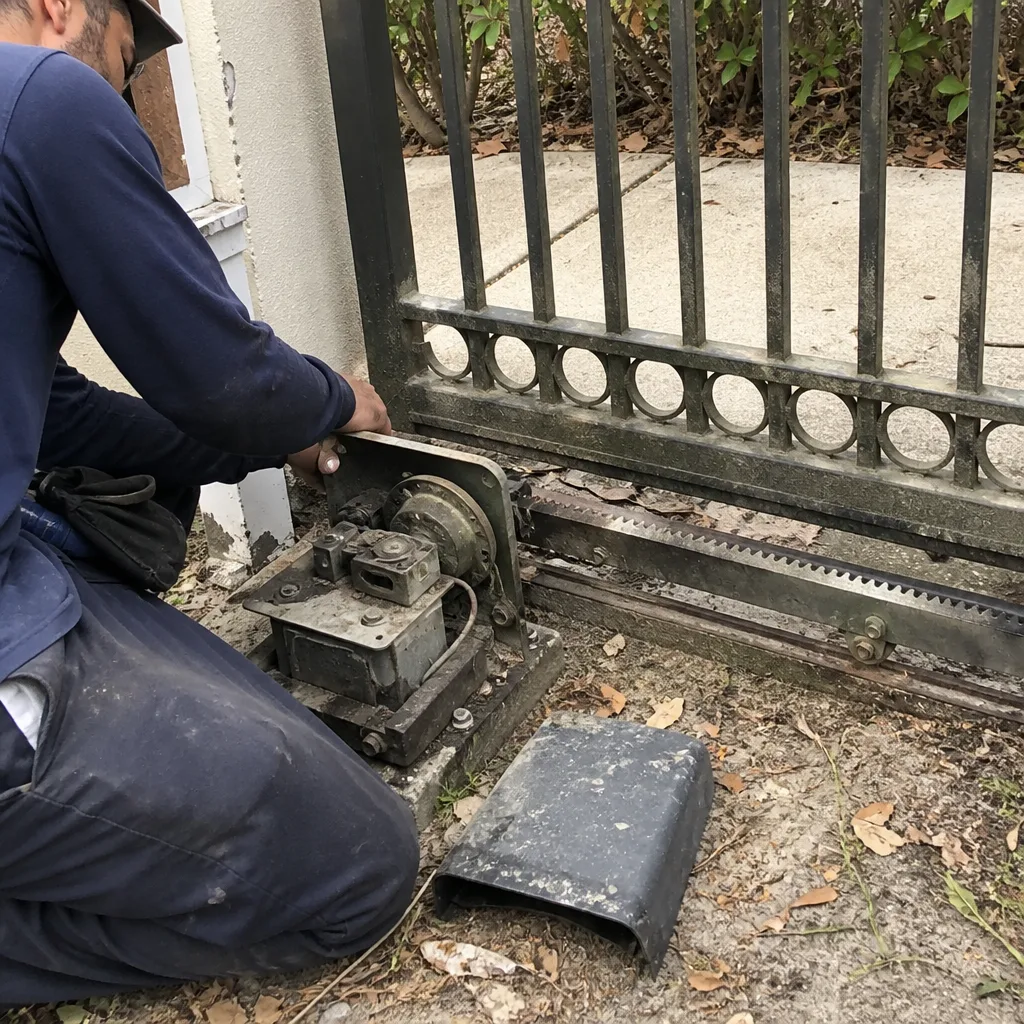
- Limit switch adjustment. Limit switches tell the gate where to stop. Set them wrong and the gate slams into the post at full force or overtravels off the track entirely. A gate that overtravels on a sliding system can derail and fall. That’s not a repair problem; that’s a hospital problem.
- Motor or gearbox disassembly. The internal components of a gate operator are not user-serviceable. Springs under tension, capacitors that hold a charge, gearboxes with exact tolerances. Opening the motor housing voids the warranty and exposes you to components that can discharge electricity or snap back under pressure.
- Any wiring work. Florida code requires that electrical work on permanent installations be done in compliance with the National Electrical Code. Your gate’s wiring runs from the operator to the sensors to the keypad, often through buried conduit. A homeowner who splices wires without proper weatherproofing in Tampa’s humidity creates a short circuit that might not show up for months, and when it does, it’ll corrode every connection along the path.
- Safety loop repair. Safety loops are wire loops buried in the driveway that detect vehicles and prevent the gate from closing on a car. When they fail, the gate either won’t close or won’t stay open. Repairing them means locating the break underground, which requires a wire tracer, a trencher, and the knowledge to splice and seal the repair so it survives Tampa’s wet season.
Safety note: if you have any doubt about whether a repair involves stored mechanical energy, live electrical components, or fall hazards from a heavy gate panel, stop. Call a trained gate technician. The repair cost is always less than the cost of a gate panel crushing a vehicle, or worse.
The Hidden Cost of DIY Electrical Gate Work
The most expensive gate repair we see in Tampa is the one that follows a DIY attempt. There’s a pattern to it, and if you understand the pattern, you’ll avoid becoming the next example. A homeowner has a gate that won’t open. They open the operator housing, poke around, maybe watch a video, maybe order a part that looks roughly like the part they think is bad. They install it. The gate still doesn’t work. Then they call us, and now there are two problems: the original failure and the new failure created by the attempted repair.
That’s the direct cost. The hidden costs are worse.
First, manufacturer warranties. Every gate operator manufacturer, including Ghost Controls, DoorKing, Elite, and Mighty Mule, has warranty terms that explicitly exclude damage caused by unauthorized modification or repair. If you open the operator and start changing things, you void the warranty. When a professional then has to replace the board you fried by miswiring it, you pay retail for that board instead of getting it covered.
Second, unpermitted modifications. In Tampa, certain electrical modifications to permanent installations require a permit. A homeowner who modifies gate wiring without a permit has created an unpermitted installation. If that installation later causes a problem, your insurance company has a reason to deny the claim. That’s not a hypothetical; insurance adjusters look for exactly this kind of thing.
Third, diagnostic overhead. When a gate has been worked on by someone who didn’t know what they were doing, every diagnosis takes longer. The technician has to undo the DIY work before they can even start finding the original problem. Longer diagnosis means more labor hours, which means a bigger bill. The money you saved by not calling us the first time comes out of the repair cost the second time.
Tampa-Specific Risks: Why Humidity Changes the Math
Tampa’s climate is not like the climate in the manuals. Most gate operator manuals are written for generic conditions, but a gate installed in Tampa faces conditions that most of the country never sees: nine months of high humidity, daily temperature swings that pull moisture into every connection, salt air in neighborhoods anywhere near the bay, and a rainy season that saturates the ground for weeks at a time. For preparation tips, see our Gate Repair Emergency Preparedness Guide for Tampa Homes.
Humidity is the silent killer of DIY repairs. When you splice a wire and wrap it in electrical tape, that connection will fail in Tampa. Moisture gets under the tape, the copper corrodes, the connection resistance rises, and the gate starts behaving erratically. A professional splice uses heat-shrink tubing, moisture-sealed connectors, and sometimes potting compound, depending on the location. If you don’t know which connections need which treatment, your repair won’t last a single rainy season.
Ground saturation is a Tampa-specific problem for safety loop repairs. When the ground is saturated, buried wires are under constant stress from soil expansion and contraction. The repair has to account for that, and a DIY splice that works in Arizona will fail in South Tampa by August. In our experience working on gates in neighborhoods like Carrollwood and Westchase, loop failures are among the most common issues we see, and among the most likely to recur if not repaired properly the first time.
Salt air compounds everything. If you live near the water in South Tampa, Davis Islands, or anywhere along the bay, the salt in the air accelerates corrosion on every metal component. Hinges that would last ten years inland last five near the water. Bolts that would come out cleanly with a socket wrench inland are seized solid from corrosion. A homeowner attempting a mechanical repair near the coast will often snap a bolt that a technician with a torch and an impact wrench would have freed in five minutes. That snapped bolt turns a simple wheel replacement into a drilling and tapping job.
The Break-Even Math: When DIY Costs More Than a Service Call
The economic case for calling a professional in Tampa is stronger than most homeowners realize, because the math is not just about the hourly rate. It’s about the full picture: tools, parts, time, risk, and the probability of getting it right the first time. Let’s run the numbers on a typical electric gate failure.
Say your gate opens halfway and stops. You suspect the limit switches. To fix it yourself, you need to diagnose the actual problem, which means buying a multimeter ($40-80 if you don’t own one), opening the operator housing, interpreting the wiring diagram, and hoping the problem is what you think it is. If you’re wrong, you’ve bought a part you don’t need and still have a broken gate. If you’re right, you’ve spent an afternoon on the repair. Or you call a gate specialist in Tampa, who arrives with the test equipment, the brand-specific knowledge, and the replacement parts already in the truck. The diagnostic fee might be $75-125, and if the repair is simple, the total bill might be $200-300. You spent $300 and got a working gate by dinner.
Now let’s say the DIY attempt goes wrong, as it often does with electrical issues. You misdiagnose the problem, order the wrong part ($50-150), spend two hours on the repair, and the gate still doesn’t work. Then you call the specialist, who now has to undo your work before diagnosing the original problem. The bill is now $350-500, and you’ve spent a Saturday on the project. The break-even point for any electrical gate repair is so close to the DIY cost that the risk of getting it wrong makes DIY economically irrational.
The exception is purely mechanical work. A gate wheel costs $15-30 and takes 30 minutes to replace with tools you probably own. A can of lithium grease costs $8 and lubrication takes 15 minutes. For those repairs, DIY is clearly the right call, even in Tampa, even with the humid climate. The line is not “never DIY”; the line is “DIY the mechanical, call for the electrical.”
Brand Considerations: Ghost Controls, DoorKing, Elite, and Mighty Mule
One of the most common surprises for Tampa homeowners is discovering that their gate system is from a brand they didn’t even know they had. Gate operators are like furnaces: most people never think about the manufacturer until the unit stops working, and by then, the brand name matters a lot. Different brands fail differently, and a repair strategy that works for one brand can be useless or harmful for another.
Ghost Controls systems are common in residential Tampa installations, often installed by homeowners or handymen as a kit. They’re relatively straightforward systems, but their control boards are sensitive to power surges, which Tampa’s afternoon thunderstorms provide in abundance. When a Ghost Controls gate stops responding, the problem is often a fried board, and the board is not a part you can buy at a hardware store.
DoorKing builds heavier systems, commonly seen in gated communities and larger residential properties. Their operators use different limit mechanisms and different safety loop protocols than residential-grade systems. A homeowner with a DoorKing gate who assumes it works like the Ghost Controls video they watched is already in trouble. DoorKing systems are also more likely to have accessory integrations: telephone entry systems, vehicle detectors, timed locking schedules. More complexity means more failure points and more reason to call a specialist who knows the brand.
Elite and Mighty Mule represent two ends of the residential spectrum. Elite builds mid-range swing gate operators with relatively user-friendly diagnostics. Mighty Mule is one of the most common DIY-installed brands in Florida, and we see more Mighty Mule systems in Tampa than almost any other residential brand. That volume matters: a technician who sees Mighty Mule systems every week knows their failure patterns, their board revisions, and their compatibility quirks. That’s knowledge a homeowner cannot get from a forum post.
The brand matters because parts are not interchangeable, diagnosis is not one-size-fits-all, and the cost of getting it wrong is measured in weeks of downtime and hundreds of dollars. If you know your gate’s brand and you call a company that works on that brand specifically, you skip the learning curve entirely. For a deeper look at gate repair options in general, see our Gate Repair in Tampa page.
Common Mistakes to Avoid
- Opening the operator housing “just to take a look.” The inside of a gate operator is not user-serviceable, and every minute you spend poking around in there is a minute you’re voiding the warranty and risking a shock. If the problem isn’t visible from the outside, the diagnosis belongs to a specialist.
- Using WD-40 on gate hinges. WD-40 is a water displacement solvent, not a lubricant. It’ll quiet the squeak for a week and then wash out the remaining grease, leaving the hinge drier than before. Use lithium grease or silicone spray.
- Misdiagnosing sensor problems as motor problems. When an electric gate won’t close, the most common cause in Tampa is a misaligned or dirty photo-eye sensor. Homeowners often assume the motor is bad and start ordering parts that don’t need replacing. Check the sensors first; they’re the cheapest and most common failure point.
- Ignoring gate weight when attempting mechanical repairs. A sliding gate panel can weigh 300-600 pounds. A homeowner who jacks up the gate without understanding where the load is will eventually get the gate off its track or, worse, have the gate slide off the jack and onto a foot or a hand. Mechanical repairs on heavy gates require respect for the weight.
- Assuming the manual’s instructions apply to Tampa conditions. Manuals are written for generic environments. In Tampa, humidity corrodes connections, salt air seizes bolts, and ground saturation stresses buried wiring. A repair that follows the manual exactly may fail within months if it doesn’t account for the local environment.
- Waiting until the gate has failed completely to call for help. Gates almost always give warning signs before they die: slower operation, intermittent failures, grinding sounds, visible rust at pivot points. Catch the problem early and the repair is cheaper. Wait until the gate won’t move and you’re also dealing with a security problem, a convenience problem, and an emergency service call.
See the difference
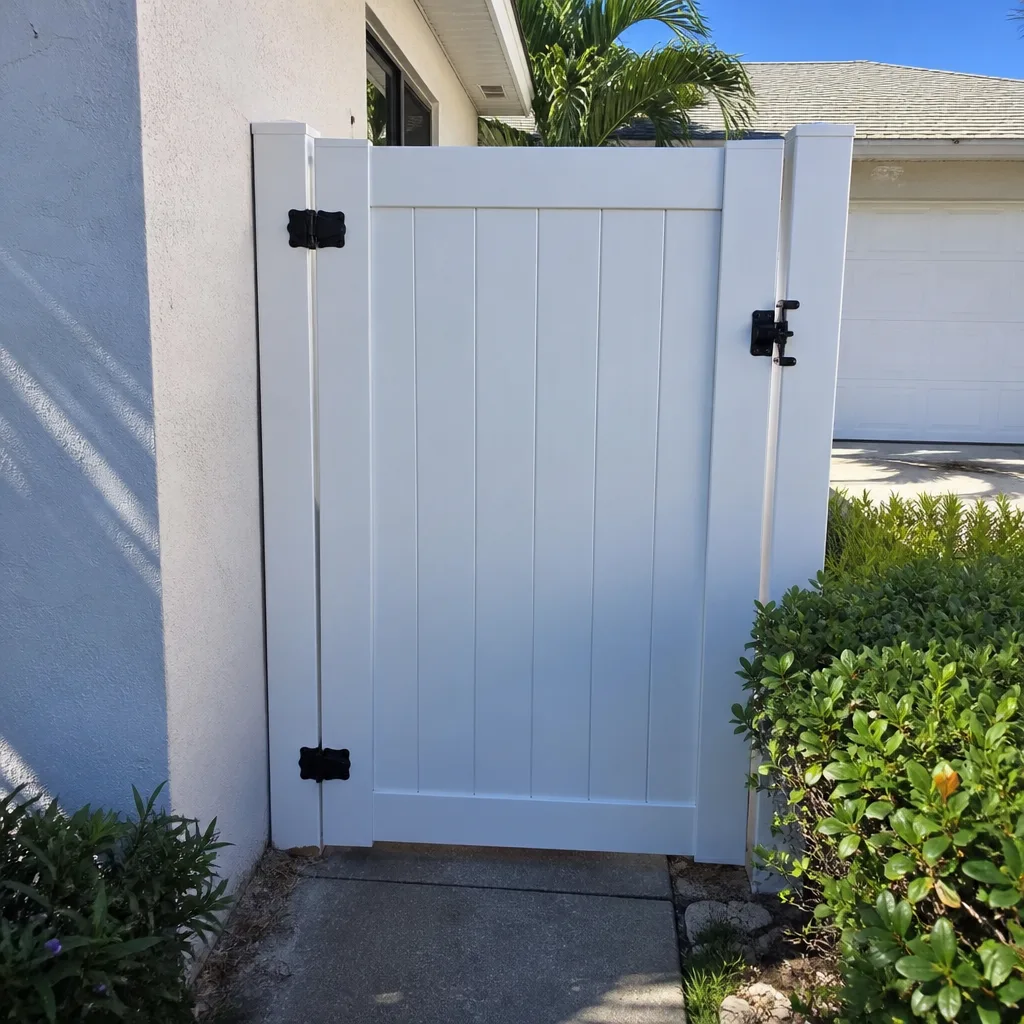
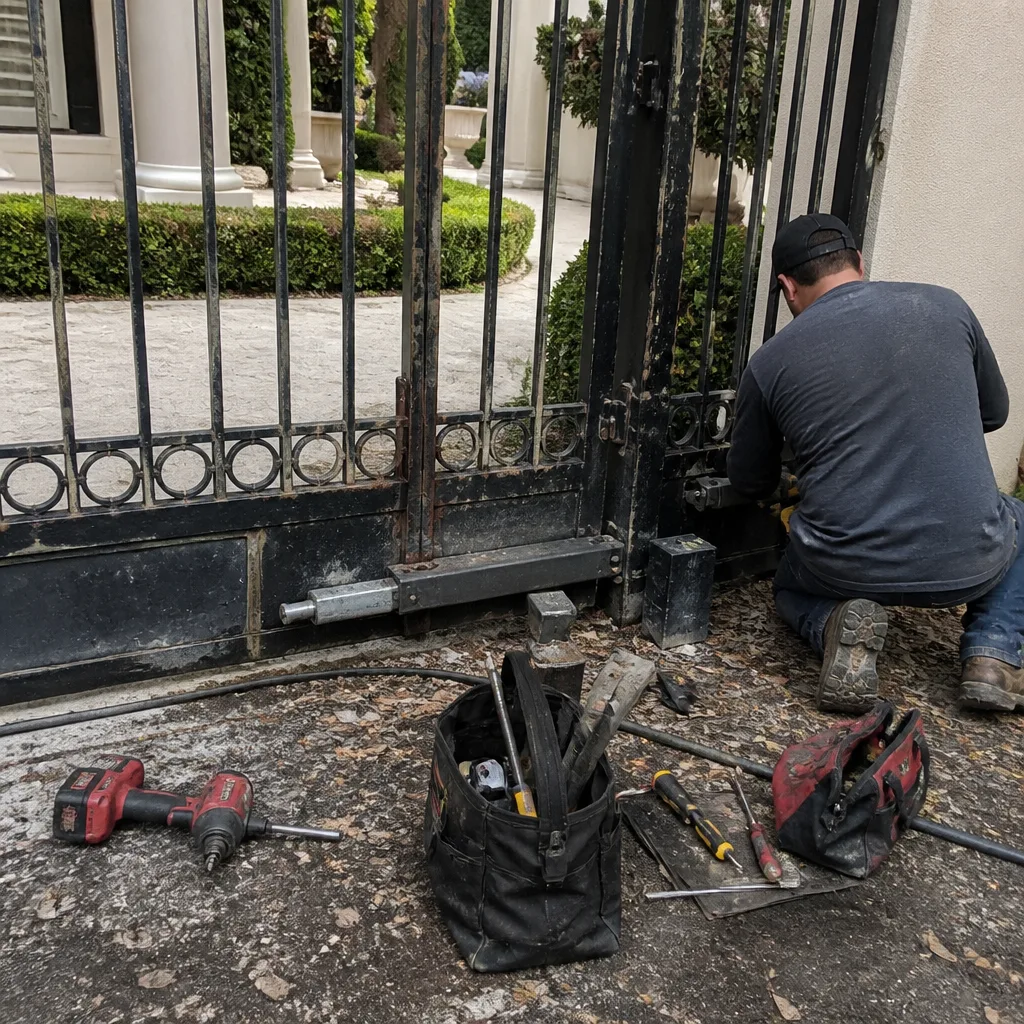 Before
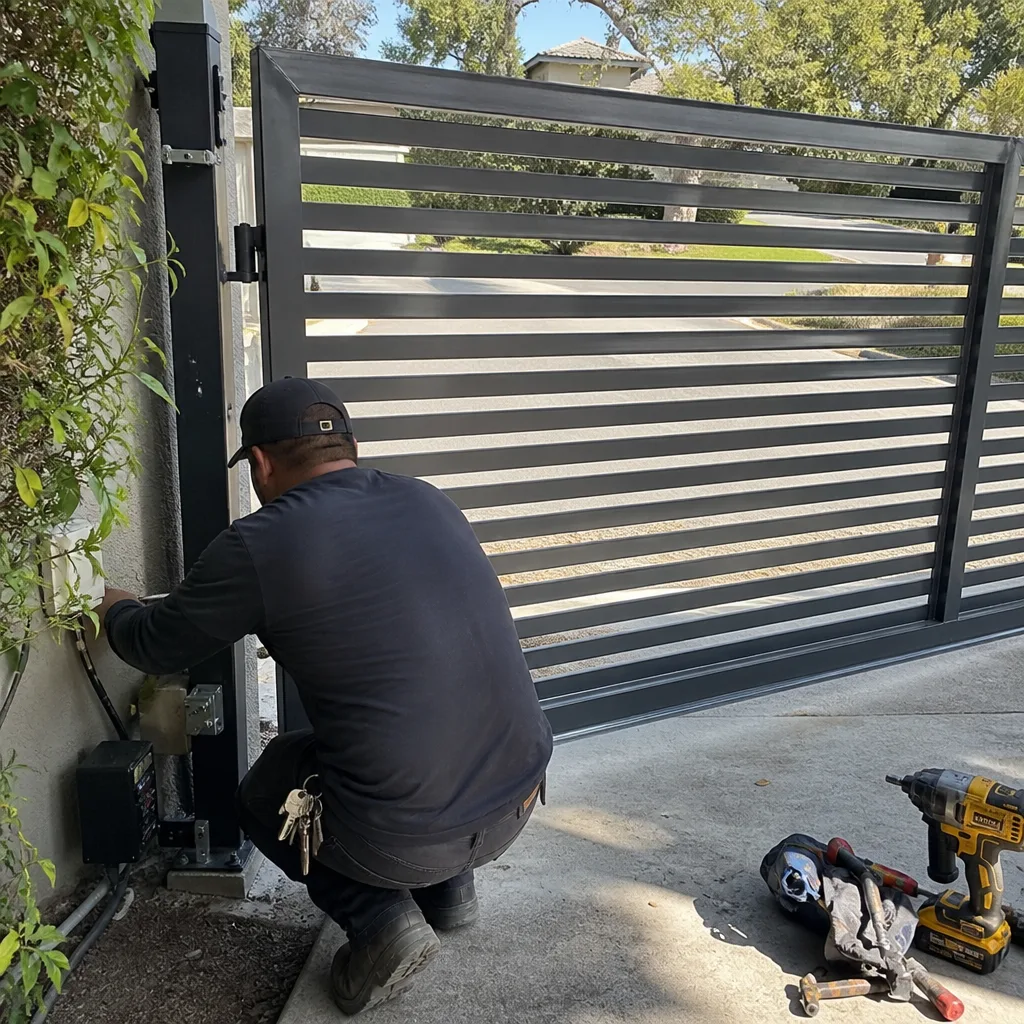 After
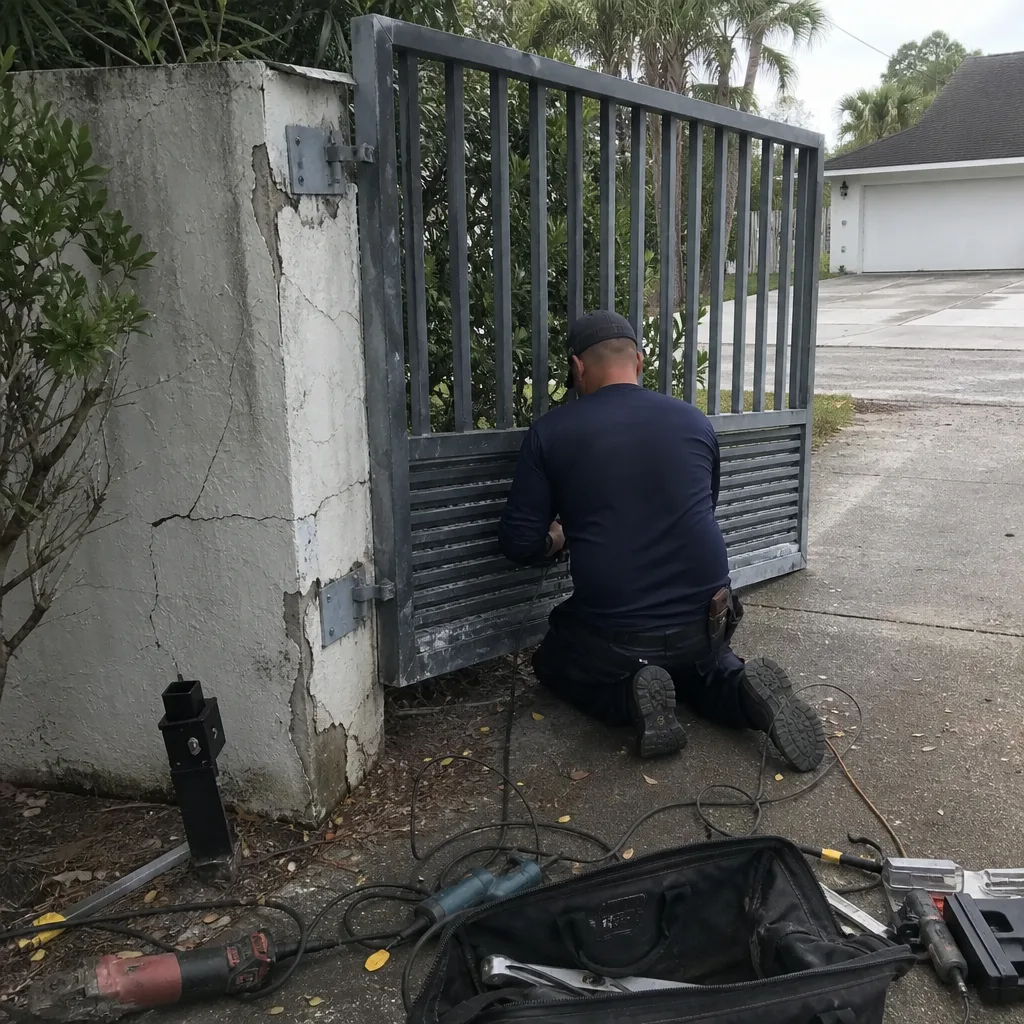 Before
 After
 Before
 After
When to Call a Professional
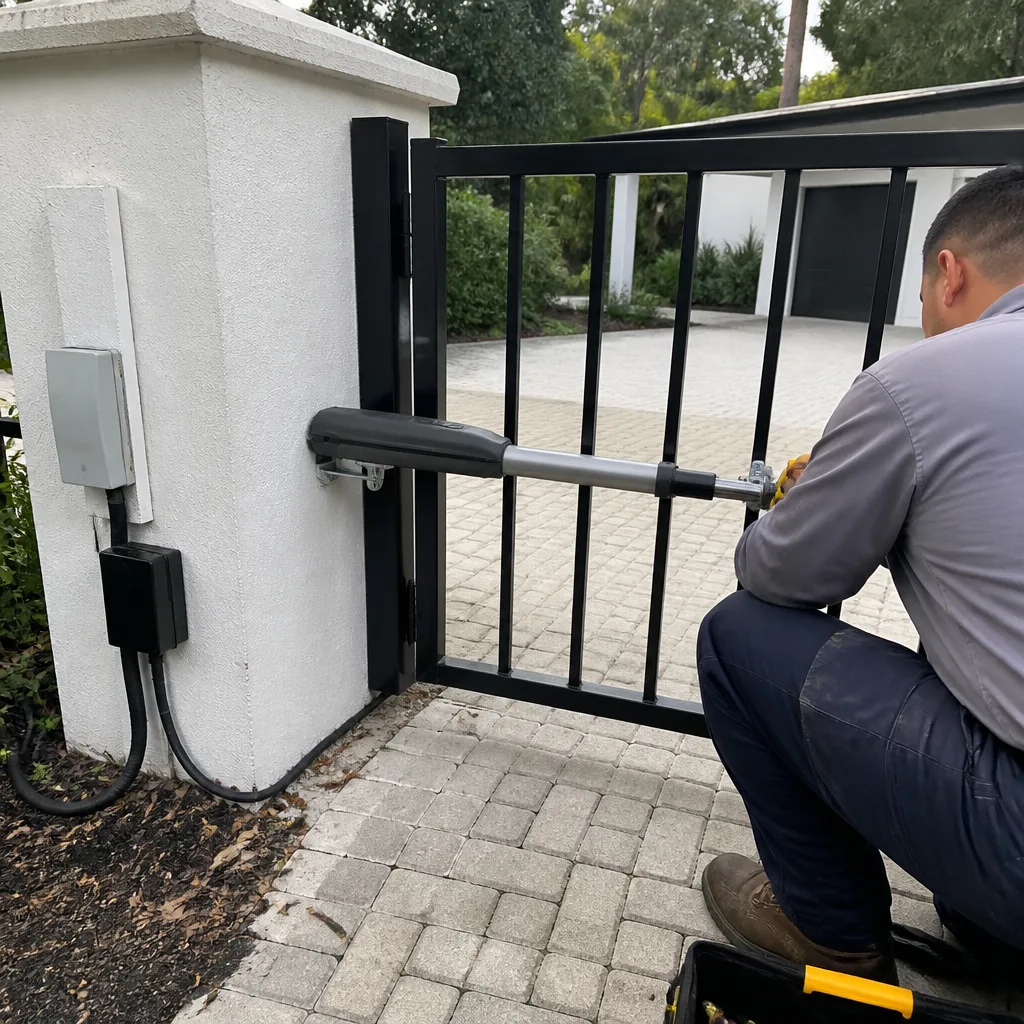
Call a professional when the repair involves anything electrical: motors, control boards, limit switches, wiring, safety loops, keypads, or intercoms. Call a professional when the gate is damaged structurally, when a post is leaning, or when a vehicle strike has compromised the frame. Call a professional when you’ve attempted a DIY fix and the problem persists, because a gate that’s been worked on by an amateur is often harder to diagnose than one that hasn’t. And call a professional when the gate is large, heavy, or mounted on a slope, because the risks of mechanical work scale with the weight of the panel. Electric Gate Repair in Tampa covers the full range of motorized systems. If you need a completely new system, see Gate Installation in Tampa. Tampa Gate Company offers free estimates in Tampa, call (866) 976-0095.
Frequently Asked Questions
Gate repair in Tampa typically ranges from $150 to $600 depending on the failure, with simple mechanical repairs like wheel replacement or hinge adjustment at the low end and control board replacement or motor repair at the high end. The price is quoted and agreed before any work starts, so there are no surprises on the invoice. Call (866) 976-0095 for a free estimate specific to your gate and your issue.
You can fix mechanical wear items like wheels, hinges, and latches yourself, but anything involving the motor, control board, wiring, or limit switches requires a trained technician due to Florida electrical code, warranty terms, and the safety-critical nature of the components. Opening the operator housing voids the warranty and can create new problems that make the eventual professional repair more expensive.
We work on systems from Ghost Controls, DoorKing, Elite, and Mighty Mule, among others, and our technicians are experienced with the failure patterns and repair procedures specific to each brand. Brand-specific knowledge means faster diagnosis and fewer wasted parts, which keeps repair costs down. Call (866) 976-0095 to confirm we service your system’s brand.
An electric gate that reverses before closing is usually seeing a problem with the safety sensors: dirty photo-eyes, misaligned sensors, or a failing safety loop. Check the photo-eyes for dirt and alignment first, because that’s the cheapest fix and the most common Tampa issue. If the sensors are clean and aligned, the problem is likely a safety loop, which requires professional diagnosis.
We do both, and our advice is repair-first, because most gates have years of life left even when a component fails. When repair isn’t the economically rational choice, either because the gate is structurally failing or the operator is obsolete, we’ll tell you straight and quote a replacement. For the full scope of what we install, see our Gate Installation in Tampa page.
Most mechanical repairs like wheel replacement or hinge tightening are done within an hour or two, while electrical diagnosis may take longer depending on the complexity of the system and whether the problem is intermittent. We bring brand-specific knowledge and common replacement parts to every call, which means most repairs are completed the same day. Call (866) 976-0095 to schedule a visit.
The Bottom Line
The line between DIY and professional gate repair in Tampa is not about your confidence or your tool collection; it’s about the nature of the failure. Mechanical wear you can see and touch is fair game, and there’s real satisfaction in replacing a wheel or quieting a squeal. Electrical malfunction is a different domain, governed by code, warranties, and safety concerns that don’t care how handy you are. Tampa’s humidity and salt air make every repair harder than the manual suggests, and the break-even math on electrical work almost always favors calling a specialist. Fix what you can see. Call for what you can’t. That’s the whole decision in one sentence, and it’s served Tampa owners well. For more guides & resources, visit our blog.
If your gate needs attention, Tampa Gate Company home is here. Call (866) 976-0095 for a free estimate, and we’ll tell you honestly whether it’s a repair you can handle or one that needs us.
Written by the team at Tampa Gate Company, serving Tampa since 2013.