
Last updated October 31, 2026
 Wrought iron
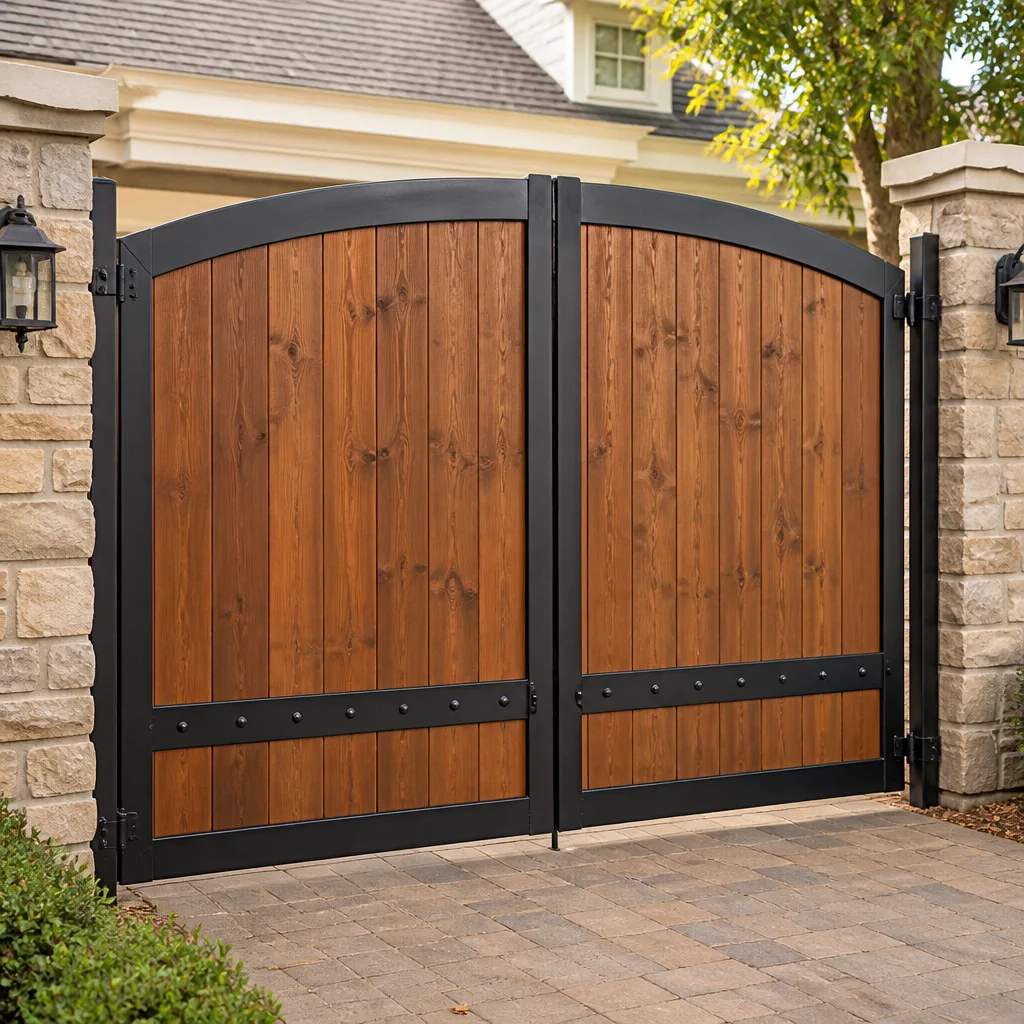 Wood & steel frame
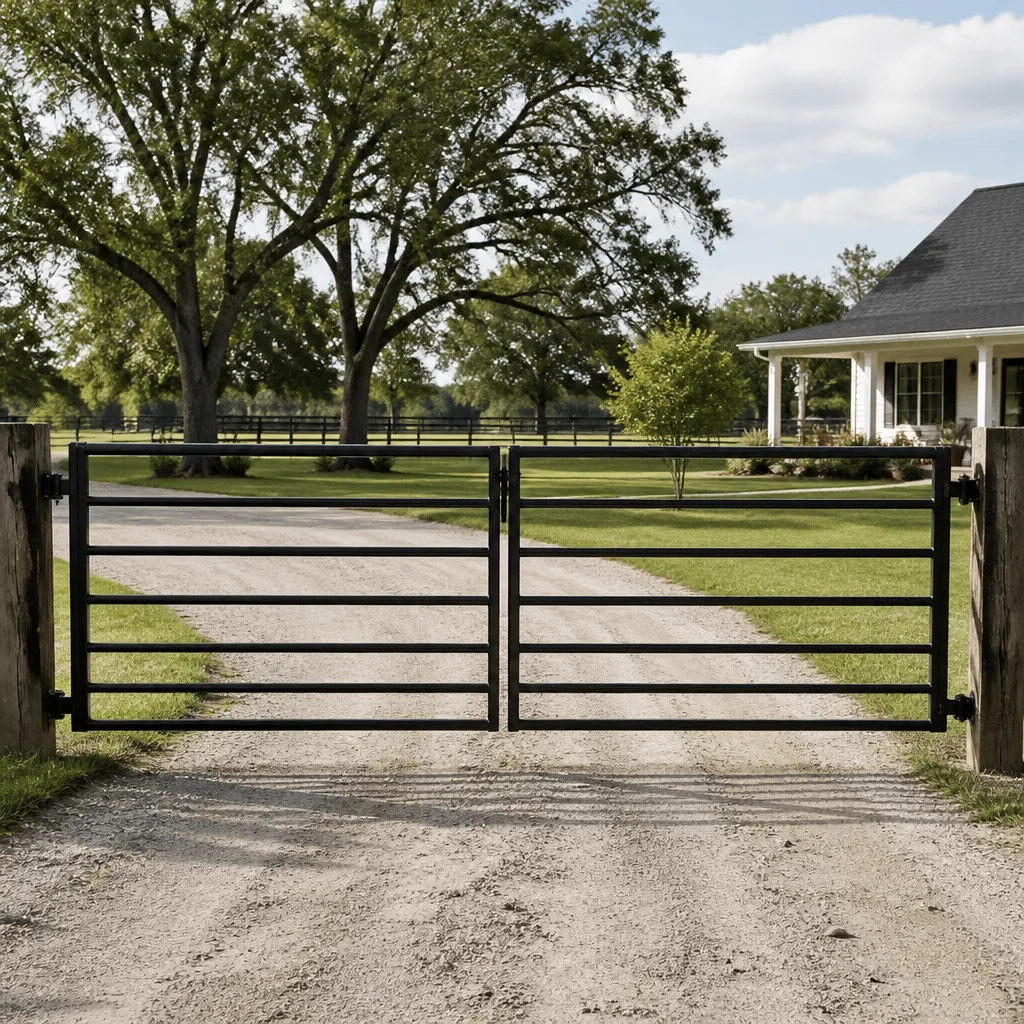 Farm & ranch
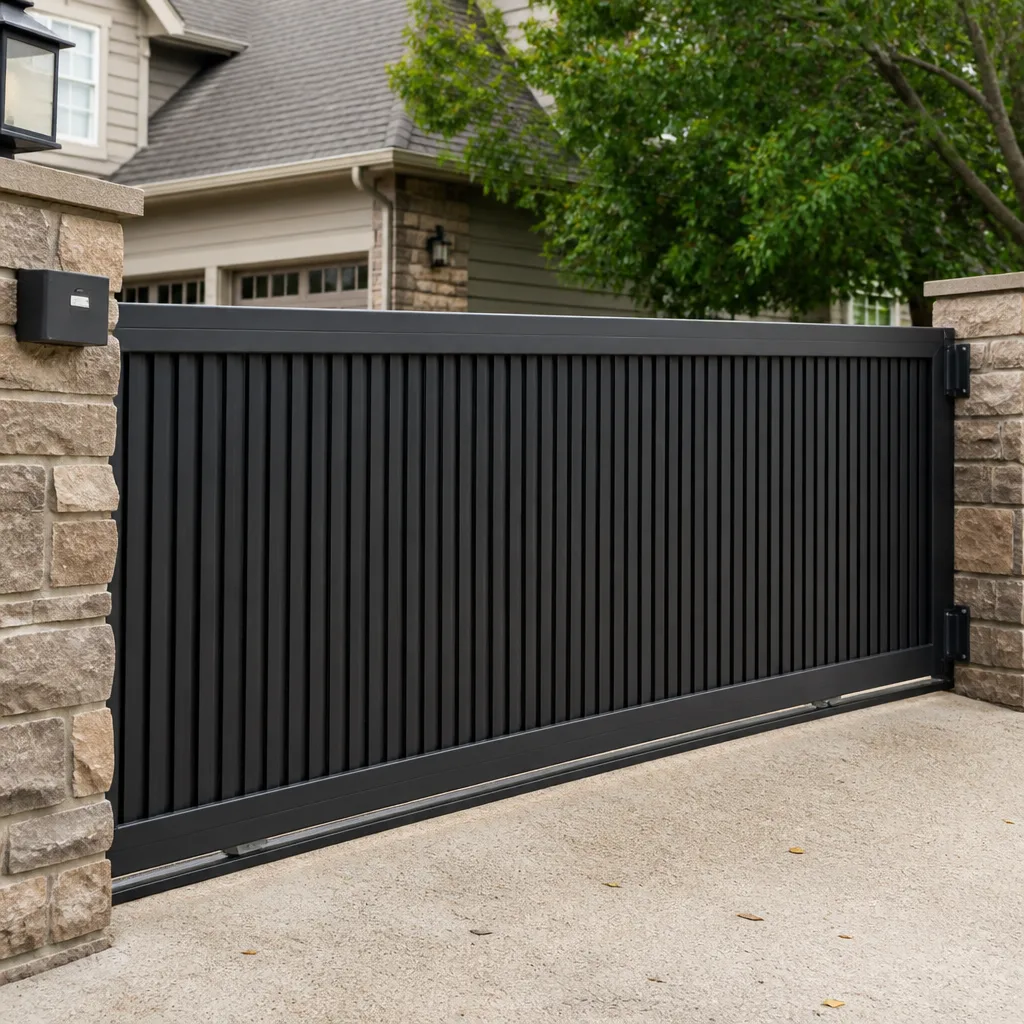 Sliding driveway gates
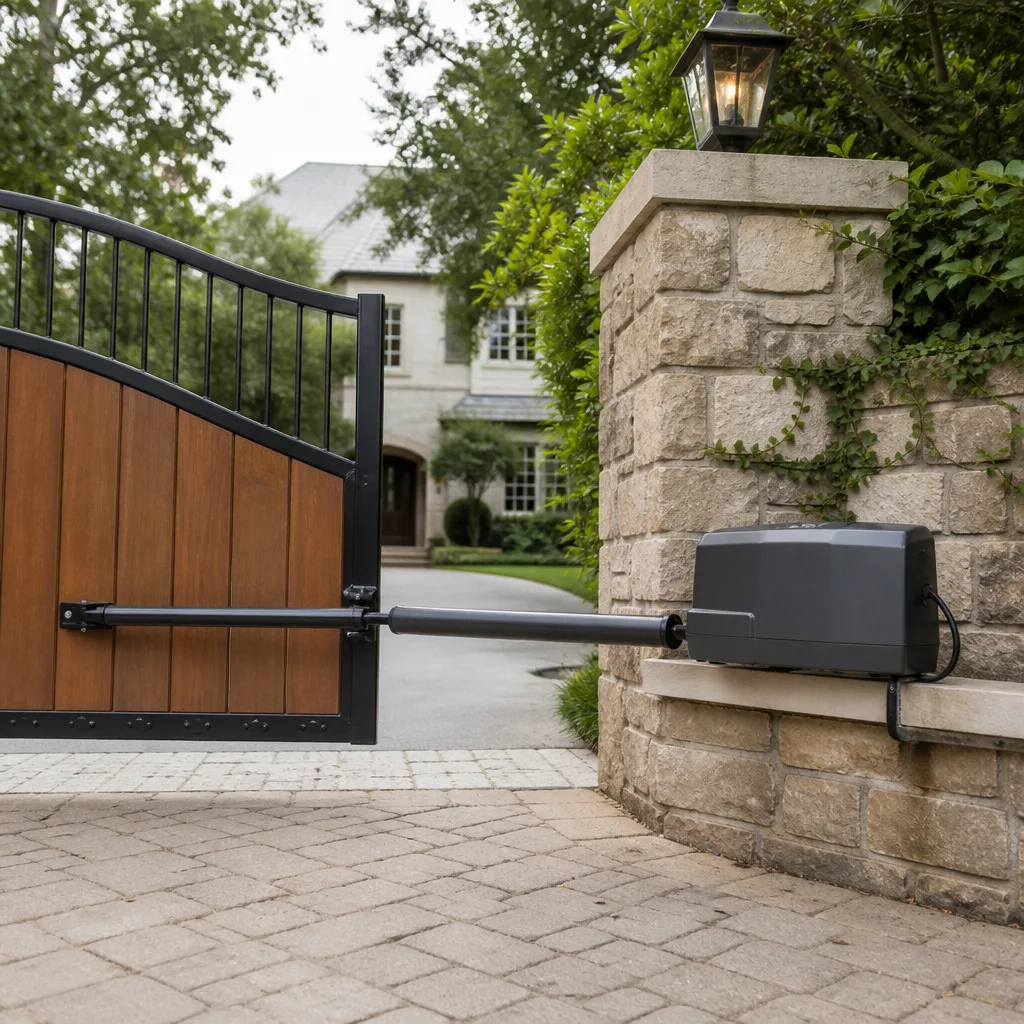 LiftMaster operators
Free on-site gate assessment - hinges, posts, and your LiftMaster or Nice gate operator checked before anything is quoted
The assessment is free and the quote is the invoice.
Get your free estimateHow to Hire a Gate Repair Contractor in Tampa: A Step-by-Step Guide
In Tampa, at least half the companies that show up in a gate repair search are general contractors, fence installers, or landscapers who list gate work as a side service. That’s not an exaggeration. We see it every week: a homeowner pays $400 for a “repair,” the gate fails again in three months, and then we’re called to redo what should have been done correctly the first time. This guide—along with our more guides & resources—gives you the exact questions to ask, the red flags to spot, and the verification steps to take before you hand over a deposit. You’ll learn how to separate a genuine gate specialist from a generalist with a truck and a business card.
Quick Answer
To hire a gate repair contractor in Tampa, you need to verify three things before signing anything: that the contractor specializes in gates rather than treating them as a side service, that they carry proper Florida licensing and liability insurance, and that their estimate names your specific gate brand and the exact parts they’ll replace. Ask brand-specific questions on the first call, confirm insurance directly with the carrier, and get warranty terms in writing before work begins. If a contractor can’t answer basic questions about your gate’s operator model or control board, keep looking.
Styles & brands we work with
Table of Contents
- Why Hiring a Gate Specialist Matters in Tampa
- The First Call: Three Questions That Reveal Everything
- Tampa Licensing and Insurance: What Actually Applies
- How to Verify a Contractor’s Credentials in 60 Seconds
- Reading a Gate Repair Estimate: What Specialists Include
- Red Flags Specific to Gate Repair Bids
- Warranty Terms to Require in Writing
- Structuring the Job So You Have Recourse
Why Hiring a Gate Specialist Matters in Tampa
A gate is not a fence. It’s a mechanical system with moving parts, weight loads, hinges under constant stress, and, in most Tampa installations, an electric operator, control board, and safety loops buried in the ground. When a fence contractor “also does gates,” they’re usually comfortable with the post and the panel. The operator, the circuit board, the sensor alignment, the torque settings on the motor: those are the parts they guess at. And guessing is expensive.
In our experience servicing gates across Tampa, the most common repair job we walk into is a re-repair. Somebody replaced a hinge but didn’t adjust the gate’s sag. Somebody swapped a battery but didn’t test the charging circuit. Somebody installed a new keypad but wired it to the wrong relay on the board. The gate works for a week. Then it doesn’t.
Here’s what a gate-exclusive specialist brings that a generalist can’t match:
- Brand familiarity on sight: A specialist recognizes a Mighty Mule operator from across the yard. They know its common failure points, its wiring quirks, and which parts are prone to wearing out in Tampa’s humidity. A generalist opens the cover and starts reading the label.
- Parts knowledge that prevents repeat failures: Knowing which control board revision pairs with which motor, which photo eye models are compatible, and which hinges actually carry the gate’s weight. That knowledge means the repair lasts.
- Faster diagnosis: When you’ve seen hundreds of LiftMaster and FAAC systems in the same climate, you don’t spend an hour tracing wires to find a bad ground. You go straight to the problem.
- Honest repair-versus-replace advice: A specialist can tell you when a repair is worth the money and when replacement is the smarter long-term call. A generalist either over-sells replacement because it’s easier, or under-sells it because they don’t have install capacity.
Tampa’s climate adds another layer. Salt air near the bay, daily humidity, afternoon thunderstorms, and intense UV exposure all take a toll on gate hardware and electronics. Components that last ten years in Arizona might fail in six in South Tampa. A local specialist knows which materials and parts hold up here, and which corrode or short out prematurely.
This is the foundation Tampa Gate Company home was built to fill. Gate repair, electric gate diagnosis, and full installation: that’s the whole job. Every day. Not a line item on a landscaping invoice.
The First Call: Three Questions That Reveal Everything
You can identify a genuine gate specialist in under three minutes of conversation. These three questions, asked on the first call, expose whether the person on the other end actually works on gates or just lists the service on a website.
Question 1: “What brands of gate operators do you work on?”
A specialist answers with specific brands, immediately. They’ll name LiftMaster, FAAC, BFT, Linear, Mighty Mule, Viking, Ghost Controls, DoorKing, Elite. They might say “all of the major ones” and then start listing. A generalist hesitates, says “all brands,” or asks you what brand you have so they can look it up later. We work on LiftMaster and Mighty Mule systems specifically, among others, and we can say so without thinking about it—something we cover in Choosing the Right Gate Repair Brand: A Buyer’s Guide for Tampa. That’s what familiarity sounds like.
Question 2: “When you diagnose an electric gate, do you test the safety loop?”
This is the question that separates operators from parts-swappers. An electric gate’s safety loop is a wire buried in the driveway that detects a vehicle’s metal mass and prevents the gate from closing on it. If the loop fails or is installed incorrectly, the gate either won’t close, reverses unexpectedly, or refuses to open for a car. A specialist knows to test the loop with a loop detector and a multimeter before touching the motor or board. A generalist won’t know what you’re asking about, or will say “we check everything.” Checking everything is a non-answer.
Question 3: “Will you give me a written estimate with the specific part numbers before you start?”
Specialists say yes without hesitation. A written estimate with part numbers, line-item labor, and a total price protects you and demonstrates that the contractor knows exactly what they’re replacing before they pick up a tool. Generalists often push back: “we’ll see once we open it up,” “we’ll know more when we’re in there.” While some discovery is legitimate on complex electric failures, a contractor who won’t commit to line-item pricing is one who wants room to inflate the invoice after the gate is disassembled. For more on what a specialist repair process looks like, see our Gate Repair in Tampa page.
If a contractor fumbles any of these three, thank them for their time and move on. You’ve just saved yourself a repeat repair bill.
Tampa Licensing and Insurance: What Actually Applies
Florida’s contractor licensing rules can confuse homeowners, and that confusion is exactly what unqualified operators rely on. Here’s the factual picture for gate work in Tampa.
Florida does not have a statewide license category specifically called “gate contractor.” Gate installation and repair typically falls under one of two categories administered by the Florida Department of Business and Professional Regulation (DBPR) or by Hillsborough County:
- Certified or Registered General Contractor: Authorized to perform a broad range of construction work, including gates when tied to a structure or significant construction scope.
- Specialty Contractor licenses: Some gate companies operate under specialty categories like “Specialty Structure Contractor” or county-issued specialty licenses for fence and gate work that doesn’t require structural changes.
What matters for you, as the person paying the invoice, is simpler than the full licensing taxonomy:
- The company must be a licensed, registered business in Florida. You can look up a business entity’s standing at Sunbiz.org (the Florida Division of Corporations) in about 15 seconds. If the company isn’t registered, walk away.
- For electric gate work, the electrical components should be handled by a licensed electrical contractor or under the supervision of one. Electric gate operators run on line voltage. Control boards, transformers, and wiring are electrical work. In Hillsborough County, an electrical contractor’s license (EC or ER) is the relevant credential for line-voltage connections and wiring.
- Insurance is non-negotiable. Any contractor working on your property should carry general liability insurance with a minimum of $500,000 in coverage, though many reputable companies carry $1 million or more. They should provide a Certificate of Insurance (COI) on request, and the certificate should come from the insurance carrier or agency, not a photocopy from the contractor’s binder.
For low-voltage components like keypads, photo eyes, and safety loops, the licensed general or specialty contractor can typically handle the work without a separate electrical license. But line-voltage wiring to the operator’s power supply is electrical work, and you want a licensed electrician or an electrical contractor on that part of the job. We handle the full scope of Electric Gate Repair in Tampa with the appropriate licensing in place for both the mechanical and electrical components.
The bottom line on licensing: don’t accept a contractor’s word that they’re licensed. Verify it. And don’t accept a Certificate of Insurance that’s more than 30 days old or that you can’t confirm directly with the issuing carrier.
How to Verify a Contractor’s Credentials in 60 Seconds
You don’t need to become a licensing expert to protect yourself. You need a 60-second verification routine. Run it on every contractor before you sign anything.
- Check Florida business registration (15 seconds): Go to Sunbiz.org, search the company name, and confirm the business is active and in good standing. If you can’t find them, or their status shows as inactive, that’s the end of the conversation.
- Check contractor licensing (20 seconds): Go to myfloridalicense.com (DBPR’s license lookup), search by company name or individual name, and confirm they hold an active license in a relevant category: General Contractor, Specialty Structure Contractor, Electrical Contractor, or a county-issued specialty license for gate work. If no license appears for the type of work you need, ask the contractor directly which license applies to gate repair and why it’s not in the DBPR database. Listen carefully to the answer. Evasion is a red flag.
- Request and verify insurance (25 seconds): Ask for a Certificate of Insurance naming you as the certificate holder. Call or email the insurance agency listed on the certificate (don’t call the contractor’s office, call the agency) and ask one question: “Is this policy active?” That’s it. Thirty seconds on the phone. If the policy is active and the coverage amounts match what you were told, you’ve done more than 90% of homeowners ever do.
None of this requires special knowledge or complicated searches. It requires the discipline to spend one minute verifying a claim before trusting someone with a security-critical installation on your property.
Reading a Gate Repair Estimate: What Specialists Include
An estimate is a window into how a contractor thinks. A specialist’s estimate looks different from a generalist’s, and once you know what to look for, the difference is obvious.
Here are the line items a gate specialist will always include that a generalist usually omits:
- Specific part numbers or exact part descriptions: Not “gate opener motor,” but “LiftMaster LA400 actuator arm, model XYZ, replacement part number K74-xxxx.” A specialist knows the part number before the gate is opened because they’ve replaced that exact part dozens of times.
- Safety system testing as a separate line item: A specialist prices photo eye alignment, loop testing, and edge sensor verification as explicit steps, not an afterthought. If your estimate doesn’t mention safety systems, the contractor doesn’t plan to touch them.
- Post-repair load and balance adjustment: A gate that opens smoothly on day one will sag and strain the new parts if the hinges aren’t shimmed and the load isn’t balanced. This is standard practice for specialists, invisible to everyone else.
- Labor broken out from parts with a clear hourly rate: You should see exactly what you’re paying for the part and exactly what you’re paying for the work. If everything is bundled in one line, you can’t evaluate the price.
- Cleanup and old part disposal: It’s a small line item, but specialists include it because leaving a broken operator arm and a pile of wire in your driveway is not an acceptable outcome. Generalists don’t mention it because they don’t plan to do it.
- A written statement that the price is final unless unforeseen conditions require a documented change order: You should never accept an open-ended estimate. The price quoted is the price you pay unless the contractor discovers a major structural issue that requires a written change order signed by you before additional work proceeds.
If an estimate is three lines long and says “repair gate: $650,” you’re not looking at a detailed plan. You’re looking at a guess with a number attached to it. When we write a repair estimate in Tampa, it names the brand, the part, the labor, and the terms. That’s the level of clarity you should demand.
Red Flags Specific to Gate Repair Bids
Most generic contractor red flags apply to gate work: no license, no insurance, cash-only pricing, high-pressure sales. But there are red flags specific to gate repair that homeowners miss because they sound reasonable at first.
Vague part descriptions
“New motor” is not a part description. Which motor? What voltage? What brand? What model? If the estimate doesn’t tell you exactly what part is going on your gate, you can’t verify whether the price is fair, whether the part is compatible, or whether it has a manufacturer warranty. Vague part descriptions mean one of two things: the contractor doesn’t know the answer, or they want flexibility to install the cheapest part they can find. Neither is good.
No brand specificity
If you have a BFT operator and the contractor’s estimate doesn’t mention BFT anywhere, that’s a problem. A specialist writes “BFT control board, model Deimos BT, replacement part” on the estimate because they know what’s on your gate. A generalist writes “control board” because they’ll figure it out when the part arrives. You’re paying for their learning curve.
Unusually fast turnaround promises on electric gate work
Electric gate diagnosis takes time. You’re testing the power supply, the transformer, the board, the motor capacitor, the limit switches, the safety loop, the photo eyes. A contractor who promises “we’ll be in and out in an hour, guaranteed” on an electric gate problem is either not planning to test anything, or they’re planning to sell you a new operator regardless of what’s wrong. Both are bad outcomes. A thorough electric gate diagnosis can take 60 – 90 minutes. A repair takes longer. If the timeline sounds too good to be true, it is.
Automatic “you need a new gate” on the first visit
Sometimes replacement is genuinely the right call. A rusted-through gate frame with a 20-year-old operator and no replacement parts available: yes, replace it. But a contractor who recommends full replacement within ten minutes of arrival, before doing any real diagnosis, is optimizing for the sale, not for your gate. A specialist’s default is repair. Replacement is the recommendation when repair isn’t the right answer, and the specialist can explain exactly why. We repair first. If that’s not the answer you’re getting, get a second opinion.
No mention of the safety system
An electric gate without working safety edges and photo eyes is dangerous. A contractor who quotes a motor replacement without ever mentioning the safety system is either unaware that safety systems exist (which disqualifies them instantly) or planning to leave them disconnected. Both are unacceptable. Any electric gate repair estimate in Tampa should address safety system testing and repair as part of the scope.
Refusal to provide the estimate in writing
Verbal quotes are worth the paper they’re not written on. A contractor who won’t put a price in writing before starting is a contractor who wants to change the price after the gate is apart. Never accept a verbal estimate for gate work. Written estimates protect both parties.
Warranty Terms to Require in Writing
A gate repair warranty is only as good as the paper it’s written on. Before work begins, you need clear answers to specific warranty questions, in writing, signed by the contractor.
- What is the warranty period on parts? Manufacturer warranties on gate parts typically range from 1 year to 5 years depending on the component. The contractor should tell you which parts carry which warranty and provide the warranty documentation. If a contractor says “lifetime warranty” on a motor or board, be skeptical: no major gate operator manufacturer offers a lifetime warranty on electronics. Ask to see it in writing.
- What is the warranty period on labor? Labor warranties on gate repair typically run 30 days to 1 year. If the same repair fails within the labor warranty period, the contractor returns and fixes it at no charge. Get the specific number of days in writing.
- What voids the warranty? Every warranty has exclusions. Common ones: damage from storms or flooding, damage from attempted DIY repairs after the work is done, damage from vehicle impacts, and power surges. Understand what’s excluded so you’re not surprised later.
- Who honors the warranty if the manufacturer goes out of business or discontinues the part? This happens more often than you’d think. A specialist will have an answer: either they stock replacement parts, have access to refurbished boards, or will offer a credit toward a new system. Get it in writing.
- Is the warranty transferable if you sell the property? In Tampa’s real estate market, you might move in three years. If the warranty transfers to the new owner, that’s a valuable selling point. If it doesn’t, you’ll know. Either way, know before you pay.
Don’t accept “we guarantee our work” as a warranty. That’s a slogan, not a contract. The warranty terms should be specific, dated, and signed. If a contractor is reluctant to put warranty terms on paper, that tells you exactly how much their guarantee is worth.
Structuring the Job So You Have Recourse
You’ve vetted the contractor, verified their license and insurance, reviewed the estimate, and confirmed the warranty. Now structure the job itself so that if something goes wrong, you’re protected.
- Get everything in writing before work starts. The estimate, the scope of work, the part numbers, the timeline, the warranty terms, and the total price. Every one of those items should be in a signed document. Verbal agreements are not enforceable when the gate stops working two weeks later.
- Agree on a payment schedule – and never pay 100% upfront. For a repair job under $2,000, paying the full amount upon completion and testing is standard. For larger jobs or new installations, a deposit of 30% – 50% is typical, with the balance due when the gate is operational and you’ve tested it yourself. A contractor who demands full payment upfront is a contractor who doesn’t need your satisfaction to get paid.
- Test the gate yourself before signing off. Open it. Close it. Test the remote. Test the keypad. Wave your hand in front of the photo eye to confirm it reverses. Drive over the safety loop and watch the gate hold open. If anything doesn’t work, note it before the contractor leaves. It’s much easier to get a return visit scheduled when the contractor is still on site.
- Document the before-and-after. Take photos of the gate and operator before work begins and after work is complete. If a warranty dispute arises, photos show the condition of the equipment at each stage. This takes two minutes and can save you hundreds.
- Keep all documentation in one place. The estimate, the warranty paperwork, the Certificate of Insurance, the receipt, the photos. If you ever need to file a claim or prove what was done, everything is in one folder.
This level of structure might feel like overkill for a $500 repair. It’s not. The contractors who appreciate thorough customers are the ones who do the work correctly. The ones who resist documentation are telling you something about how they operate. When we’re hired for a Gate Installation in Tampa or a repair, we provide written estimates, detailed scopes, and documented warranties as standard practice. Not as a special request.
Common Mistakes to Avoid
- Hiring the cheapest bid without checking credentials: The low bid usually comes from an unlicensed operator or a generalist who doesn’t know what the job actually involves. You’ll pay the difference when the gate fails again.
- Taking the contractor’s word on insurance without verification: “Fully insured” printed on a truck door means nothing. Call the carrier. Confirm the policy is active. It takes 30 seconds.
- Accepting a vague estimate: “Repair gate: $650” is not an estimate, it’s a guess. Demand line items, part numbers, and a written total before authorizing work.
- Ignoring the safety system because the gate “mostly works”: A gate that opens but has disconnected photo eyes or a failing safety loop is a liability. Tampa homes and businesses see daily vehicle and foot traffic through gates. Safety systems exist for a reason.
- Paying in full before the work is complete: Once the contractor has your money, your leverage is gone. Pay on completion, after testing.
- Choosing a fence company for an electric gate problem: Fence companies build fences. Electric gate operators are electrical and mechanical systems. Hiring a fence company to diagnose a control board problem is like hiring a painter to fix your car’s transmission.
- Skipping the warranty discussion entirely: If you don’t ask about warranty terms before work starts, you’ll learn what they are (or aren’t) when something fails. At that point, it’s too late to negotiate.
See the difference
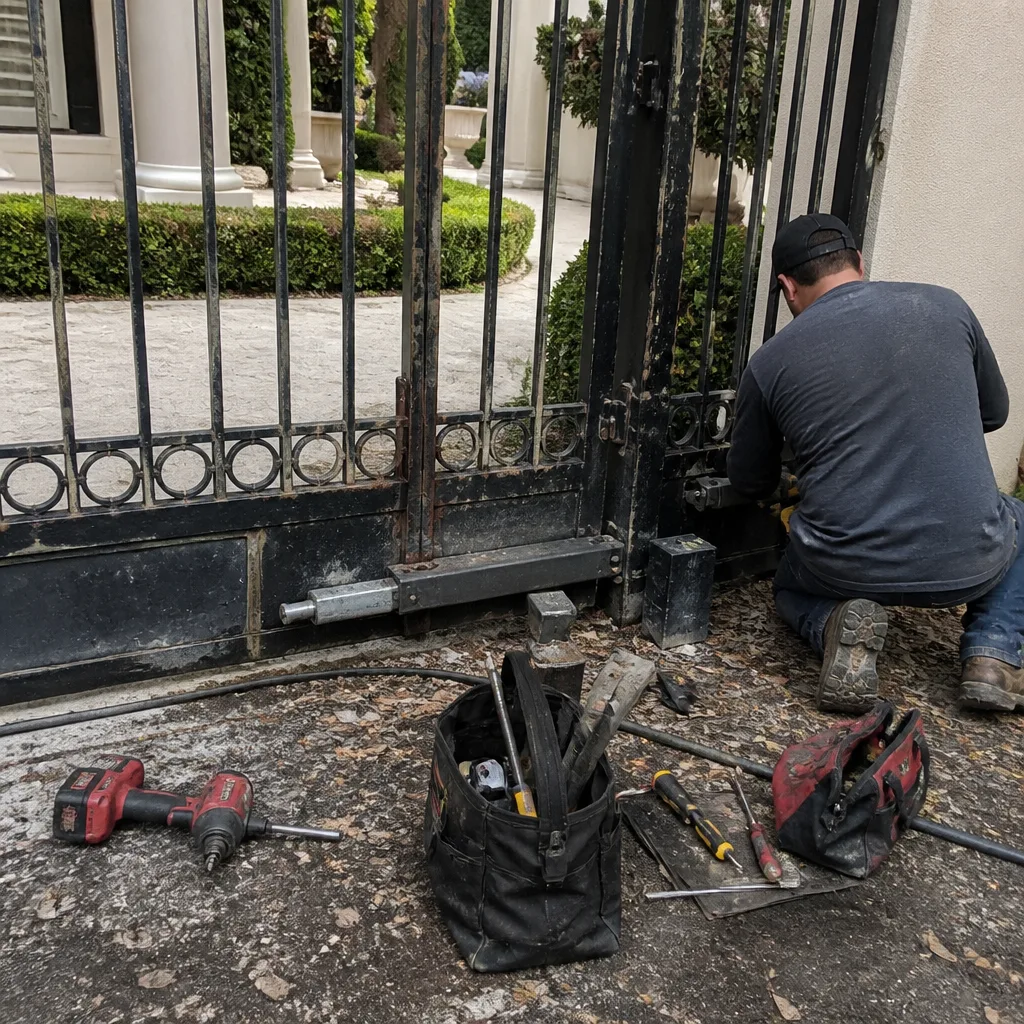 Before
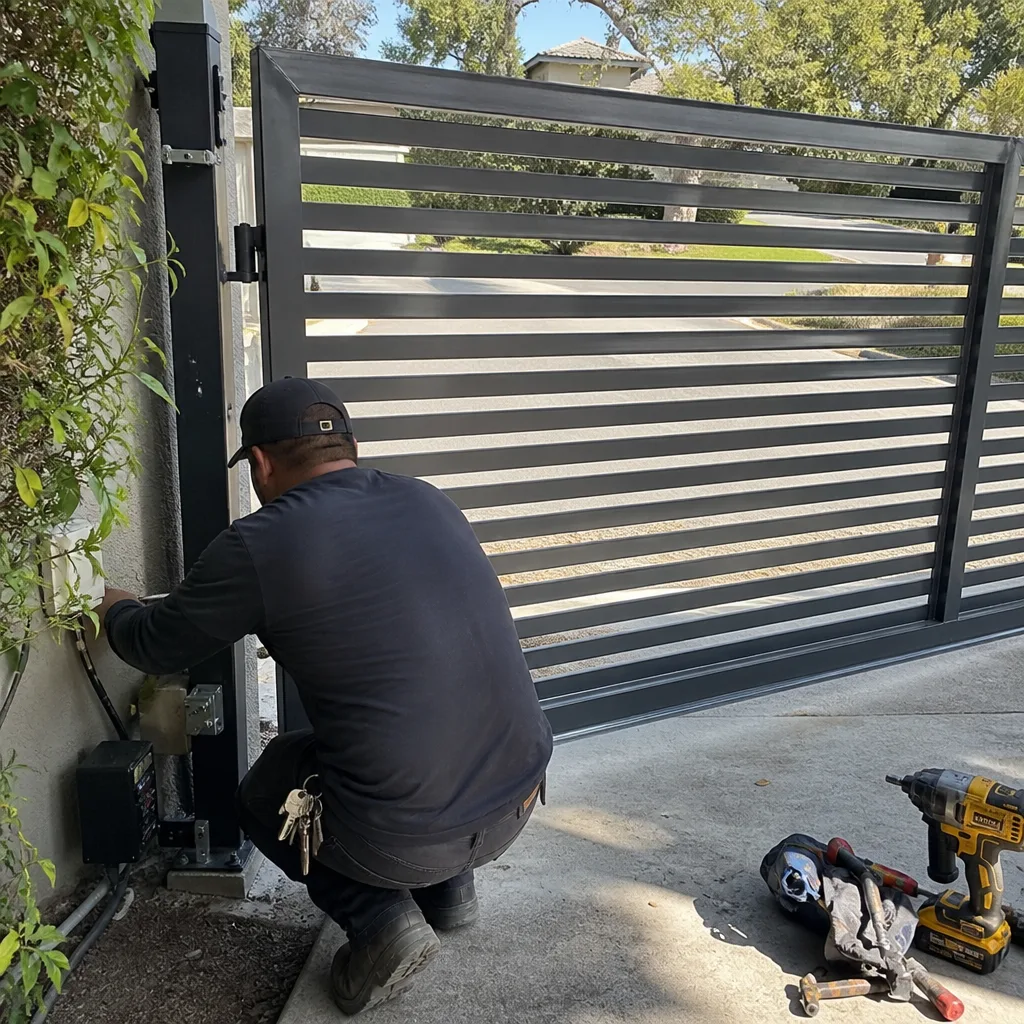 After
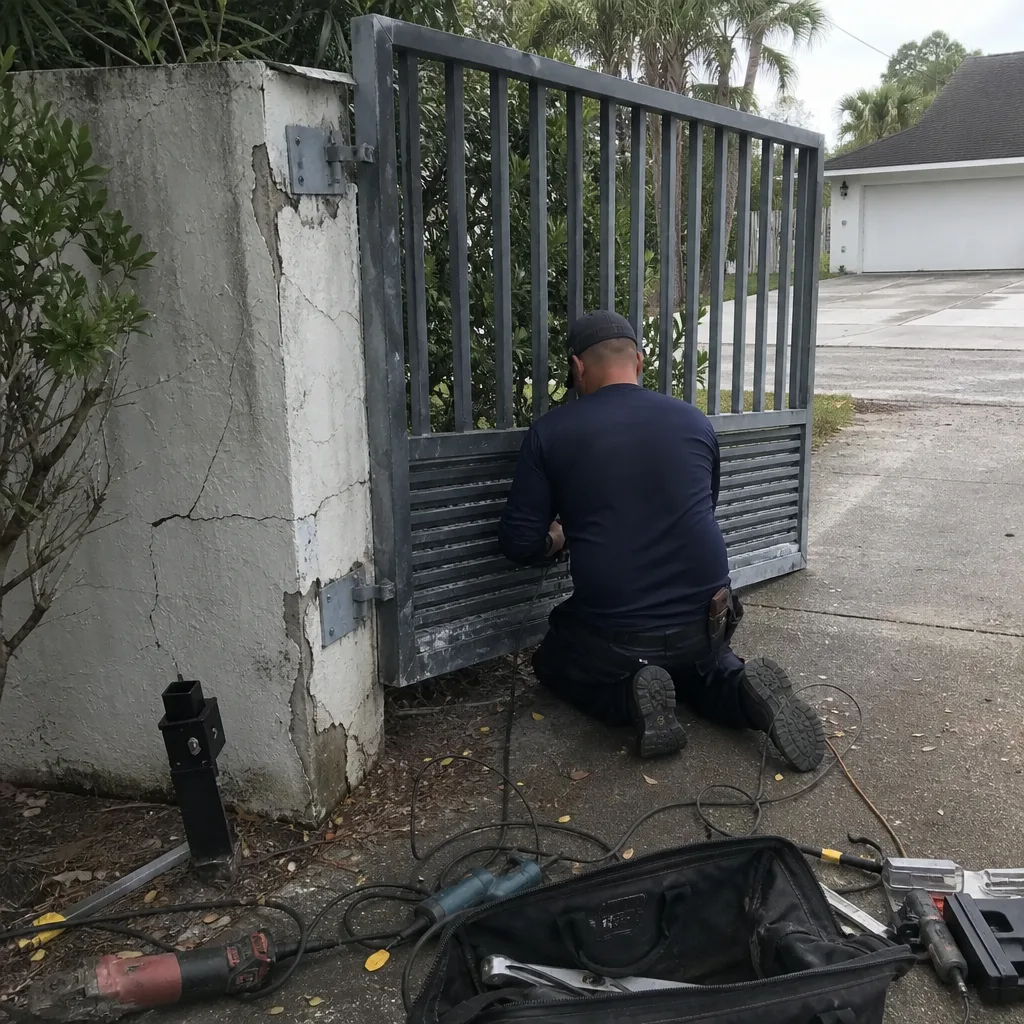 Before
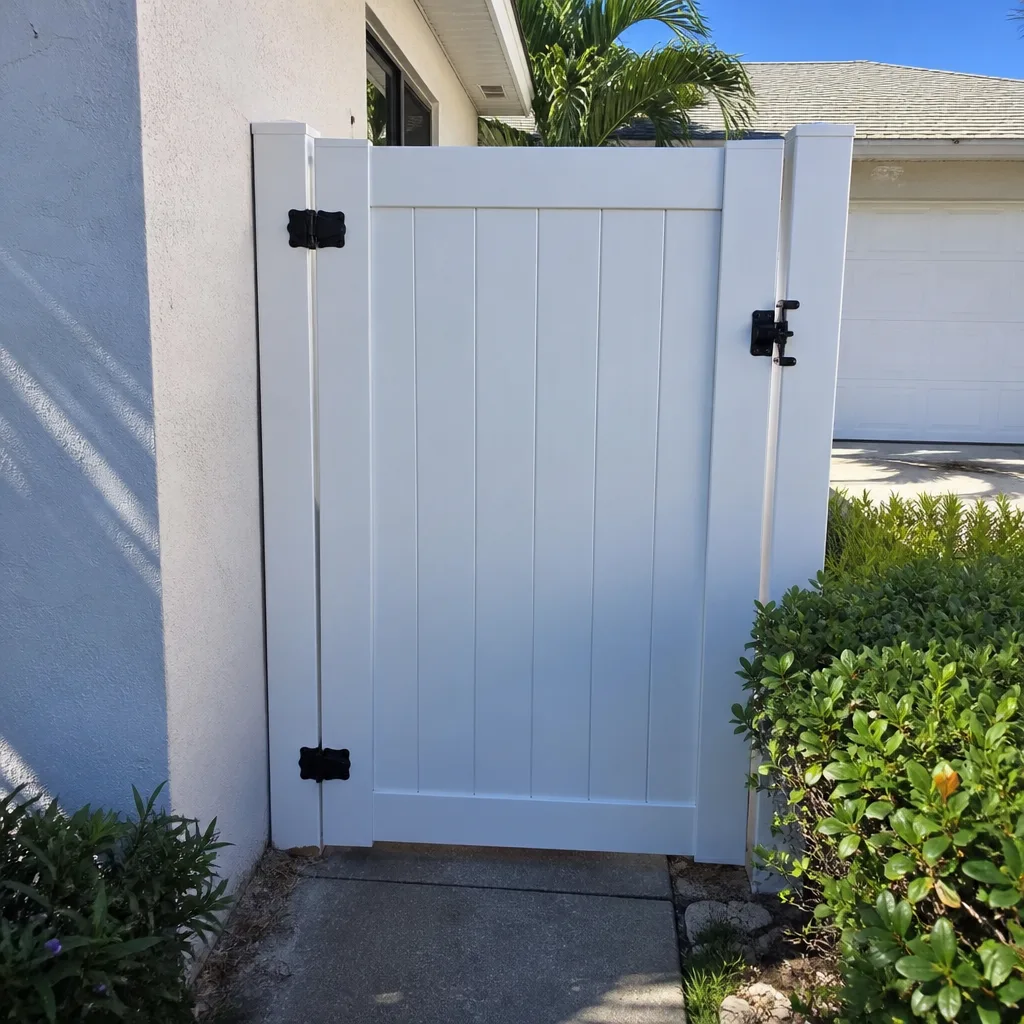 After
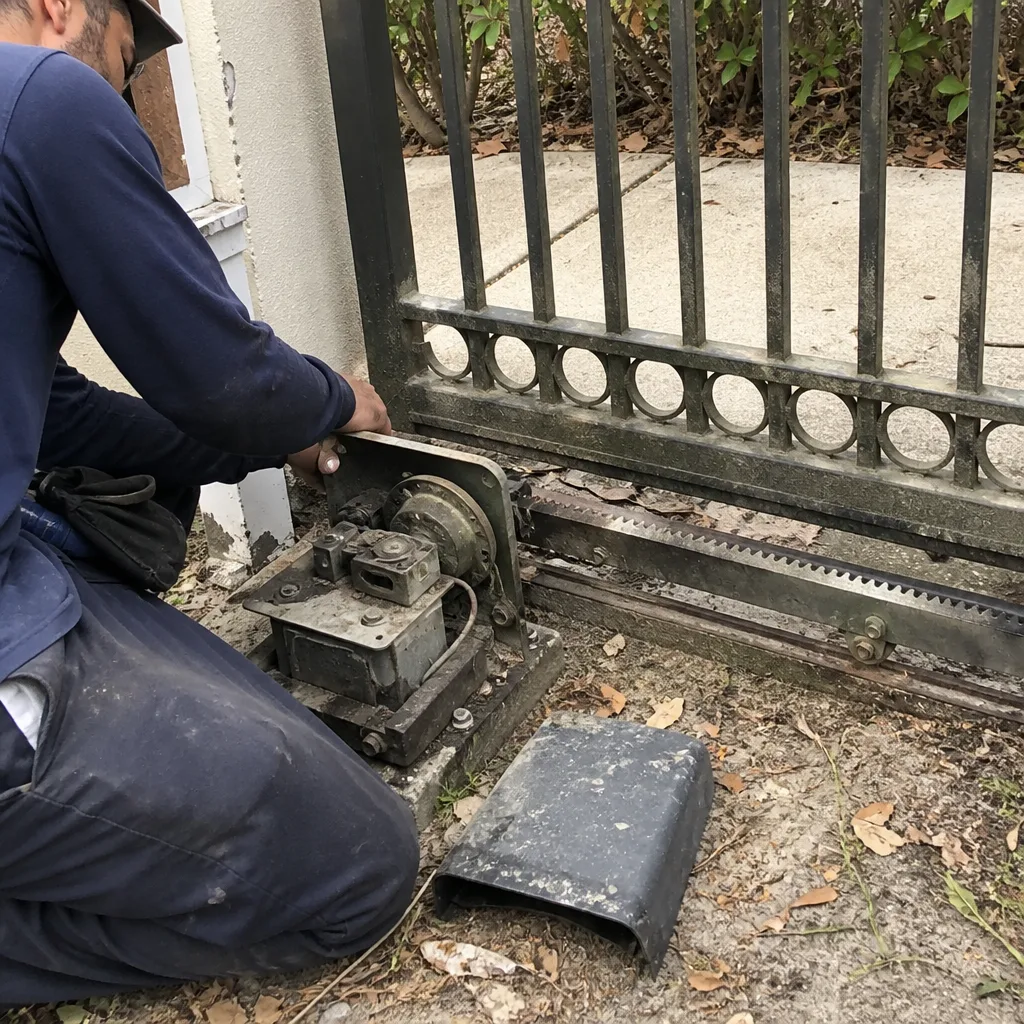 Before
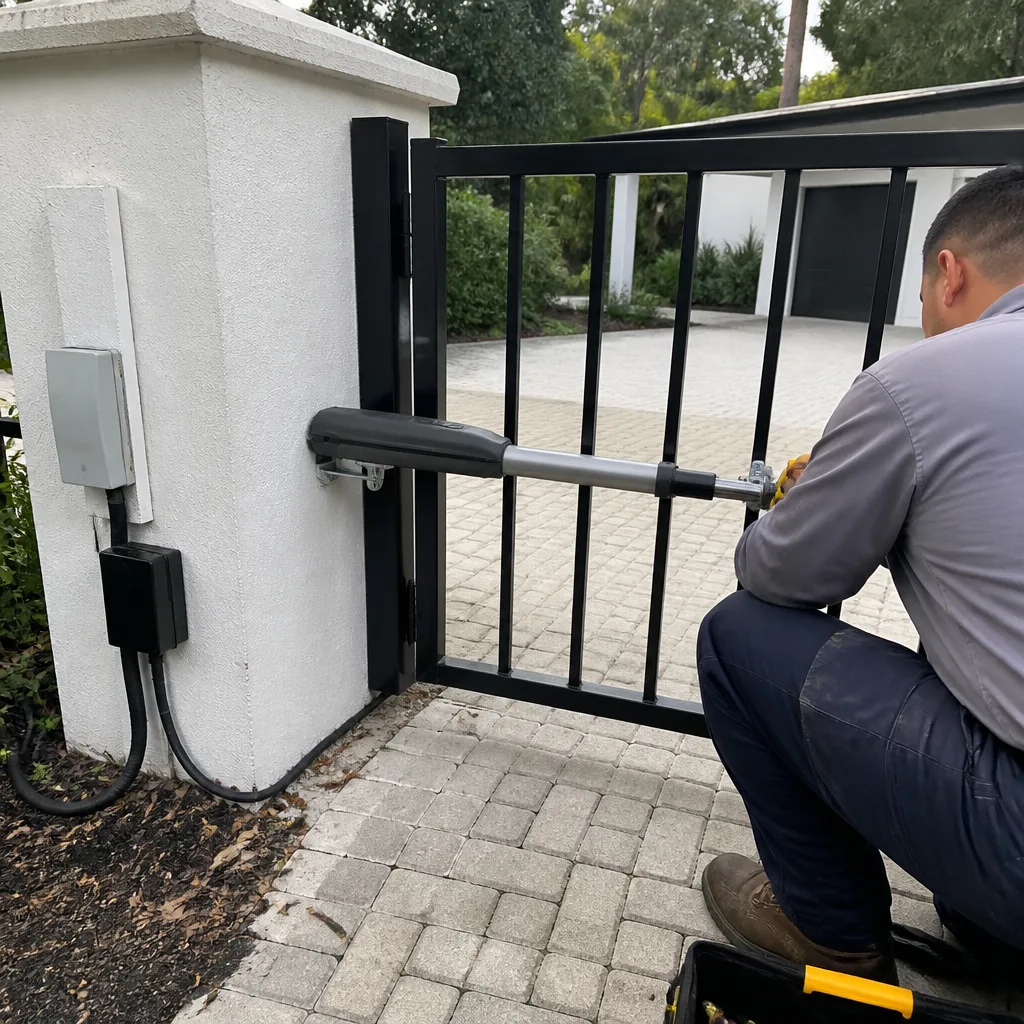 After
When to Call a Professional
Some gate issues are safe to address yourself: lubricating hinges, tightening loose bolts, replacing a remote battery. Most are not. If your gate is off its track, sagging badly, making grinding noises from the operator, failing to reverse when obstructed, or working intermittently for no obvious reason, it’s time for a professional. Electric gate systems involve line voltage, heavy moving panels, and safety circuits that can fail dangerously. A gate that closes unexpectedly can cause serious injury or property damage. Don’t guess at it. Tampa Gate Company offers free estimates in Tampa – call (866) 976-0095 and we’ll take a look before you commit to anything.
Frequently Asked Questions
Gate repair in Tampa typically runs between $250 and $900 depending on the component. A hinge replacement or simple hardware fix often lands in the $250 – $400 range, while a control board replacement on an electric gate can run $500 – $900 with parts and labor. Full operator replacement starts around $1,200 and goes up from there. The only way to get an accurate number for your specific gate is a diagnostic visit, because the problem isn’t always obvious from the symptom. Call (866) 976-0095 for a free estimate – the quote is always agreed before any work starts.
For urgent repair needs, many Tampa gate companies can schedule same-day or next-day service depending on their current workload. We prioritize security-related failures: a gate that won’t close properly leaves your property exposed, and a gate that won’t open traps you in your own driveway. Call (866) 976-0095 and describe what’s happening. We’ll give you a straight answer about scheduling so you can plan accordingly.
The short answer is that you usually can’t tell from symptoms alone, and neither can a contractor who hasn’t tested the system. A humming motor with no movement might be a bad capacitor, a seized gearbox, or a board not sending full voltage. A gate that reverses direction might be a safety loop issue, a limit switch problem, or a board fault. This is why proper diagnosis matters: replacing a motor when the board is the problem wastes $800 and doesn’t fix anything. A specialist tests each component before replacing anything. We diagnose the motor, board, and safety loop on every electric gate repair call – not just the most obvious failure point.
We work on LiftMaster, FAAC, BFT, Viking, and Mighty Mule systems specifically, along with Linear, Ghost Controls, DoorKing, and Elite. If your gate has a different brand operator, it’s worth a call anyway: most residential and commercial operators in the Tampa market fall within these nine brands, and a gate specialist can typically diagnose the system regardless of the name on the cover. If you don’t know what brand is on your gate, that’s fine. We’ll identify it on arrival.
Yes. A complete gate installation includes the post set, gate panel, operator, wiring, power supply connection, safety photo eyes, safety edges, and optional access control like keypads or intercoms. We don’t leave you to find a separate electrician for the power run or a separate contractor for the safety components. The entire system is spec’d, installed, and tested as one project. Get a free measure and written price for your installation by calling (866) 976-0095.
In many cases, yes. Florida homeowners’ policies typically cover gate damage from wind, falling trees, and hail, subject to your deductible. The catch: the insurance payout usually covers only the damaged component, not upgrades or code-required improvements. If your 15-year-old operator is destroyed by lightning, your policy may reimburse you for a new operator of similar type. You should also photograph the damage immediately and get a repair estimate before filing a claim, because insurers want documentation. If you need a detailed estimate for an insurance claim in Tampa, call (866) 976-0095 and we’ll write one up.
The Bottom Line
Hiring a gate repair contractor in Tampa comes down to one core principle: verify before you pay. Confirm the contractor specializes in gates by asking brand-specific questions. Confirm their license and insurance through the state database and their insurance carrier. Demand a written estimate with part numbers and line-item pricing. Get warranty terms on paper. Test everything before you sign off. The contractors who clear these hurdles without hesitation are the ones who’ll fix your gate correctly the first time. The gate on your property is doing a job: keeping people out, keeping pets in, controlling access, buying you privacy. Hire someone who treats that job as a specialty through our Gate Repair services, not a side gig. If you’re in Tampa and you want a gate specialist rather than a generalist with a truck, call (866) 976-0095. Estimates are free, the price is agreed before work starts, and you’ll get a straight answer about what your gate actually needs.
Written by the team at Tampa Gate Company, serving Tampa since 2013.