
Last updated October 31, 2026
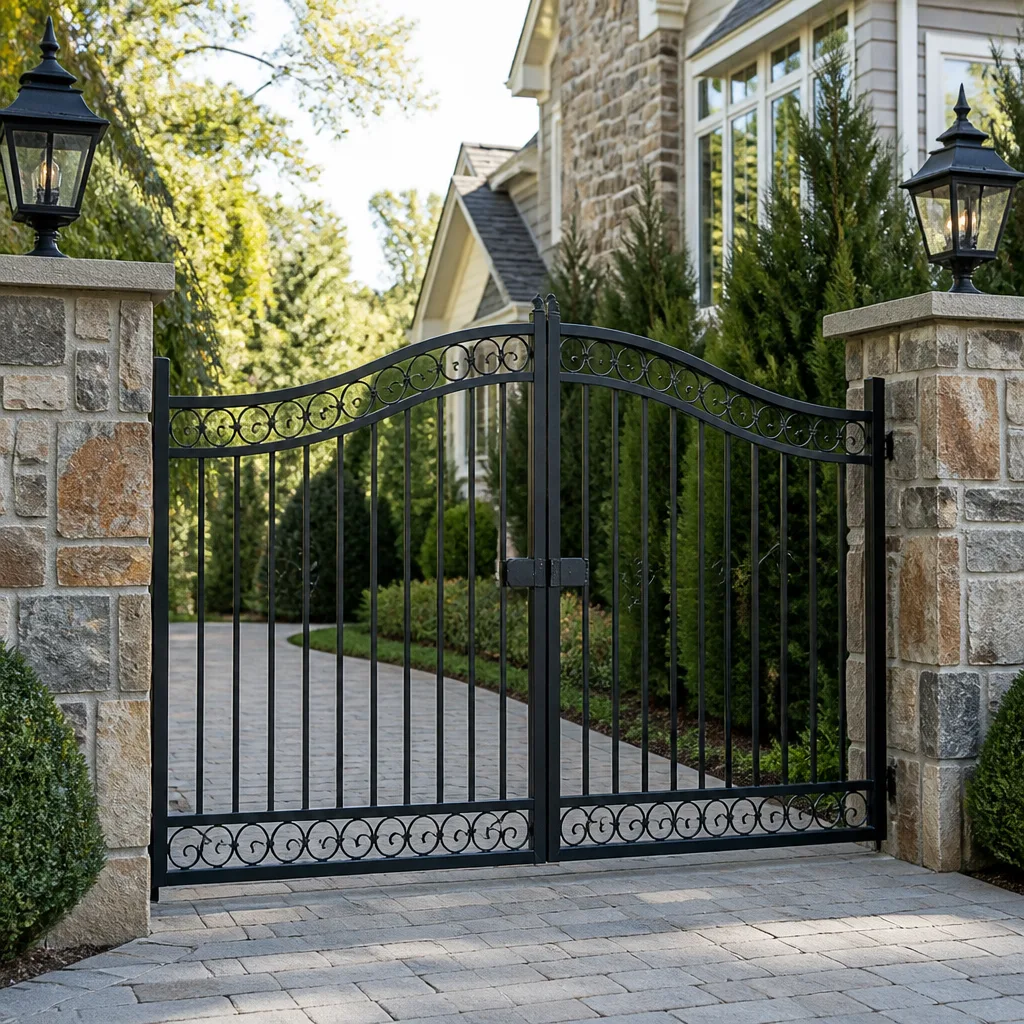 Wrought iron
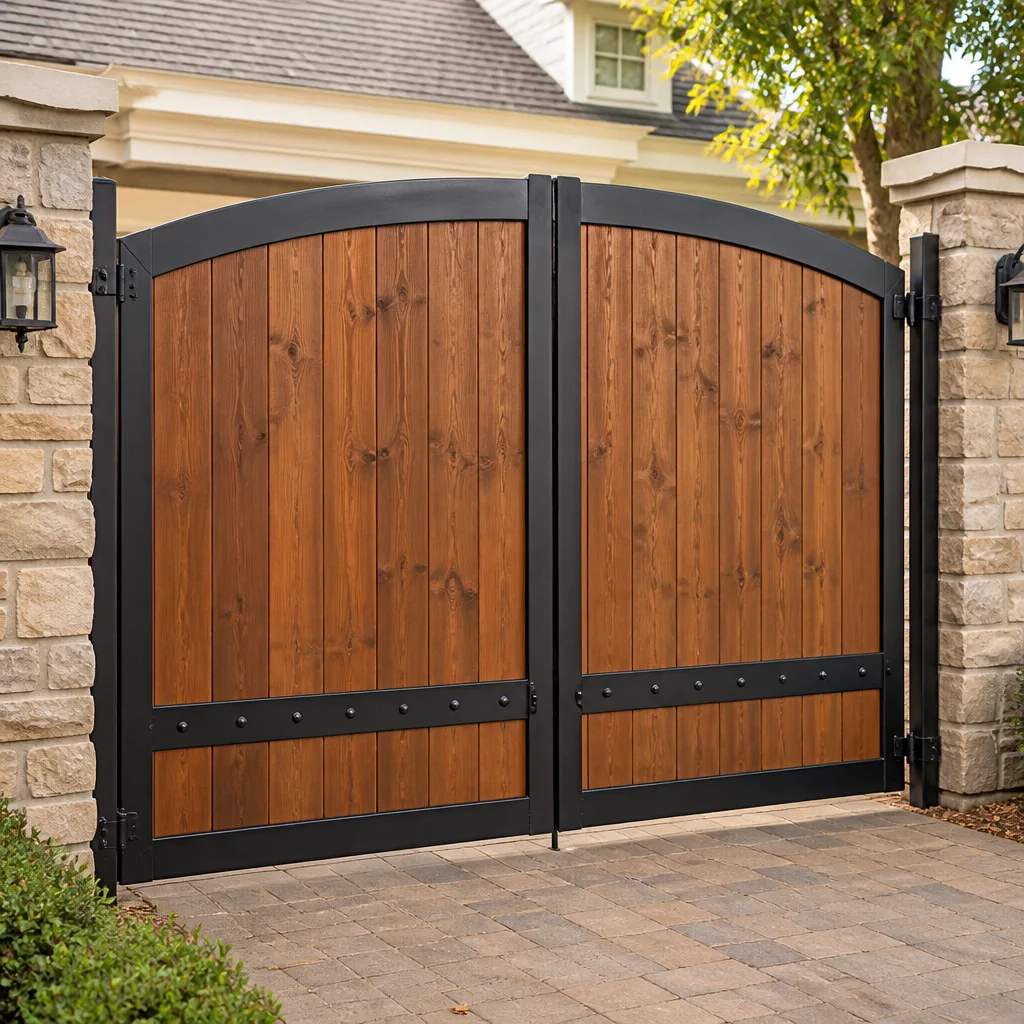 Wood & steel frame
 Farm & ranch
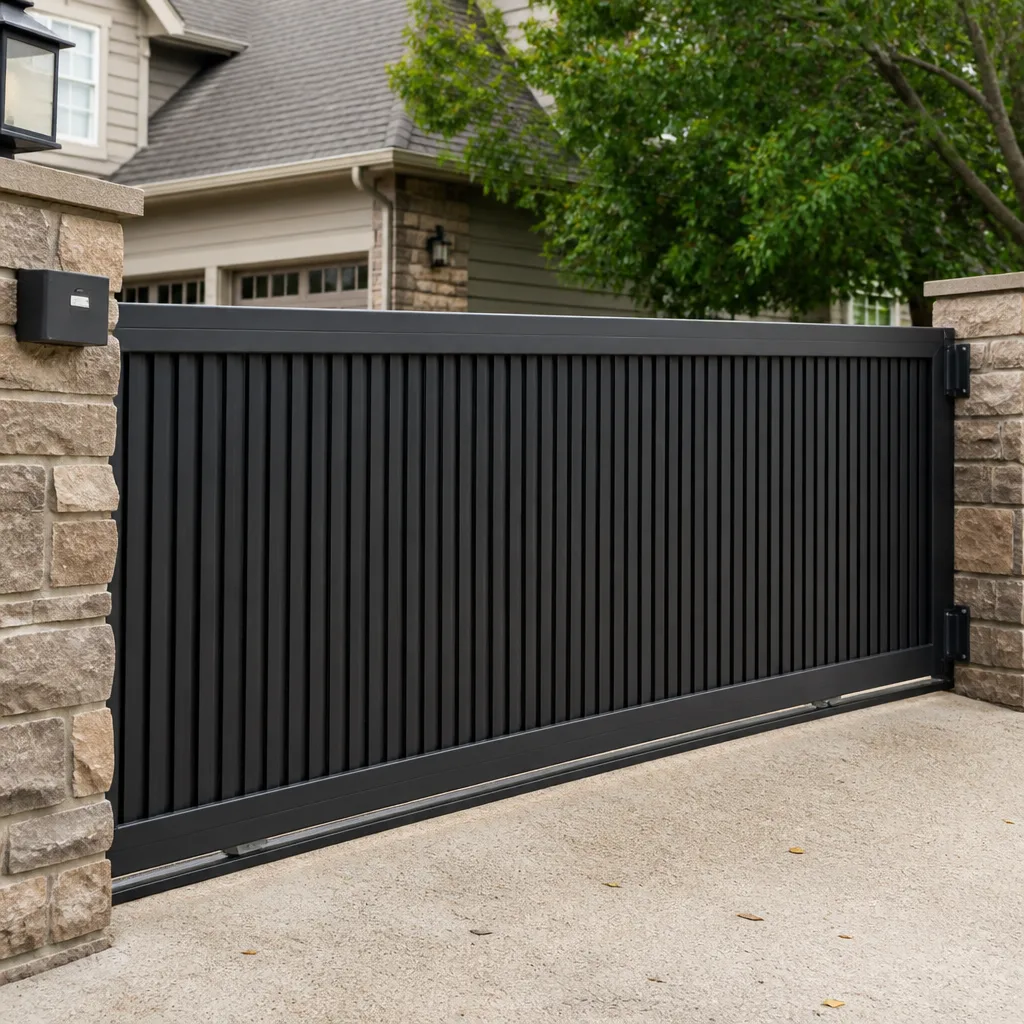 Sliding driveway gates
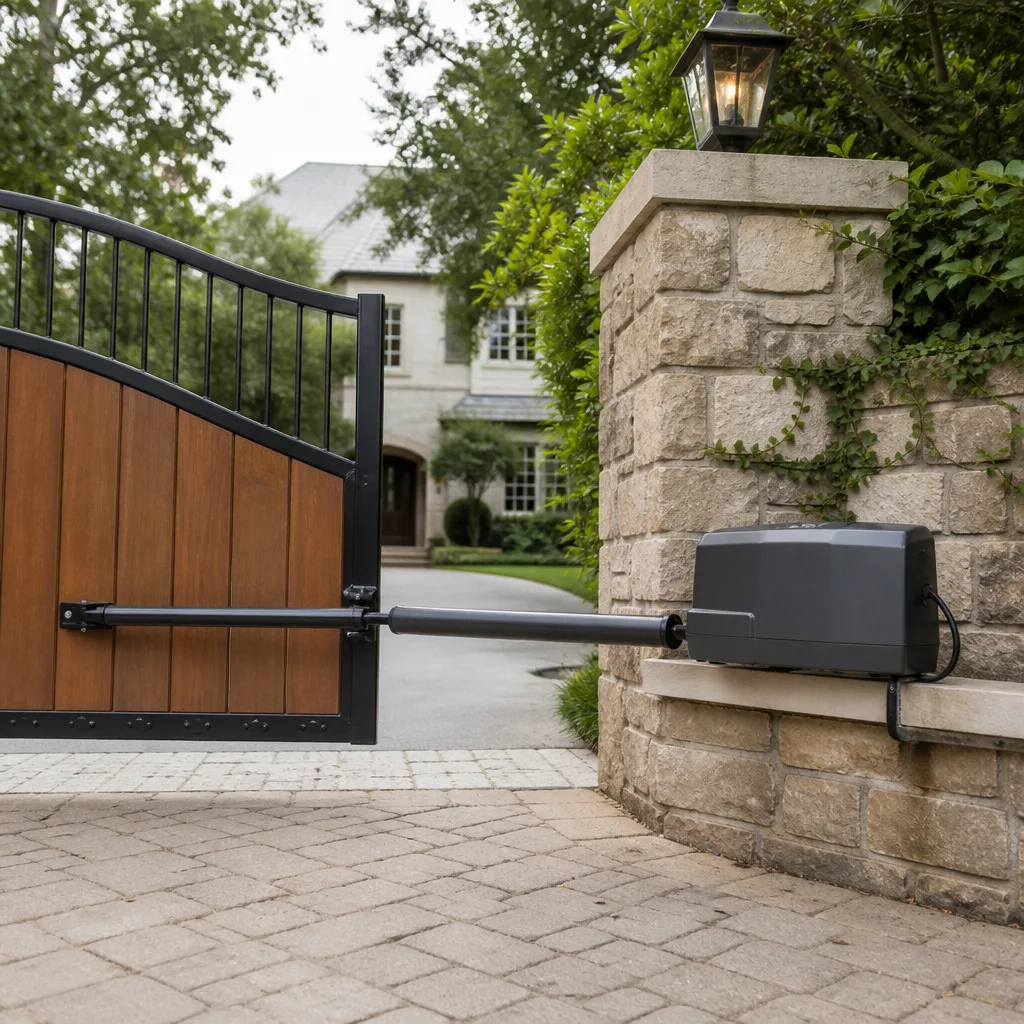 LiftMaster operators
Free on-site gate assessment - hinges, posts, and your LiftMaster or Nice gate operator checked before anything is quoted
The assessment is free and the quote is the invoice.
Get your free estimateGate Repair Permits, Codes & Inspections in FL: What You Need to Know
Unpermitted gate work in Florida can void your homeowner’s insurance coverage for related incidents and create complications when you sell – and most homeowners in Tampa have no idea where the permit threshold actually sits. A surprising number of property owners either pull permits for simple hinge lubrication that no municipality requires, or skip permits entirely for electrical gate operator work that absolutely does. This guide draws the actual line between maintenance, repair, and work that requires a permit under Florida Building Code, Hillsborough County amendments, and Tampa’s local ordinances. You’ll learn what triggers a permit, what your insurance policy actually covers, how HOAs add a second compliance layer, and how to fix unpermitted work before it becomes a title problem.
Styles & brands we work with
Quick Answer
Most mechanical gate repairs in Florida – hinge replacement, wheel adjustments, track realignment, manual latch fixes – do not require a permit. However, any work involving electrical modifications to a gate operator, new motor installation, or structural changes to a gate column or footing does trigger a permit requirement under the Florida Building Code and local Tampa amendments. When in doubt, call your local building department or a gate specialist who works with inspectors regularly.
Table of Contents
- What the Florida Building Code Actually Says About Gates
- Permit Work vs. Maintenance: The Actual Line
- Hillsborough County and Tampa Amendments That Change the Threshold
- Insurance Implications of Unpermitted Gate Work
- The HOA Overlay: A Second Compliance Layer
- How to Fix Unpermitted Gate Work Before a Home Sale
- Common Mistakes to Avoid
- When to Call a Professional
- Frequently Asked Questions
- The Bottom Line
What the Florida Building Code Actually Says About Gates
The Florida Building Code (FBC) – specifically Chapter 1, Section 105 – states that a permit is required for any construction, alteration, repair, or addition that changes the structural or electrical characteristics of a building or its appurtenant structures. Gates fall under “appurtenant structures” when they’re permanently affixed to a fence, wall, or driveway entry system. That’s the framework. But the practical application is narrower than most people assume.
In our experience working on gate systems across Tampa, we see the same confusion repeatedly. A homeowner replaces a cracked hinge on a manual swing gate. That’s maintenance – no permit. The same homeowner replaces the entire gate frame and welds new steel posts into fresh concrete footings. That’s structural alteration – permit required. The distinction isn’t about the size of the job; it’s about whether you’re restoring existing components or changing the structural or electrical system.
Here’s what the FBC specifically triggers permits for in gate work:
- New gate installation where posts, footings, or columns are set into the ground or attached to a structure
- Electrical work on automated gate systems, including new wiring, panel connections, or operator replacement that involves circuit modifications
- Structural modification of an existing gate – resizing, adding weight that changes load calculations, or altering the mounting system
- Pedestrian gate installation adjacent to a vehicular gate, when it requires new concrete or structural supports
The FBC also incorporates safety standards from UL 325 and ASTM F2200, which govern automated gate construction and installation. If you’re installing a new electric gate operator in Florida, the system must meet UL 325 entrapment protection requirements – photo eyes, reversing edges, and force settings. Inspectors verify these during the permit inspection. A gate installation in Tampa that skips this step creates a liability exposure that no insurance policy will quietly absorb.
Permit Work vs. Maintenance: The Actual Line
Here’s where most Florida property owners go wrong, in both directions. Some pull permits for work that no building department in the state requires. Others assume that because a repair is “just fixing what’s already there,” no permit is ever needed. Both errors cost money – one in unnecessary permit fees and delays, the other in failed inspections and insurance exclusions.
The test we recommend to gate owners is simple. Ask three questions:
- Does this work change the structural connection between the gate and the ground or support structure? Replacing a hinge on the same bracket? Maintenance. Cutting out and replacing a rusted gate post set in concrete? Permit.
- Does this work involve adding, replacing, or modifying any electrical component? Replacing a keypad battery? Maintenance. Wiring a new control board to the operator? Permit.
- Does this work change the size, weight, or function of the gate? Welding a steel panel over a damaged section that adds 80 pounds? Structural change – permit.
Maintenance-only exemptions under Florida Building Code Section 105.2 include:
- Replacing worn hinges, rollers, or track guides with identical or like-for-like parts
- Lubricating mechanical components
- Replacing a keypad, remote receiver, or battery (no hard wiring changes)
- Adjusting gate travel limits and force settings on an existing operator
- Painting or surface restoration that doesn’t alter structural members
If you’re doing any of the above, no permit is needed anywhere in Tampa or Hillsborough County. If you’re doing work outside this list, call the building department before you start – or call a gate specialist who already knows the line. We repair gates in Tampa regularly and advise clients on this exact threshold.
Hillsborough County and Tampa Amendments That Change the Threshold
The state code is the floor, not the ceiling. Hillsborough County and the City of Tampa both adopt amendments that tighten certain requirements, and understanding these local overlays matters if you own property in Tampa proper versus unincorporated Hillsborough County. The two jurisdictions don’t always treat gate work identically.
Tampa’s local code requires a permit for any electrical work that involves adding a new circuit or extending an existing one. That means if your electric gate operator needs a dedicated circuit run from the panel – even a short run – you need an electrical permit in Tampa, period. In some unincorporated Hillsborough County areas, the county historically interpreted minor electrical work more leniently, though recent code adoption cycles have aligned the county closer to Tampa’s stricter reading. Don’t rely on what your neighbor got away with three years ago in a different jurisdiction.
Other local nuances:
- Tampa requires a site plan for new gate installations showing property lines, setbacks, and utility easements. This catches people off guard when they assume a driveway gate is a simple accessory structure.
- Hillsborough County enforces flood zone requirements for gates in AE flood zones – particularly for masonry gate columns, which count as obstructions in some circumstances. If your Tampa property is in a flood zone, structural gate work may trigger additional review.
- Wind load calculations matter in both jurisdictions. Florida’s hurricane exposure means a gate that fails in high winds is a debris hazard. New gate installations in Tampa require wind load documentation, especially for sliding gates over six feet tall.
For automated gate systems specifically, the electrical inspector will check for proper grounding, a disconnect switch within sight of the operator, and compliance with UL 325 entrapment protection. These inspections aren’t optional – they’re the difference between a permitted, insurable gate and a liability ticking clock.
Insurance Implications of Unpermitted Gate Work
This is the section most gate owners wish they’d read before doing unpermitted electrical work. Here’s what actually happens when a claim is filed on an unpermitted automated gate installation or modification in Florida.
Your homeowner’s insurance policy contains a clause – typically in the “Concealment or Fraud” and “Duties After Loss” sections – that requires the property to be in compliance with applicable building codes and permit requirements. When a gate-related injury or property damage claim is filed, the adjuster’s first questions are: When was the gate installed? Who installed it? Was a permit pulled? Was it inspected?
If the answer is “no permit” on work that required one, the insurer has grounds to deny the claim. Not reduce it. Deny it. In Florida, courts have generally upheld insurer denials where unpermitted electrical work was a contributing factor to the loss. We’ve spoken with Tampa homeowners who learned this the hard way after a gate-related injury on their property, as detailed in our Gate Repair Warning Signs: A Tampa Homeowner’s Reference Guide.
The specific risk scenarios:
- Gate-related injury: An automated gate entrapment, a falling gate panel, or a pedestrian knocked by a swinging gate. Unpermitted work gives the insurer an exclusion pathway.
- Property damage from gate failure: A sliding gate that comes off its track and damages a vehicle. Same exposure.
- Fire from faulty electrical: A poorly wired gate operator that shorts and causes a garage fire. The fire investigator’s report will note the electrical violation.
- Sale-time liability: If you sell the home and the buyer later discovers unpermitted gate work, you may face a disclosure claim. Florida requires sellers to disclose unpermitted work in many circumstances.
The fix isn’t to hide the work. It’s to bring it into compliance, which the retroactive permitting section below covers.
The HOA Overlay: A Second Compliance Layer
If you own property in a deed-restricted community – and Tampa has hundreds of them, from New Tampa to South Tampa to Westchase – your HOA rules operate on top of municipal code, not instead of it. A gate that passes Hillsborough County permitting can still violate your HOA’s architectural guidelines. And HOA enforcement can be faster and more aggressive than any building department.
Common HOA gate rules we encounter in Tampa:
- Design review required for any gate visible from the street, even if the county doesn’t require a permit for the specific repair
- Material restrictions – some communities ban certain gate styles or require specific materials (wrought iron look, specific heights, specific colors)
- Automation restrictions – a handful of Tampa HOAs restrict the use of gate operators in certain zones, or require specific brands for compatibility with community access systems
- Speed and setback requirements for automated gates near community roads
The practical implication: before you spend money on any gate repair or upgrade in a Tampa HOA community, check your governing documents. An unapproved gate change can trigger daily fines in some HOAs that accumulate faster than you’d expect. We’ve seen homeowners in gated Tampa communities install a new automatic opener, pass the county inspection, and then get a violation notice from the HOA because the operator’s control box was visible from the street. The HOA didn’t care about the electric permit; they cared about aesthetics.
If you’re uncertain whether your HOA has specific gate requirements, call your community management office. It’s a ten-minute conversation that can save you a thousand-dollar fix.
How to Fix Unpermitted Gate Work Before a Home Sale
If you’ve discovered unpermitted gate work on your property – whether you inherited it from a previous owner or did it yourself years ago – the clock is ticking. Home inspectors in the Tampa market routinely flag electrical and structural issues during a sale, and gate systems are on the checklist. An unpermitted gate operator is one of the most common findings we hear about from sellers scrambling to close.
Here’s the step-by-step path to compliance, drawn from years of working with Tampa property owners through this exact process:
- Document what exists. Note the gate type (manual or automated), operator brand (we frequently work on BFT, Linear, and Ghost Controls systems in Tampa), age if known, and any visible modifications. Take photos.
- Call the Hillsborough County Building Department or City of Tampa Construction Services depending on your jurisdiction. Ask about the “unpermitted work disclosure” process. Florida building departments have a formal pathway for this – you’re not the first person to need it.
- Request a retroactive permit application. You’ll need to describe the work, when it was done (best estimate), and who performed it. If you don’t have the original contractor’s information, that’s common and not disqualifying.
- Schedule an inspection. For automated gate systems, the inspector will verify electrical safety including proper grounding and UL 325 entrapment protection. For structural work, they’ll check footings, connections, and wind load compliance.
- Correct any deficiencies. The inspector may require changes – adding a disconnect switch, upgrading photo eyes, reinforcing a post base. A gate specialist familiar with inspection requirements can complete these corrections quickly.
- Obtain the certificate and retain it. Once the work passes, you’ll receive documentation that should be disclosed to the buyer and kept with your property records.
The total cost of retroactive permitting in Tampa typically runs from a few hundred dollars in fees to a few thousand if corrections are needed. Compare that to the cost of a failed sale or a post-closing disclosure claim, and it’s not close. We help electric gate repair in Tampa clients bring their systems into compliance regularly – the process is more straightforward than most people fear.
Common Mistakes to Avoid
- Assuming all gate work is permit-free because it’s a “repair.” The permit threshold isn’t about the word “repair” – it’s about whether the work changes structural or electrical characteristics. Replacing a motor on a Viking operator with modified wiring is electrical work, not maintenance.
- Pulling a permit for pure maintenance. Replacing a hinge, lubricating a track, or swapping a remote battery needs no permit anywhere in Florida. Don’t pay fees for work the code treats as ordinary care.
- Ignoring the electrical scope of automated gate work. This is the most expensive mistake we see in Tampa. Even a “simple” operator replacement that involves running new wiring or adding a circuit requires an electrical permit.
- Assuming HOA approval substitutes for a building permit. They’re separate compliance layers. An HOA approval letter doesn’t satisfy the county, and a county permit doesn’t satisfy your HOA.
- Failing to disclose unpermitted gate work when selling. Florida courts treat concealment of unpermitted work as a material misrepresentation. Full disclosure plus retroactive permitting is the correct path.
- Using a general handyman for automated gate electrical work. Unlicensed electrical work doesn’t just risk a failed inspection – it can void related insurance claims. Florida requires licensed electrical contractors for gate operator circuit work.
- Forgetting about wind load on new gate installations in Tampa. A gate that meets the aesthetic brief but fails hurricane wind requirements is a code violation waiting for the next storm. Tampa’s exposure is real, and inspectors know it.
When to Call a Professional
If your gate situation involves any of the following, bring in a specialist before you spend money or start work: automated gate systems with electrical issues you can’t trace in ten minutes, structural damage to gate posts or columns (especially rust at the base in Tampa’s humid, salt-adjacent climate), any new gate installation that requires footings and electrical runs, inherited unpermitted work you need brought into compliance, or an HOA violation that requires recertification. These scenarios involve code nuances, safety requirements, and inspection details that benefit from experience with actual gate systems. Tampa Gate Company offers free estimates in Tampa – call (866) 976-0095 and we’ll assess your gate, identify any permit concerns, and give you a written plan.
Frequently Asked Questions
If the replacement involves the same operator model, same wiring, and zero circuit changes, it’s typically maintenance – no permit. If the new operator requires new wiring, a dedicated circuit, or a control board that changes the electrical configuration, you need an electrical permit in Tampa. Call (866) 976-0095 and we’ll tell you which category your job falls into before any work starts.
Residential electrical permits in Tampa and Hillsborough County typically range from $100 to $400 depending on the scope, with structural permits for new gate installations running higher. The exact fee depends on the work valuation and jurisdiction. The cost of a permit is always less than the cost of an insurance denial on unpermitted work.
Florida allows owner-builder permits for your own residential property, but electrical work still requires compliance with the National Electrical Code and inspection. Most Tampa homeowners underestimate the complexity of UL 325 entrapment protection, grounding, and disconnect requirements. If you’re not confident in code compliance, a gate installation specialist is the safer route.
You can bring it into compliance through the retroactive permitting process at your local building department. Document the work, apply for a retroactive permit, schedule an inspection, and correct any deficiencies. Tampa Gate Company handles this process regularly for homeowners and property managers – call (866) 976-0095 for help.
A manual gate that’s purely mechanical – hinges, latch, track, wheels – typically needs no permit for repairs. New manual gate installation with concrete footings or structural posts does require a building permit in Tampa, because the structure must meet wind load and safety requirements.
Automated gates in Florida are subject to UL 325 safety standards when installed or significantly modified, and the permitting inspector verifies compliance. There’s no annual safety inspection requirement for residential gates, but commercial properties may face periodic safety obligations under OSHA or liability insurance requirements. For electric gate systems – whether BFT, Linear, Viking, or Ghost Controls – we recommend an annual safety check regardless.
The Bottom Line
Florida gate permit rules aren’t as complicated as they’re made out to be, but the consequences of getting them wrong are real. Maintenance-only work – hinges, rollers, batteries, adjustments – needs no permit anywhere in Tampa or Hillsborough County. Structural changes and electrical modifications do, and skipping them creates insurance exposure, title complications, and HOA risk that compounds over time. If you’re unsure where your gate work falls, the ten-minute call to the building department is free, and the cost of being wrong isn’t. You can also explore our more guides & resources for additional help. For gate repair, electric gate work, or new installations in Tampa, call (866) 976-0095 for a free estimate – we’ll tell you honestly whether a permit applies before any work begins.
Written by the team at Tampa Gate Company, serving Tampa since 2013.
See the difference
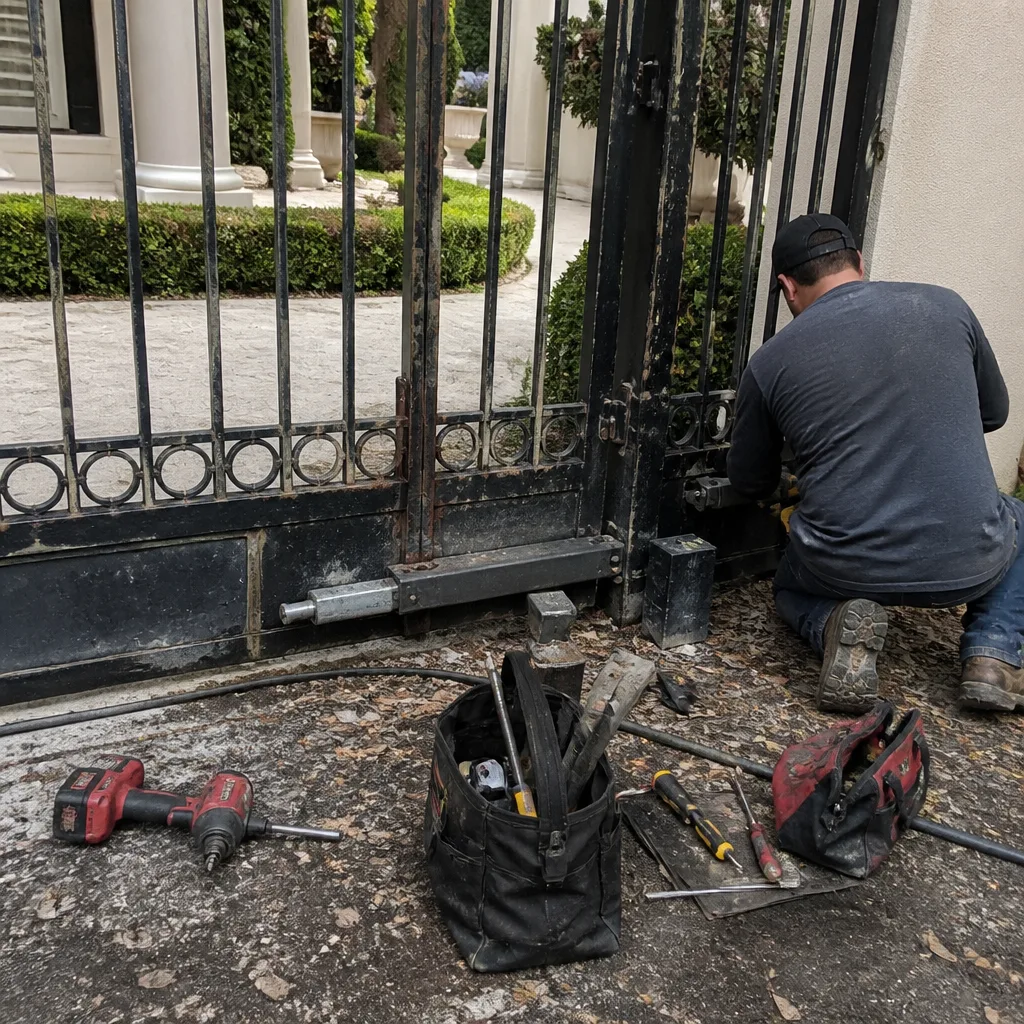 Before
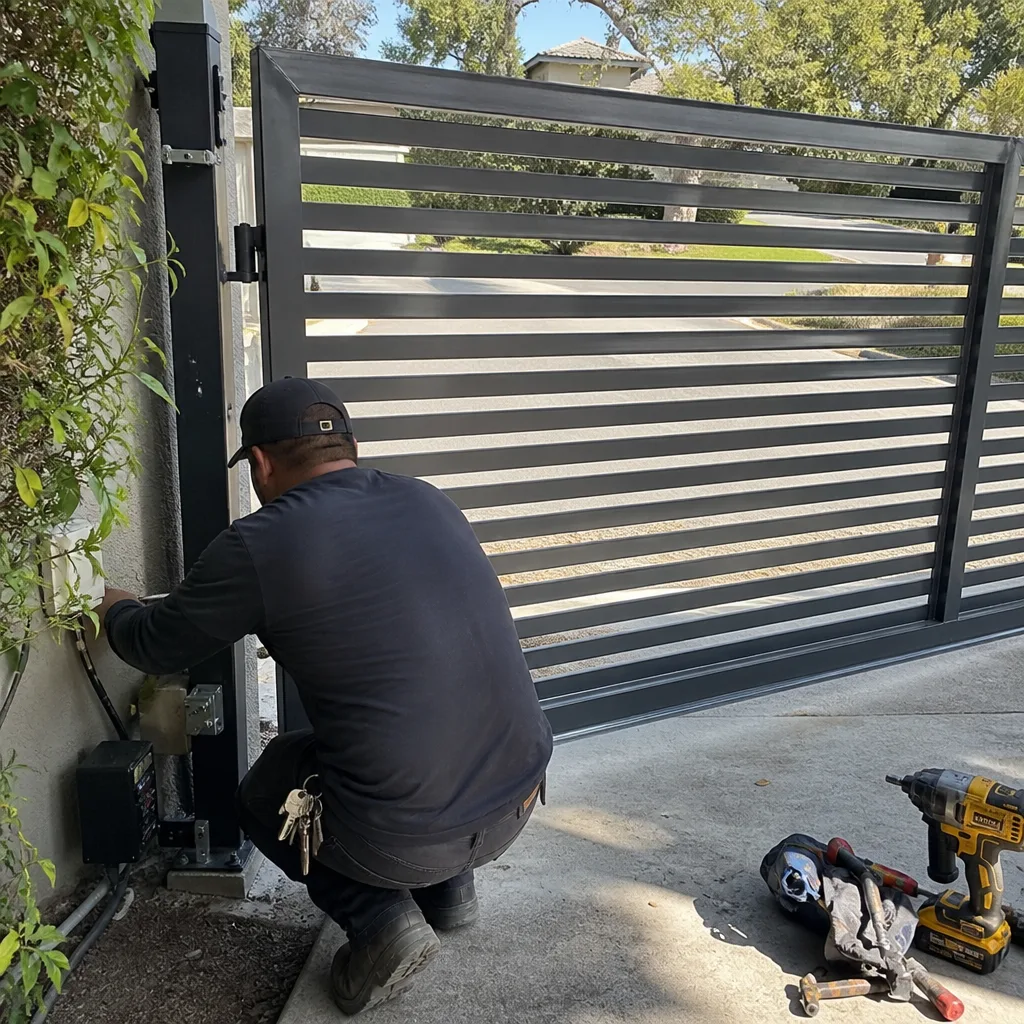 After
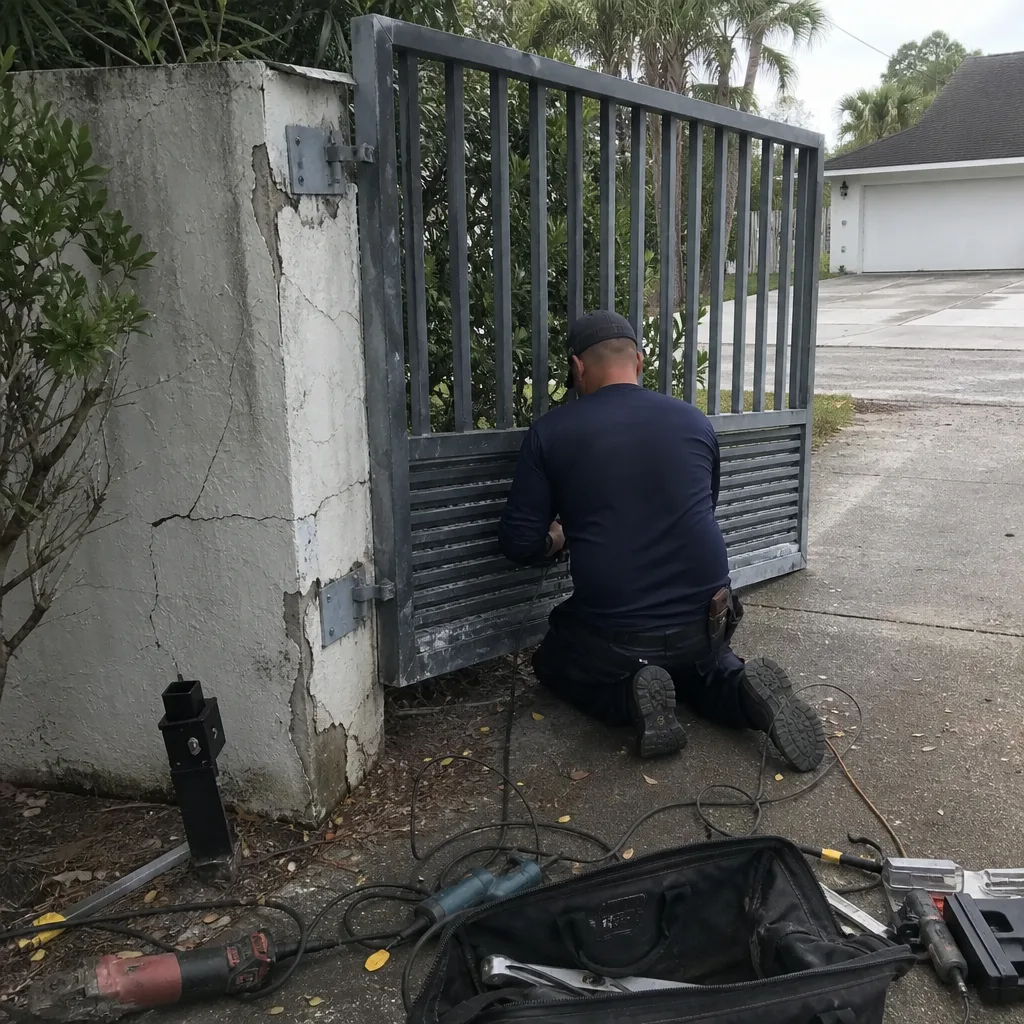 Before
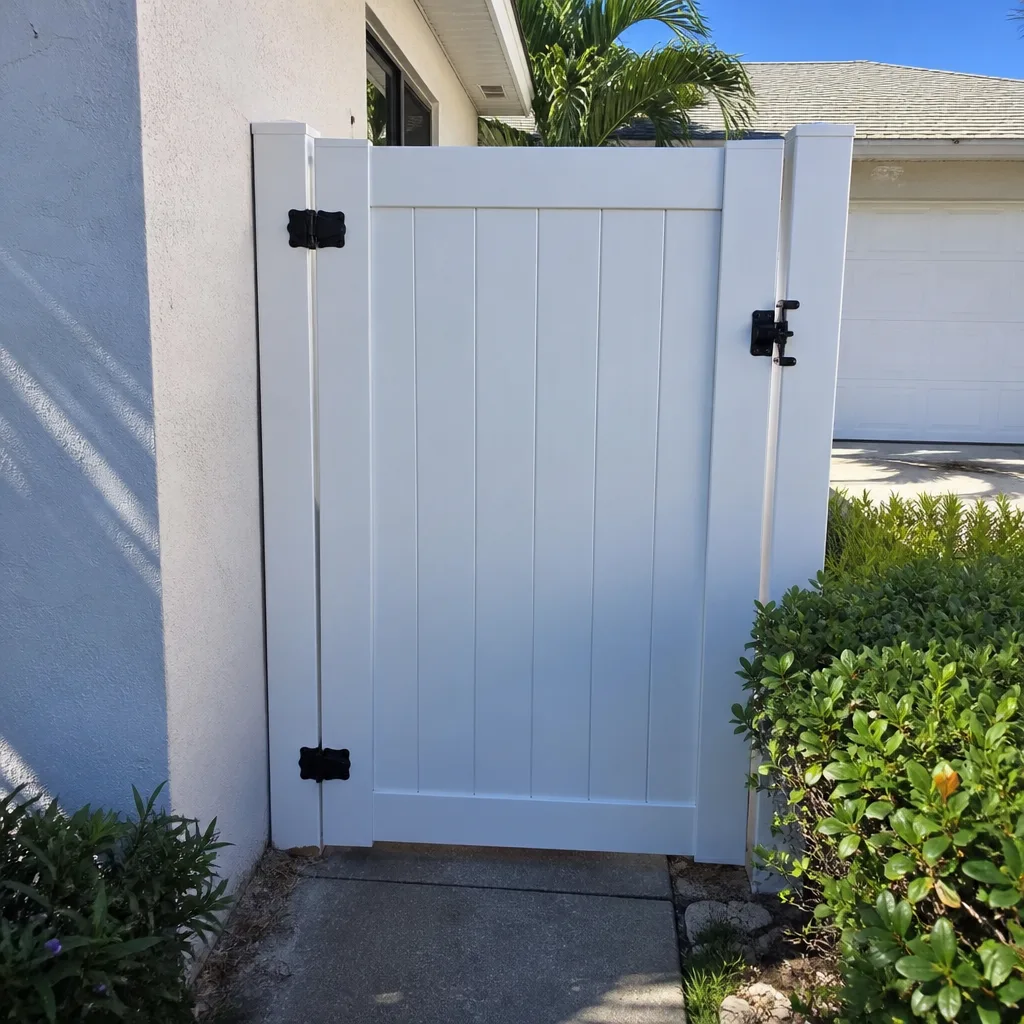 After
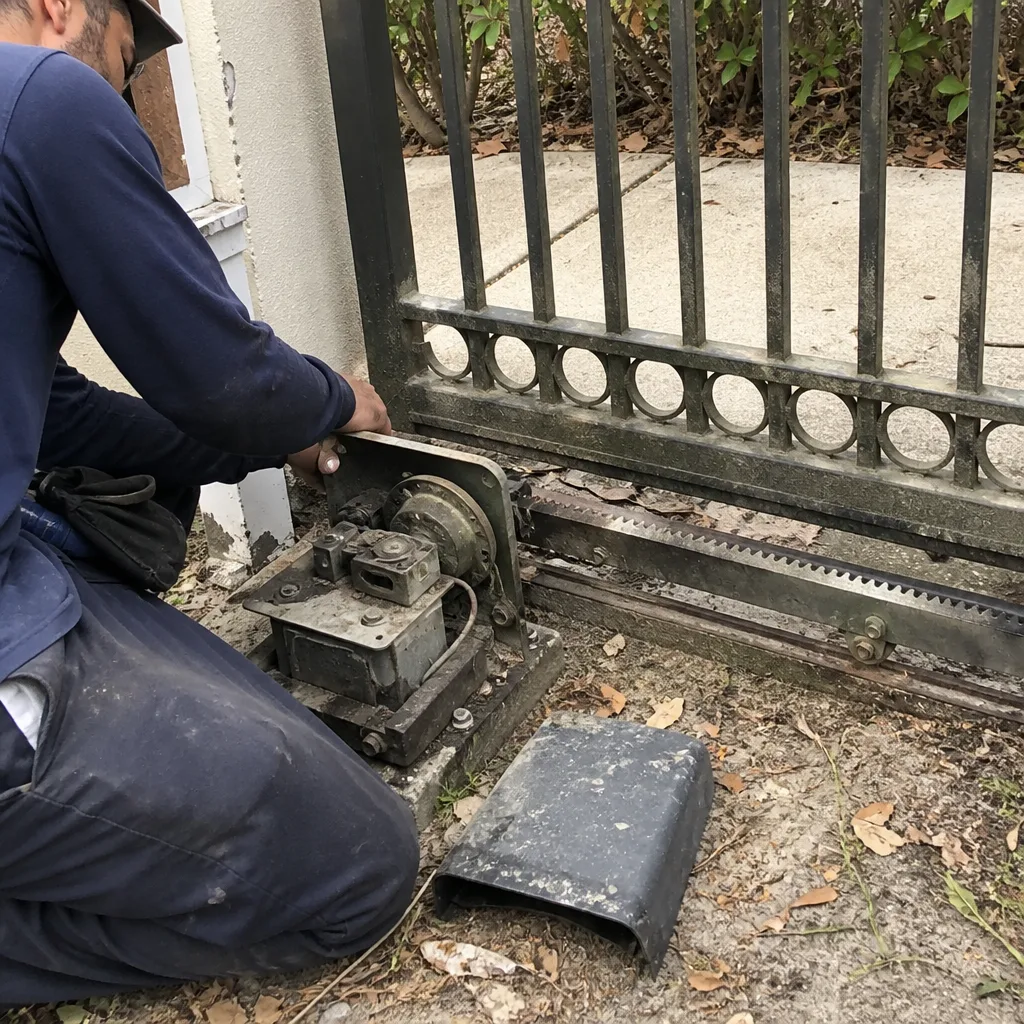 Before
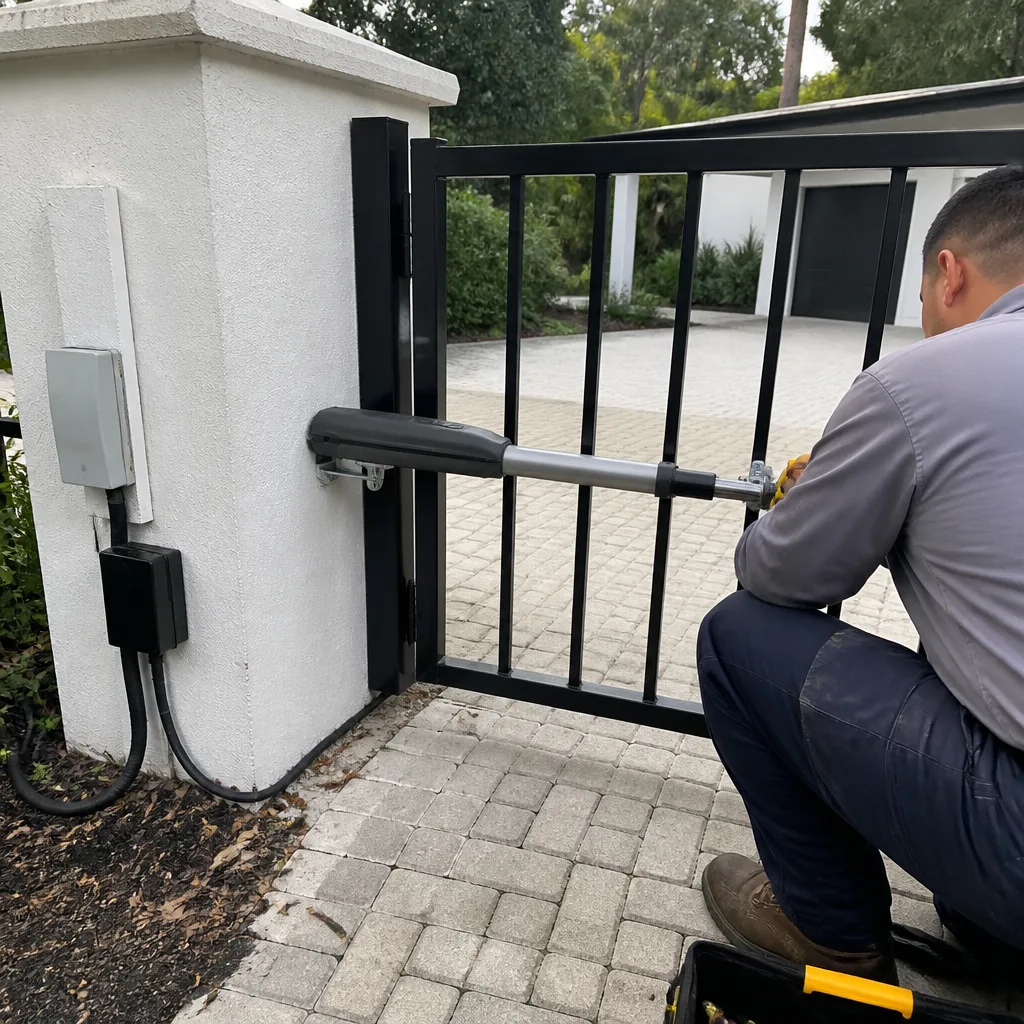 After